American Crow
Corvus brachyrhynchos
birdsHow to Identify
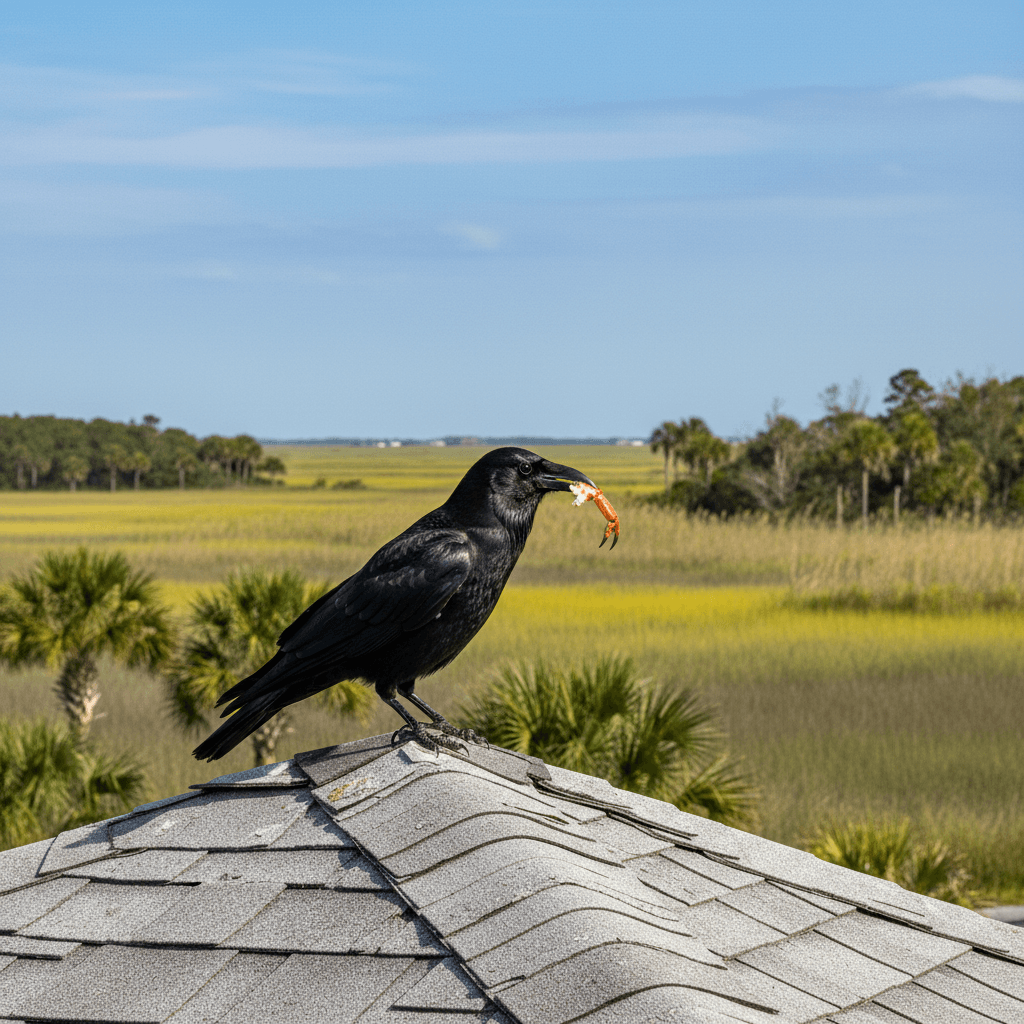
American crows are large, black birds with iridescent feathers and a distinctive 'caw' call. They measure about 17-21 inches in length with a wingspan of 33-39 inches. Their strong bills and legs are also black.
Signs of Infestation
Crows may congregate in large numbers, creating noise disturbances. Look for scattered trash, especially in areas where crows forage for food. Droppings on cars, patios, and roofs are also common signs of crow activity.
Health Risks
While not directly harmful, large crow populations can cause sanitation issues and property damage in Myrtle Beach. Their droppings can carry diseases, and their scavenging behavior can spread trash and attract other pests. Aggressive behavior towards pets or people is rare, but possible if they feel threatened.
Our Treatment Method
MBPC offers humane bird control solutions in the Grand Strand area. Our SC-licensed technicians can assess crow roosting and nesting sites and recommend deterrents such as visual or auditory devices. We prioritize non-lethal methods in accordance with state regulations and ethical pest management practices.
Prevention Tips
Remove or secure potential food sources, such as open garbage cans and pet food. Trim trees to reduce roosting sites, especially those overhanging buildings. Use bird netting or other physical barriers to protect gardens and fruit trees on your Myrtle Beach property.
Habitat
American crows are highly adaptable and thrive in various habitats across coastal South Carolina. They are commonly found in urban and suburban areas, agricultural fields, and near shorelines. They often roost in large flocks in trees and utility poles near residential areas of Myrtle Beach.
Peak activity: Year-Round
Identification Photos
Frequently Asked Questions About American Crow
Yes, American crows are protected under the Migratory Bird Treaty Act. Lethal control requires a permit from the US Fish and Wildlife Service, and local ordinances may further restrict crow management activities in Myrtle Beach.
Crows are attracted to food sources, water, and roosting sites. Open garbage cans, pet food, bird feeders, and standing water can attract crows to your Myrtle Beach property. Tall trees and structures provide ideal roosting locations.
Various deterrents can discourage crows, including visual repellents (scarecrows, shiny objects), auditory devices (noise makers, recorded distress calls), and physical barriers (netting). Consistent application of these methods is key to long-term success in the Myrtle Beach area.
Crow attacks on pets are rare but can occur, especially during nesting season (spring). Keep small pets indoors or supervised when crows are present. Removing accessible food sources can also help reduce crow activity around your Myrtle Beach home.
Don't Let Pests Win.
Take Back Your Home Today.
Every day you wait gives pests more time to multiply and cause damage. Our licensed technicians are ready to help — often the same day you call.
Free Inspection
No cost, no obligation
Same-Day Service
Fast response guaranteed
Eco-Friendly
Safe for family & pets
100% Guarantee
Pests return, so do we
Ready to get started?
Choose how you'd like to connect with us.
Available Mon-Fri 8am-6pm, Sat 9am-2pm