American Dog Tick
Dermacentor variabilis
arachnidsHow to Identify
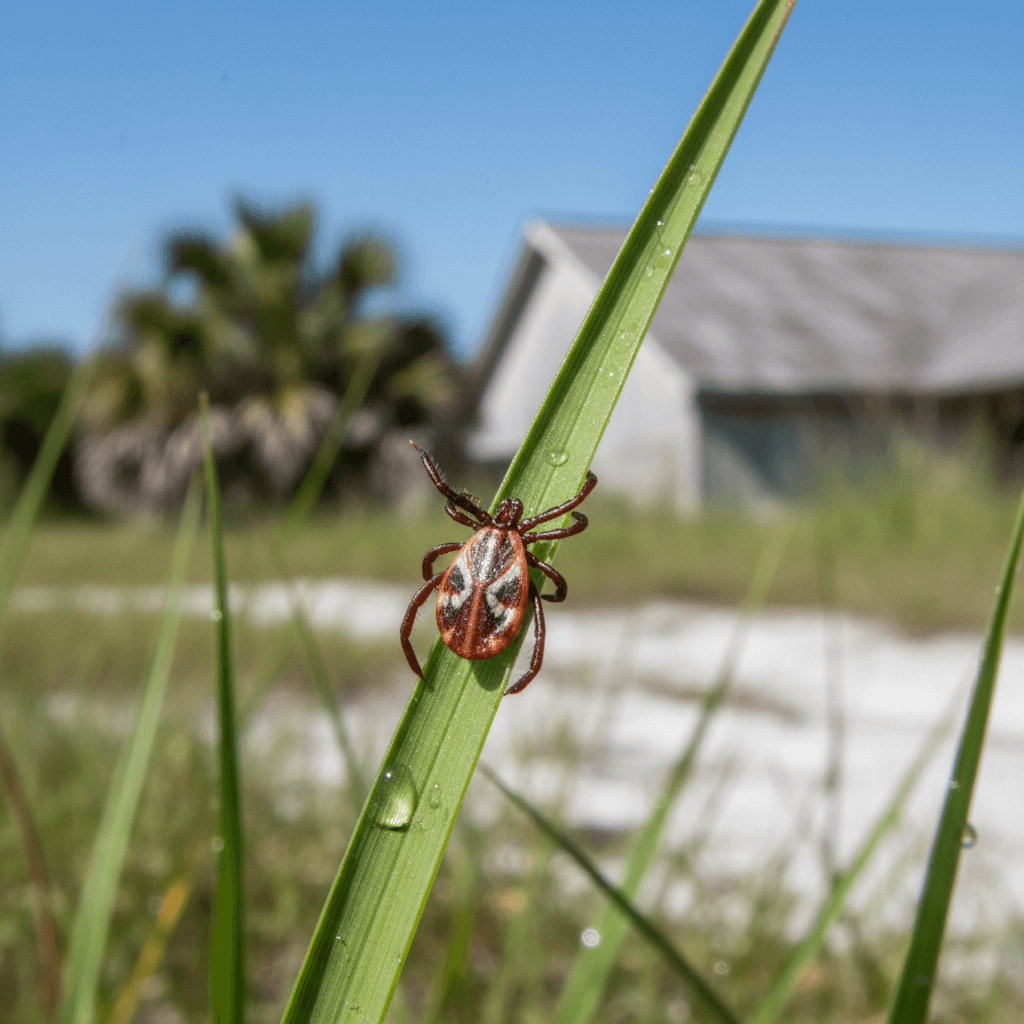
American dog ticks are reddish-brown with distinctive white or silvery markings on their dorsal shield (scutum). Adults are about 1/8 to 1/4 inch long before feeding, and they can engorge to much larger sizes after a blood meal. These ticks have eight legs, classifying them as arachnids, not insects.
Signs of Infestation
The most common sign is finding ticks crawling on your clothing, pets, or skin after spending time outdoors in grassy or wooded areas around Myrtle Beach. You might also notice unexplained bites or redness on your skin. Check pets regularly, especially around the ears, neck, and between the toes, as these ticks frequently hitch rides into your home.
Health Risks
American dog ticks can transmit diseases like Rocky Mountain spotted fever and tularemia, though these are relatively rare in coastal South Carolina. Their bites can cause localized irritation, itching, and in some individuals, allergic reactions. In rare cases, a heavy infestation can lead to anemia in pets.
Our Treatment Method
MBPC offers targeted treatments to control American dog ticks in your yard, focusing on areas where pets and humans frequent. Our licensed technicians will apply EPA-approved acaricides to reduce tick populations, in accordance with SC Department of Pesticide Regulation guidelines. We recommend regular yard maintenance in conjunction with professional treatments for optimal control in the Grand Strand area.
Prevention Tips
When spending time outdoors in Myrtle Beach, wear long sleeves and pants, and use insect repellent containing DEET. Check yourself and your pets thoroughly for ticks after being outside, and remove any attached ticks promptly and correctly. Keep your lawn mowed and clear brush and leaf litter around your home to reduce tick habitat in your SC yard.
Habitat
American dog ticks thrive in grassy fields, wooded areas, and along trails throughout the Myrtle Beach area. They prefer habitats with moderate humidity and dense vegetation, common along the salt marshes and tidal creeks. These ticks are most active from spring through summer in the humid subtropical climate of coastal SC.
Peak activity: Spring-Summer
Identification Photos
Frequently Asked Questions About American Dog Tick
Use fine-tipped tweezers to grasp the tick as close to the skin's surface as possible. Pull upward with steady, even pressure. Avoid twisting or jerking the tick, as this can cause the mouthparts to break off and remain in the skin. After removing the tick, clean the bite area with soap and water. Contact a doctor if you develop a rash or fever.
Yes, American dog ticks can transmit diseases to pets and cause localized irritation. Regularly check your pets for ticks, especially after walks in grassy or wooded areas. Use veterinarian-recommended tick preventatives to protect your furry friends from these pests in our coastal SC environment.
Keep your lawn mowed, remove leaf litter and brush, and create a barrier of wood chips or gravel between your lawn and wooded areas. Consider using a yard spray specifically designed to control ticks, or contact MBPC for professional tick control services in the Myrtle Beach area.
American dog ticks are most active from spring through summer in Myrtle Beach, when the weather is warm and humid. However, they can be active year-round during mild winters. Take precautions whenever you spend time outdoors, regardless of the season.
Don't Let Pests Win.
Take Back Your Home Today.
Every day you wait gives pests more time to multiply and cause damage. Our licensed technicians are ready to help — often the same day you call.
Free Inspection
No cost, no obligation
Same-Day Service
Fast response guaranteed
Eco-Friendly
Safe for family & pets
100% Guarantee
Pests return, so do we
Ready to get started?
Choose how you'd like to connect with us.
Available Mon-Fri 8am-6pm, Sat 9am-2pm