American Mink
Neogale vison
wildlifeHow to Identify
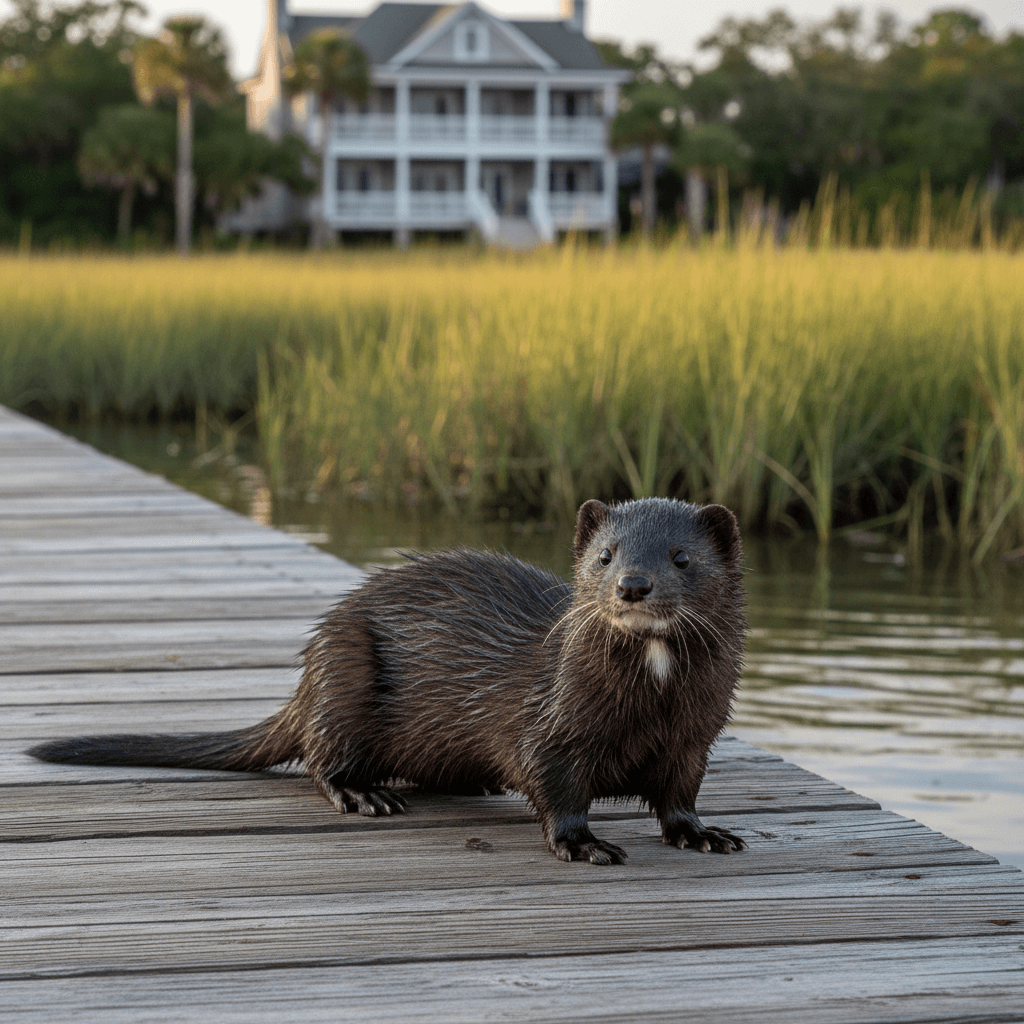
American minks are slender, semi-aquatic mammals with dark brown fur and a long, bushy tail. They have a streamlined body, small ears, and webbed feet, making them well-suited for swimming. A key identifier is a white patch on their chin or chest, though this isn't always present.
Signs of Infestation
Mink presence around your Myrtle Beach property is indicated by their distinctive musky odor, similar to that of a skunk but less intense. You may also find their droppings, which are dark and cylindrical, containing fur, feathers, or fish bones. Look for tracks near water sources or along the edges of your yard – they have five toes on each foot.
Health Risks
While minks are not typically aggressive towards humans, they can carry diseases and parasites that pose a risk to pets and, indirectly, humans in the Myrtle Beach area. Their presence can also be a nuisance, particularly if they prey on domestic fowl or create dens in inconvenient locations under decks or sheds.
Our Treatment Method
As a licensed pest control provider, MBPC focuses on humane wildlife management practices for American minks. We offer trapping and relocation services, ensuring compliance with SC Department of Natural Resources regulations. Our experienced technicians can also provide recommendations to modify your property to discourage mink activity along the Grand Strand.
Prevention Tips
To deter minks from your Myrtle Beach property, eliminate potential food sources by securing garbage cans and pet food. Clear away dense vegetation near water features to reduce cover. Seal any openings under decks or sheds to prevent them from establishing dens on your property.
Habitat
American minks are common in coastal South Carolina, thriving in habitats near water such as salt marshes, tidal creeks, and rivers. They prefer areas with dense vegetation for cover and abundant prey. In Myrtle Beach, they may be found near residential areas bordering waterways, seeking food sources like fish, amphibians, and rodents.
Peak activity: Year-Round
Identification Photos
Frequently Asked Questions About American Mink
While minks are not typically aggressive, they may prey on small pets like rabbits or chickens. They can also transmit diseases or parasites to dogs and cats. Keep pets supervised, especially near water sources, and ensure they are up-to-date on vaccinations.
Minks are smaller and darker than river otters, with a more slender body and shorter tail. Otters are larger, have lighter brown fur, and a broader, flatter tail. Otters are also more social and often seen in groups, while minks are generally solitary.
Do not attempt to handle or remove the mink yourself. Contact MBPC for humane trapping and relocation services. Disturbing a den can stress the animal and potentially lead to defensive behavior. Our licensed technicians can safely and legally address the situation.
American minks are classified as furbearers in South Carolina and are subject to hunting and trapping regulations. However, relocation requires a permit from the SC Department of Natural Resources. MBPC ensures all wildlife management practices are conducted in compliance with state laws and regulations.
Don't Let Pests Win.
Take Back Your Home Today.
Every day you wait gives pests more time to multiply and cause damage. Our licensed technicians are ready to help — often the same day you call.
Free Inspection
No cost, no obligation
Same-Day Service
Fast response guaranteed
Eco-Friendly
Safe for family & pets
100% Guarantee
Pests return, so do we
Ready to get started?
Choose how you'd like to connect with us.
Available Mon-Fri 8am-6pm, Sat 9am-2pm