Armyworm
Spodoptera frugiperda
insectsHow to Identify
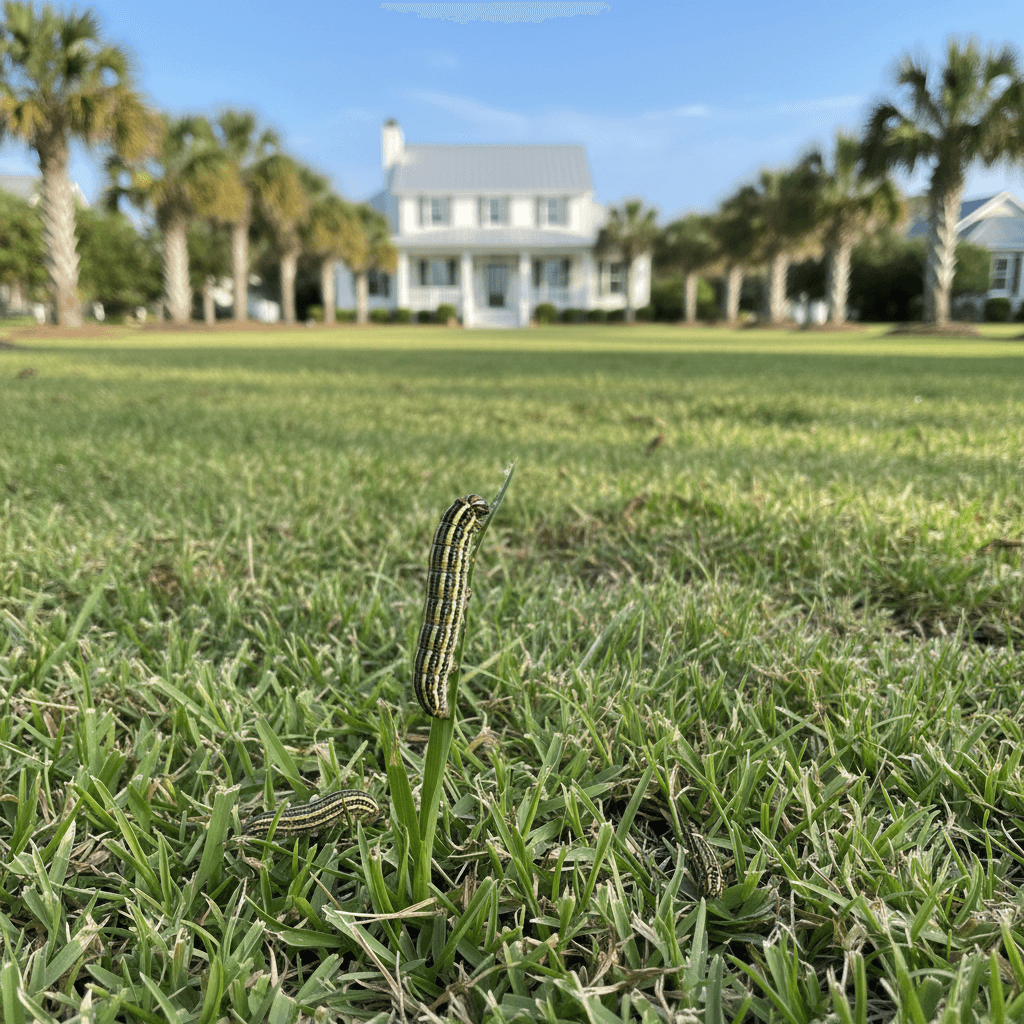
Armyworm caterpillars are smooth-skinned with stripes running lengthwise down their bodies, varying in color from green to brown to black as they mature. They can be identified by the inverted Y-shaped marking on their head capsule. Mature larvae can reach up to 1.5 inches in length.
Signs of Infestation
Homeowners in Myrtle Beach may notice rapidly defoliated lawns or garden plants. Check for ragged edges or skeletonized leaves on turfgrass and ornamental plants, as armyworms are voracious feeders. Large numbers of caterpillars may be observed migrating across lawns or paved surfaces in search of food.
Health Risks
Armyworms pose no direct health risks to humans or pets in Myrtle Beach. However, their rapid destruction of lawns and gardens can be a significant nuisance and lead to costly lawn repair or replacement. Severe infestations can also stress plants, making them more susceptible to disease.
Our Treatment Method
MBPC offers targeted insecticide applications to control armyworm infestations on Grand Strand properties. Our SC Department of Pesticide Regulation-licensed technicians use products specifically formulated to eliminate armyworms while minimizing impact on beneficial insects. We recommend prompt treatment to prevent extensive damage to your lawn or garden.
Prevention Tips
Maintain a healthy lawn by providing adequate water and fertilization, as healthy turfgrass is more resistant to armyworm damage. Regularly inspect your lawn and garden plants for signs of armyworm activity, especially during late summer and early fall. Remove thatch buildup to reduce armyworm harborage.
Habitat
Armyworms thrive in the warm, humid subtropical climate of coastal South Carolina. They are commonly found in lawns, pastures, and agricultural fields throughout the Grand Strand. Armyworm moths lay their eggs on grasses and other host plants, and the larvae feed on foliage.
Peak activity: Late Summer-Fall
Identification Photos
Frequently Asked Questions About Armyworm
Armyworms are not poisonous or harmful to pets in Myrtle Beach. However, it's best to keep pets away from treated areas until the insecticide has dried to prevent accidental ingestion.
Armyworm activity typically peaks in late summer and early fall in the Myrtle Beach area. Warm, humid weather favors their development and reproduction. Monitor your lawn and garden closely during this time.
Armyworms are voracious feeders and can cause significant damage to lawns in a very short period. A large infestation can decimate a lawn in a matter of days, especially in the sandy soils of Myrtle Beach.
Maintaining a healthy lawn and regularly inspecting for signs of armyworm activity can help prevent infestations. Contact MBPC for preventative treatment options to protect your Grand Strand property from armyworm damage.
Don't Let Pests Win.
Take Back Your Home Today.
Every day you wait gives pests more time to multiply and cause damage. Our licensed technicians are ready to help — often the same day you call.
Free Inspection
No cost, no obligation
Same-Day Service
Fast response guaranteed
Eco-Friendly
Safe for family & pets
100% Guarantee
Pests return, so do we
Ready to get started?
Choose how you'd like to connect with us.
Available Mon-Fri 8am-6pm, Sat 9am-2pm