Black-tailed Jackrabbit
Lepus californicus
wildlifeHow to Identify
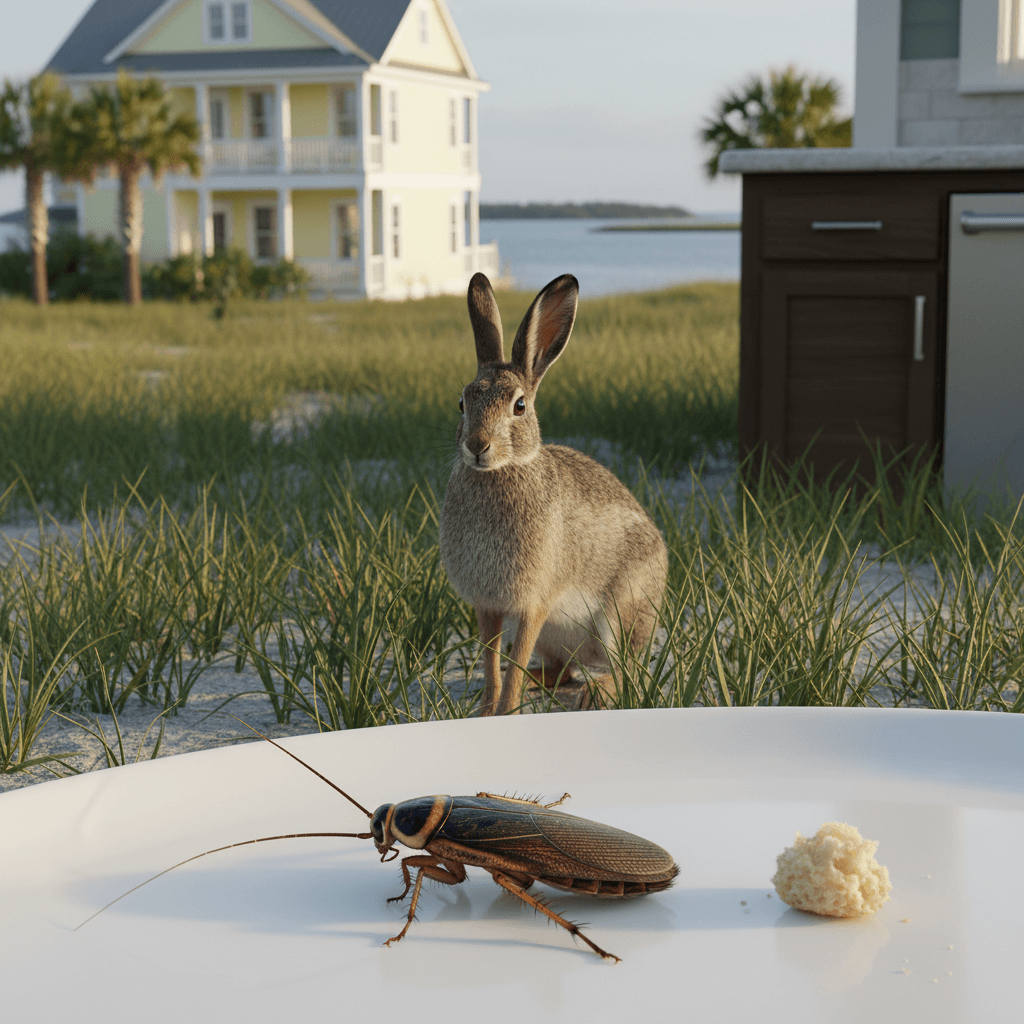
Black-tailed jackrabbits are large hares with distinctive black stripes on their long ears and a black stripe along the top of their tail. They have powerful hind legs adapted for running and leaping, and their fur is typically a grayish-brown color, providing excellent camouflage.
Signs of Infestation
In residential areas of Myrtle Beach, signs of jackrabbits include chewed vegetation in gardens and landscaping, especially seedlings and young plants. You may also find their oval-shaped droppings in yards or near gardens. Gnawing on low-lying tree bark can also indicate their presence.
Health Risks
While generally not aggressive, black-tailed jackrabbits can carry fleas and ticks, posing a potential risk of Lyme disease or other vector-borne illnesses to humans and pets in the Myrtle Beach area. Their foraging habits can also cause significant damage to gardens and crops.
Our Treatment Method
As a SC Department of Pesticide Regulation licensed company, MBPC focuses on humane wildlife management. We do not typically handle jackrabbits directly but can advise on deterrents and habitat modification. Contact the South Carolina Department of Natural Resources for relocation guidelines within the Grand Strand.
Prevention Tips
Protect gardens and landscaping with fencing, netting, or plant protectors, especially during peak growing seasons in Myrtle Beach. Remove brush piles and tall grass near your home to reduce harborage. Avoid leaving out pet food or other attractants that might draw them into your yard.
Habitat
Black-tailed jackrabbits prefer open areas with sparse vegetation, which can include grassy fields, coastal scrub, and even disturbed areas near residential developments along the Grand Strand. The mild winters and abundance of food in Myrtle Beach make it a suitable habitat.
Peak activity: Year-Round
Identification Photos
Frequently Asked Questions About Black-tailed Jackrabbit
While generally not aggressive, jackrabbits can carry fleas and ticks, which pose a risk of disease transmission to pets and humans. They can also damage gardens and landscaping.
Jackrabbits are attracted to yards with abundant food sources, such as gardens, landscaping, and low-lying vegetation. They also prefer areas with dense cover for shelter.
Fencing, netting, and plant protectors can help deter jackrabbits from feeding on garden plants. Removing brush piles and other sources of cover can also make your yard less attractive to them.
Relocating wildlife may be regulated. Contact the South Carolina Department of Natural Resources for guidance on trapping and relocation regulations in the Myrtle Beach area.
Don't Let Pests Win.
Take Back Your Home Today.
Every day you wait gives pests more time to multiply and cause damage. Our licensed technicians are ready to help — often the same day you call.
Free Inspection
No cost, no obligation
Same-Day Service
Fast response guaranteed
Eco-Friendly
Safe for family & pets
100% Guarantee
Pests return, so do we
Ready to get started?
Choose how you'd like to connect with us.
Available Mon-Fri 8am-6pm, Sat 9am-2pm