Black Vulture
Coragyps atratus
birdsHow to Identify
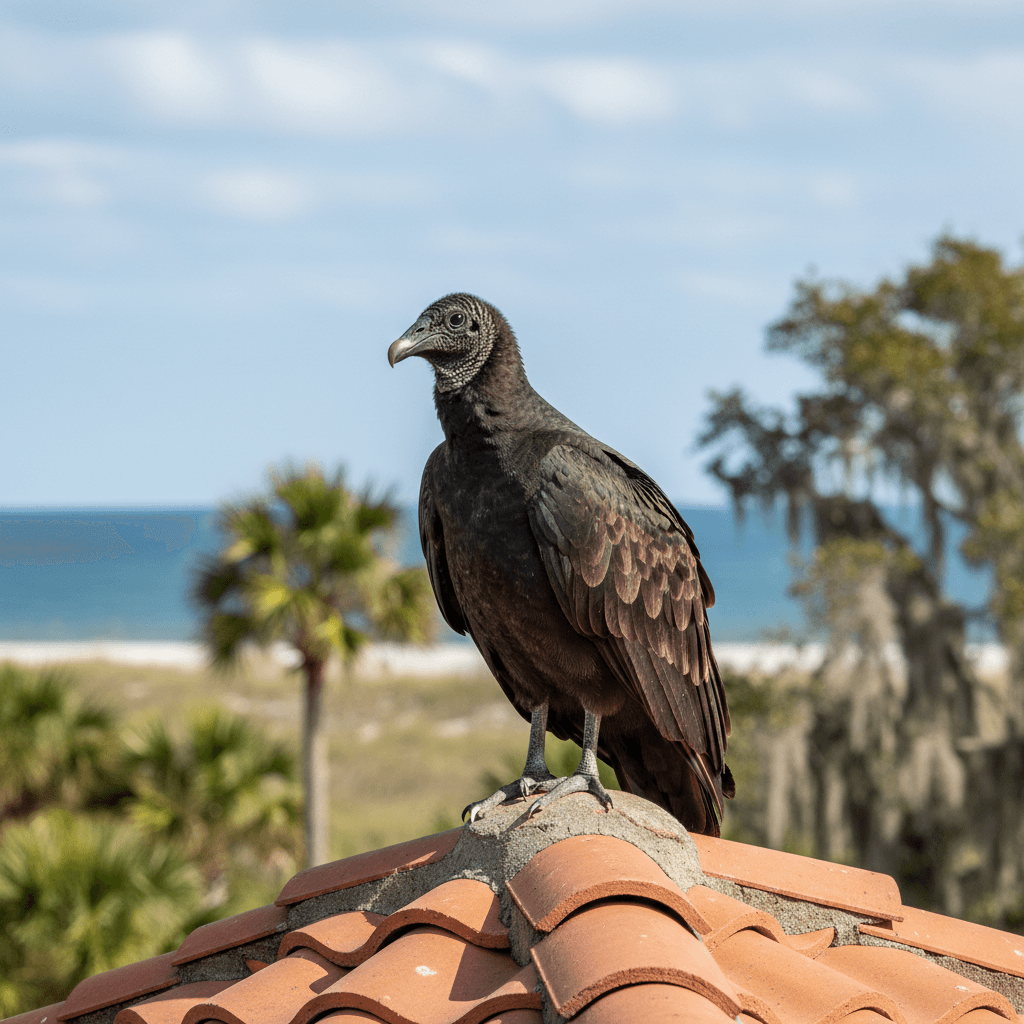
Black vultures are large, stocky birds with black plumage, a featherless black head, and short, rounded wings. They have a distinctive, almost tailless silhouette in flight, flapping their wings more frequently than turkey vultures. Adults have gray legs and feet.
Signs of Infestation
Homeowners may notice black vultures roosting on roofs, decks, or in trees on their property. They are known to damage property by tearing at rubber seals around windows and cars, canvas awnings, and pool covers. Large numbers of vultures can create sanitation concerns due to their droppings.
Health Risks
While black vultures do not directly attack humans, their droppings can carry bacteria and parasites that pose a health risk, especially to children and pets in Myrtle Beach. The accumulated waste can also damage property and create unpleasant odors. They can also cause damage to vehicles parked outdoors.
Our Treatment Method
MBPC can provide exclusion services to deter vultures from roosting on your property, in accordance with SC Department of Pesticide Regulation guidelines. Our trained technicians can install bird netting or other deterrents to protect vulnerable areas. Habitat modification, such as trimming trees, may also be recommended to discourage roosting.
Prevention Tips
Remove potential food sources, such as pet food or garbage, from your yard. Motion-activated sprinklers or noisemakers can deter vultures from roosting on your roof. Contact MBPC for professional advice on vulture deterrents suitable for your Myrtle Beach property.
Habitat
Black vultures are common in the coastal areas of South Carolina, including the Grand Strand. They prefer open areas near forests, roosting in trees, on utility poles, and on rooftops. The warm, humid subtropical climate of Myrtle Beach provides ideal conditions for these scavengers.
Peak activity: Year-Round
Identification Photos
Frequently Asked Questions About Black Vulture
Yes, black vultures are protected under the Migratory Bird Treaty Act. Lethal control is illegal without a permit from the U.S. Fish and Wildlife Service. MBPC can advise on humane, legal methods of deterring vultures from your Myrtle Beach property.
Vultures are attracted to areas with readily available food sources and suitable roosting sites. This may include open garbage cans, pet food left outdoors, or tall trees and buildings that provide a good vantage point in the Myrtle Beach area.
Regularly cleaning affected areas with a disinfectant solution can help minimize health risks and property damage. Consider covering vulnerable items with tarps or using bird deterrents to prevent vultures from roosting nearby on your Grand Strand property.
While the risk of direct disease transmission is low, vulture droppings can contain bacteria and parasites that are harmful to humans and pets. Always wear gloves and wash your hands thoroughly after cleaning up vulture waste around your Myrtle Beach home.
Don't Let Pests Win.
Take Back Your Home Today.
Every day you wait gives pests more time to multiply and cause damage. Our licensed technicians are ready to help — often the same day you call.
Free Inspection
No cost, no obligation
Same-Day Service
Fast response guaranteed
Eco-Friendly
Safe for family & pets
100% Guarantee
Pests return, so do we
Ready to get started?
Choose how you'd like to connect with us.
Available Mon-Fri 8am-6pm, Sat 9am-2pm