
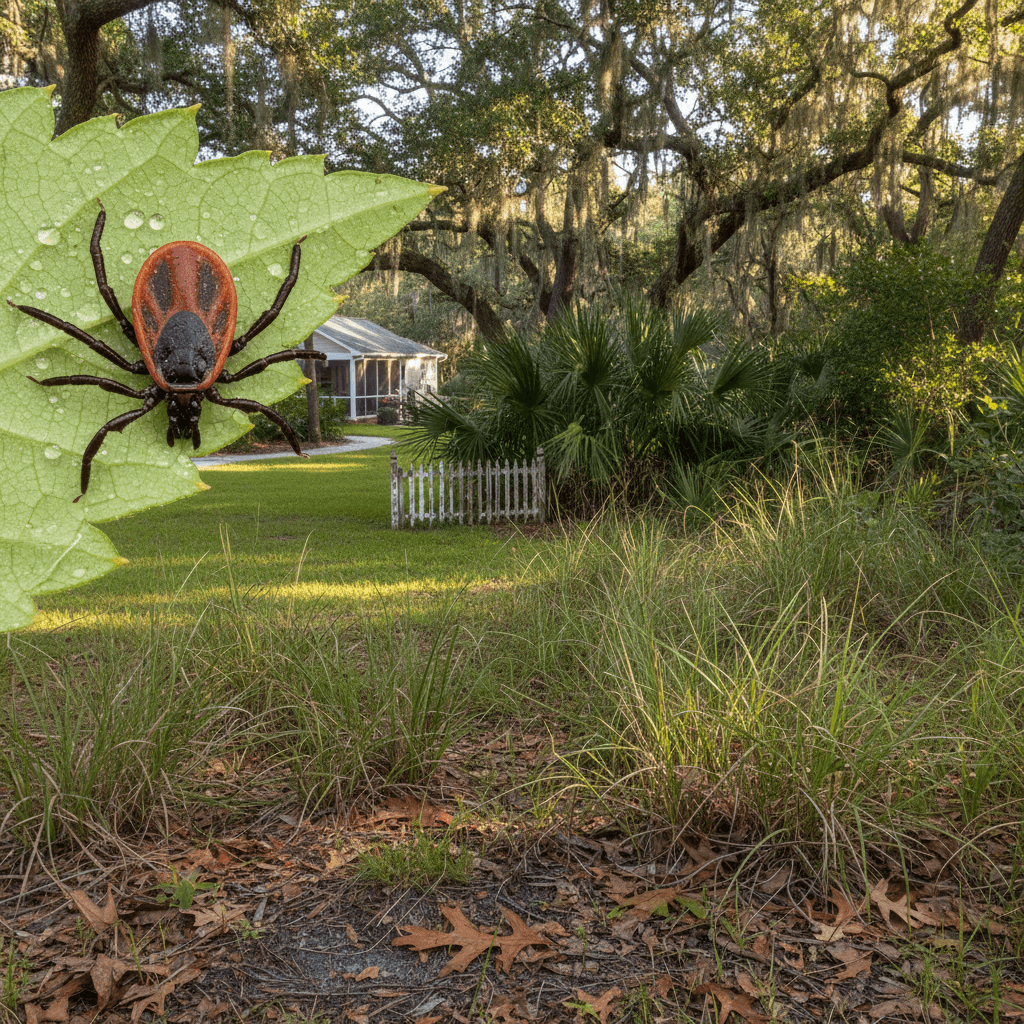
Blacklegged tick
Ixodes scapularis
arachnidsHow to Identify
Blacklegged ticks, also known as deer ticks, are small, about the size of a sesame seed, especially in the nymph stage. Adult females have a characteristic reddish-brown body with a black shield on their back, and all stages have eight legs.
Signs of Infestation
Blacklegged ticks don't infest homes but are brought onto properties by wildlife. Check yourself, your family, and pets for ticks after spending time in wooded or grassy areas. Finding a tick crawling on you or embedded in your skin is a sign of exposure in areas where they are prevalent.
Health Risks
Blacklegged ticks are a major vector of Lyme disease, anaplasmosis, and other serious illnesses. Prompt removal of attached ticks can reduce the risk of transmission. Due to the high prevalence of tick-borne diseases in the Southeast, including coastal SC, consult a doctor if you develop a rash or fever after a tick bite.
Our Treatment Method
MBPC offers perimeter treatments to reduce tick populations on your Grand Strand property, focusing on wooded edges and grassy areas. These treatments, applied by our SC Department of Pesticide Regulation-licensed technicians, target tick breeding grounds and host habitats, reducing the risk of tick encounters.
Prevention Tips
When spending time outdoors in Myrtle Beach, wear light-colored clothing to easily spot ticks. Use insect repellent containing DEET or picaridin. After being outdoors, check yourself, your family, and pets thoroughly for ticks, paying close attention to areas such as the hairline, behind the ears, and in skin folds.
Habitat
Blacklegged ticks thrive in the humid subtropical climate and wooded areas of Myrtle Beach and the Grand Strand. They are commonly found in tall grasses, shrubs, and leaf litter, especially near the edges of wooded properties and along walking trails. These ticks require moisture to survive, making coastal SC a prime habitat.
Peak activity: Spring-Fall
Identification Photos
Frequently Asked Questions About Blacklegged tick
Use fine-tipped tweezers to grasp the tick as close to the skin's surface as possible. Pull upward with steady, even pressure. Do not twist or jerk the tick; this can cause the mouthparts to break off and remain in the skin. After removing the tick, clean the area with soap and water.
Use veterinarian-recommended tick preventatives such as spot-on treatments, oral medications, or tick collars. Check your pets for ticks regularly, especially after spending time outdoors. Consult with your vet about Lyme disease vaccination for your pets, given its prevalence in coastal SC.
Early symptoms of Lyme disease may include a rash (often a bullseye pattern), fever, chills, fatigue, headache, muscle and joint aches, and swollen lymph nodes. If you experience these symptoms after a tick bite in the Myrtle Beach area, seek medical attention promptly.
Professional yard treatments from MBPC can significantly reduce tick populations around your home. Targeting known tick habitats like wooded edges, overgrown vegetation, and leaf litter is key. Regular treatments, especially during peak tick season, can help create a safer outdoor environment for your family and pets in Myrtle Beach.
Don't Let Pests Win.
Take Back Your Home Today.
Every day you wait gives pests more time to multiply and cause damage. Our licensed technicians are ready to help — often the same day you call.
Free Inspection
No cost, no obligation
Same-Day Service
Fast response guaranteed
Eco-Friendly
Safe for family & pets
100% Guarantee
Pests return, so do we
Ready to get started?
Choose how you'd like to connect with us.
Available Mon-Fri 8am-6pm, Sat 9am-2pm