Cabbage looper
Trichoplusia ni
insectsHow to Identify
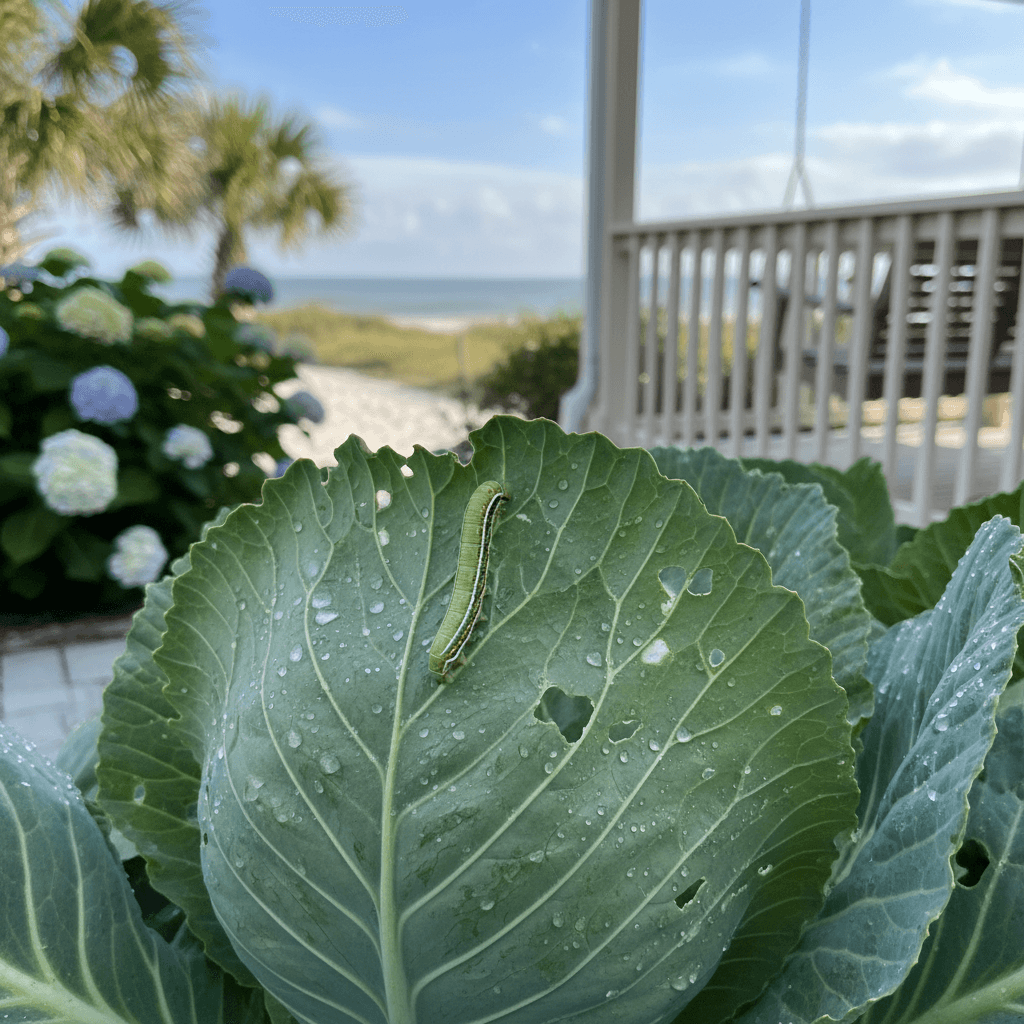
Cabbage loopers are pale green caterpillars, growing to about 1.5 inches long. They have a distinctive looping motion as they crawl, arching their back due to having fewer prolegs than other caterpillars. Adults are mottled gray-brown moths with a silvery figure-eight marking on their forewings.
Signs of Infestation
Look for irregular holes chewed in the leaves of garden vegetables, especially cabbage, broccoli, and other leafy greens. You may also find dark green frass (caterpillar droppings) on the affected plants. Heavy infestations can quickly defoliate plants, impacting yield in Myrtle Beach gardens.
Health Risks
Cabbage loopers do not pose a direct health risk to humans or pets in Myrtle Beach. However, the pesticides used to control them can be harmful if not applied correctly. It is best to consume produce thoroughly washed to remove any potential pesticide residue.
Our Treatment Method
MBPC offers environmentally conscious treatments for cabbage loopers, adhering to SC Department of Pesticide Regulation guidelines. Options include Bacillus thuringiensis (Bt) sprays, insecticidal soaps, and targeted pyrethroid applications. Our licensed technicians will assess your Grand Strand garden and recommend the most effective and safe approach.
Prevention Tips
Inspect your garden plants regularly for signs of infestation. Handpick caterpillars when possible and remove any infested leaves. Consider using row covers to protect susceptible plants, especially during peak cabbage looper season in Myrtle Beach.
Habitat
Cabbage loopers are common pests in gardens and agricultural fields throughout the Myrtle Beach area. They thrive in the warm, humid subtropical climate, feeding on a wide range of plants. They are often found in vegetable gardens, greenhouses, and occasionally on ornamental plants near coastal SC.
Peak activity: Spring-Fall
Identification Photos
Frequently Asked Questions About Cabbage looper
Cabbage loopers are not picky eaters! They prefer cabbage, broccoli, cauliflower, and other leafy greens commonly grown in Myrtle Beach gardens. They will also feed on tomatoes, beans, and other vegetables.
No, cabbage loopers are not dangerous to humans or pets. They are strictly a pest of garden plants and agricultural crops in our area. However, be cautious about pesticide use around pets and children in your Myrtle Beach yard.
Cabbage loopers have a distinctive looping motion as they crawl, arching their back because they only have prolegs near their rear. Other caterpillars move with a more wave-like motion. Also, the silvery mark on the moth makes it easy to spot in your Myrtle Beach garden at dusk.
Yes, you can prevent cabbage loopers organically in your Myrtle Beach garden! Bacillus thuringiensis (Bt) is a very effective organic control. Also, you can hand-pick caterpillars and use row covers to protect your plants.
Don't Let Pests Win.
Take Back Your Home Today.
Every day you wait gives pests more time to multiply and cause damage. Our licensed technicians are ready to help — often the same day you call.
Free Inspection
No cost, no obligation
Same-Day Service
Fast response guaranteed
Eco-Friendly
Safe for family & pets
100% Guarantee
Pests return, so do we
Ready to get started?
Choose how you'd like to connect with us.
Available Mon-Fri 8am-6pm, Sat 9am-2pm