Canada Goose
Branta canadensis
birdsHow to Identify
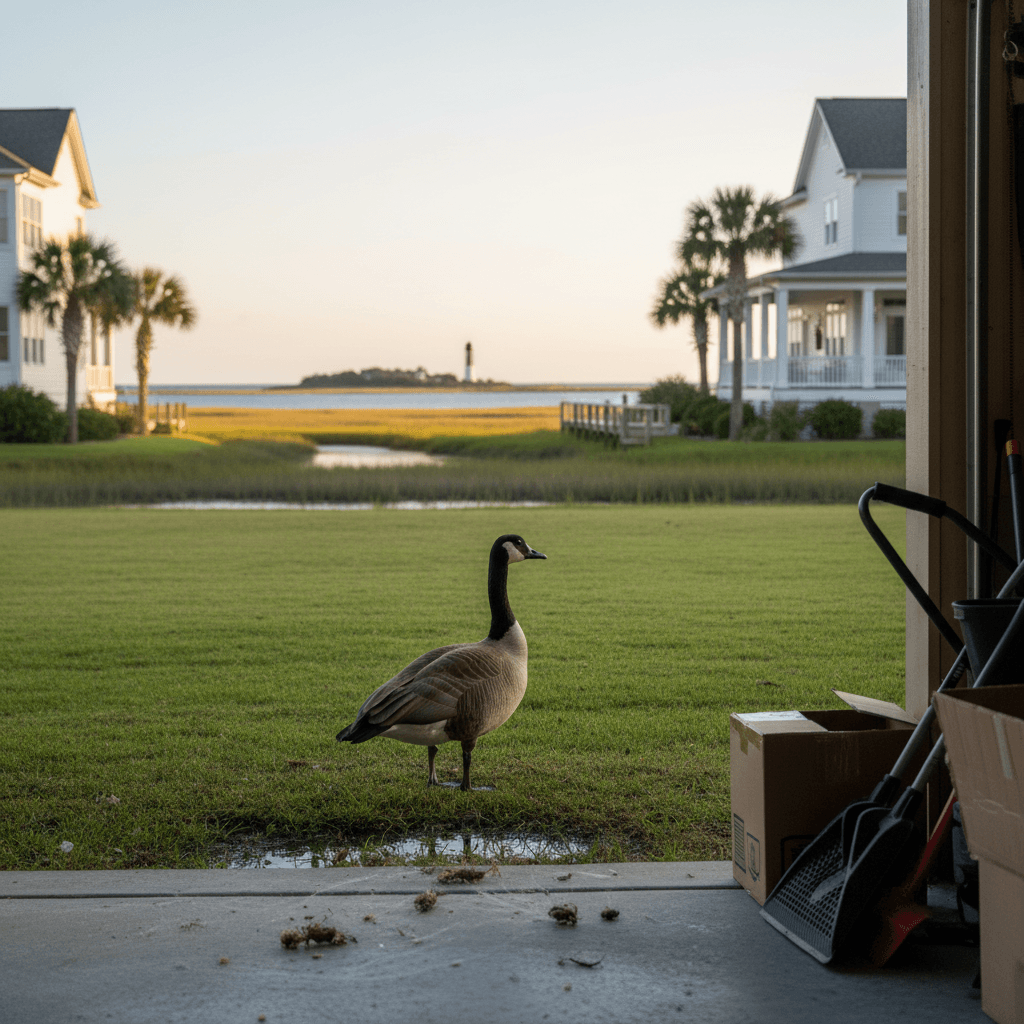
Canada geese are large waterfowl with a distinctive black head and neck, white cheek patches, and a brownish-gray body. They typically measure 2-4 feet in length with a wingspan of 4-6 feet. Their honking call is another easy way to identify them.
Signs of Infestation
An 'infestation' by Canada geese around Myrtle Beach properties is typically noticed by excessive droppings on lawns, walkways, and docks. You might also see them aggressively defending their territory, especially during nesting season. Grazing on lawns and gardens can also be a sign.
Health Risks
While Canada geese are not directly harmful, their droppings can pose a health risk due to bacteria like E. coli. Large accumulations of droppings can also contaminate water sources. Geese can also be aggressive towards people, especially when protecting their young in areas near Myrtle Beach.
Our Treatment Method
MBPC does not directly handle Canada goose removal, as they are a protected species. However, we can advise on deterrents and habitat modification methods in compliance with SC Department of Natural Resources regulations. For persistent issues, we can connect you with licensed wildlife management professionals in the Grand Strand area who specialize in humane goose control.
Prevention Tips
Avoid feeding Canada geese, as this encourages them to stay and congregate. Install fencing or netting around gardens and sensitive areas to deter them from grazing. Employ noise deterrents, such as ultrasonic devices, during peak activity times in Myrtle Beach.
Habitat
Canada geese thrive in areas with access to open water and grassy areas. In coastal South Carolina, they are commonly found on golf courses, parks, and near ponds, lakes, and salt marshes. The mild winters and abundant food sources in Myrtle Beach make it an attractive year-round habitat.
Peak activity: Year-Round
Identification Photos
Frequently Asked Questions About Canada Goose
Yes, Canada geese are protected under the Migratory Bird Treaty Act. Any lethal control measures require permits from the US Fish & Wildlife Service and the SC Department of Natural Resources. Non-lethal deterrents are the preferred method for managing goose populations in Myrtle Beach.
Golf courses provide ideal habitat for Canada geese: plenty of short grass for grazing, open water, and few predators. The mild climate in Myrtle Beach allows them to thrive year-round. Golf courses are a frequent gathering place.
Regularly cleaning up droppings is important to minimize health risks. You can also try using goose repellent sprays or granules, but their effectiveness may vary. Consider hiring a professional wildlife management company to implement deterrent strategies on your Myrtle Beach property.
Canada geese can be aggressive, especially during nesting season when protecting their young. It's best to keep a safe distance and avoid approaching them, especially if they exhibit defensive behaviors like hissing or flapping their wings. This is particularly relevant in public spaces across Myrtle Beach.
Don't Let Pests Win.
Take Back Your Home Today.
Every day you wait gives pests more time to multiply and cause damage. Our licensed technicians are ready to help — often the same day you call.
Free Inspection
No cost, no obligation
Same-Day Service
Fast response guaranteed
Eco-Friendly
Safe for family & pets
100% Guarantee
Pests return, so do we
Ready to get started?
Choose how you'd like to connect with us.
Available Mon-Fri 8am-6pm, Sat 9am-2pm