Casemaking clothes moth
Tinea pellionella
insectsHow to Identify
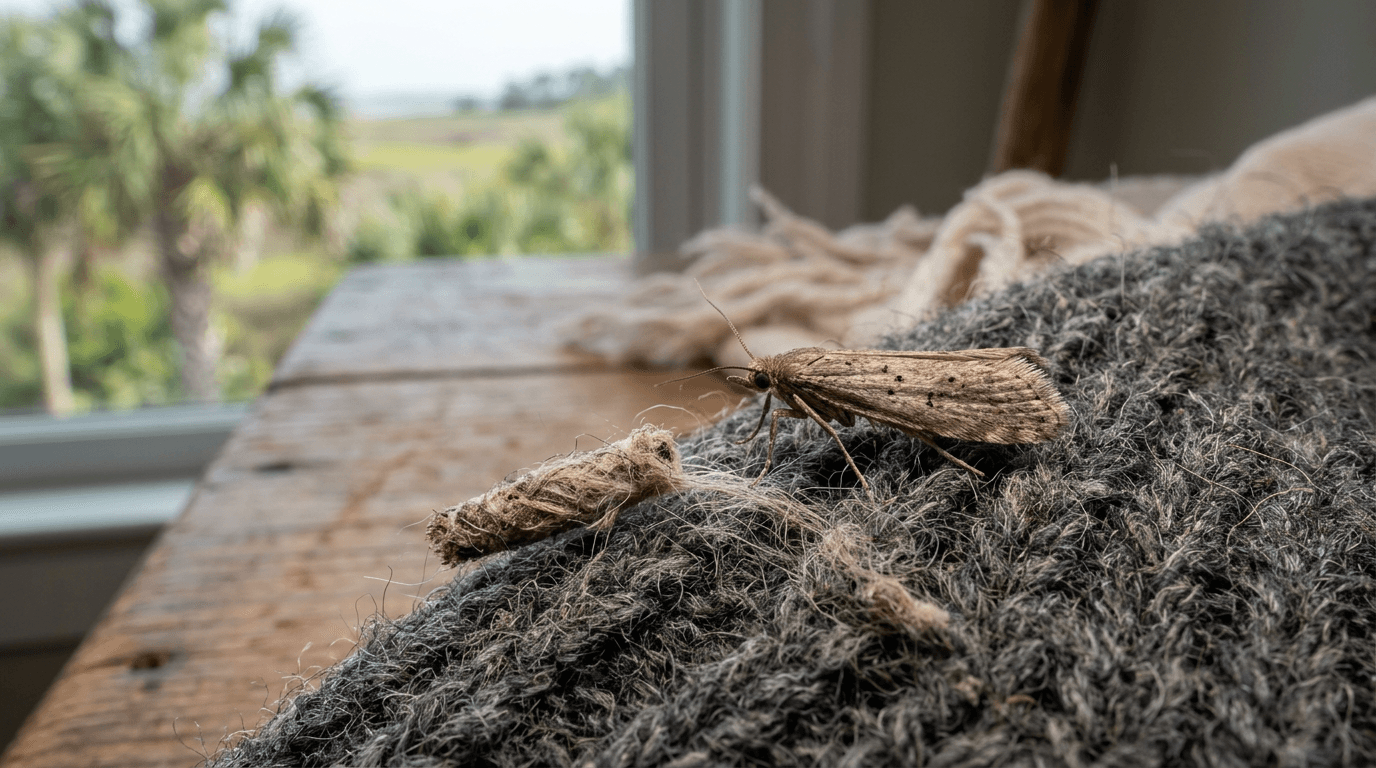
Casemaking clothes moths are small, about 1/4 inch long, with buff-colored wings. The larvae are more distinctive, creating small, silken cases around themselves that they carry as they move and feed. These cases are often made from the same material the larvae are feeding on, providing camouflage.
Signs of Infestation
Look for small, cylindrical cases (about 1/4 to 1/2 inch long) on clothing, carpets, or upholstery. You might also notice irregular holes in fabrics, especially those made of wool, silk, or other natural fibers. Larval droppings, which resemble fine grains of sand, may also be present near infested items in your Myrtle Beach home.
Health Risks
Casemaking clothes moths don't pose direct health risks to humans in Myrtle Beach. However, their feeding habits can cause significant damage to clothing, textiles, and other valuable items in your home. Allergic reactions to moth larvae or their shed skins are possible, especially in sensitive individuals.
Our Treatment Method
MBPC offers targeted treatments for casemaking clothes moths, focusing on eliminating larvae and preventing further damage. Our SC Department of Pesticide Regulation-licensed technicians may recommend thorough vacuuming, laundering infested items, and applying appropriate insecticides to affected areas. Preventative strategies are also crucial in the humid Grand Strand climate.
Prevention Tips
Regularly vacuum carpets, rugs, and upholstery in your Myrtle Beach home. Store clothing in airtight containers or garment bags, especially natural fiber items like wool and silk. Consider using cedar chips or mothballs in closets and storage areas to deter moths, but be mindful of ventilation.
Habitat
Casemaking clothes moths thrive in dark, undisturbed areas where natural fibers are stored, such as closets, attics, and storage units in coastal SC homes. They prefer humid environments, making Myrtle Beach's climate ideal for their survival. They can be found infesting carpets, rugs, clothing, upholstery, and other textiles.
Peak activity: Year-Round
Identification Photos
Frequently Asked Questions About Casemaking clothes moth
Contact Myrtle Beach Pest Control for professional treatment. We can identify the source of the infestation and recommend effective methods, including targeted insecticide applications and preventative measures specific to the Grand Strand's climate.
No, they are not dangerous to humans in Myrtle Beach, but they can cause significant damage to clothing, upholstery, and other textiles made of natural fibers. The larvae are the destructive stage.
Casemaking clothes moths are attracted to keratin, a protein found in natural fibers like wool, silk, and fur. They also prefer dark, undisturbed areas with high humidity, making many Myrtle Beach homes susceptible.
Store clean clothes in airtight containers or garment bags, regularly vacuum closets and storage areas, and consider using cedar products or mothballs as deterrents in your Myrtle Beach home.
Don't Let Pests Win.
Take Back Your Home Today.
Every day you wait gives pests more time to multiply and cause damage. Our licensed technicians are ready to help — often the same day you call.
Free Inspection
No cost, no obligation
Same-Day Service
Fast response guaranteed
Eco-Friendly
Safe for family & pets
100% Guarantee
Pests return, so do we
Ready to get started?
Choose how you'd like to connect with us.
Available Mon-Fri 8am-6pm, Sat 9am-2pm