Chinch Bug
Blissus leucopterus
insectsHow to Identify
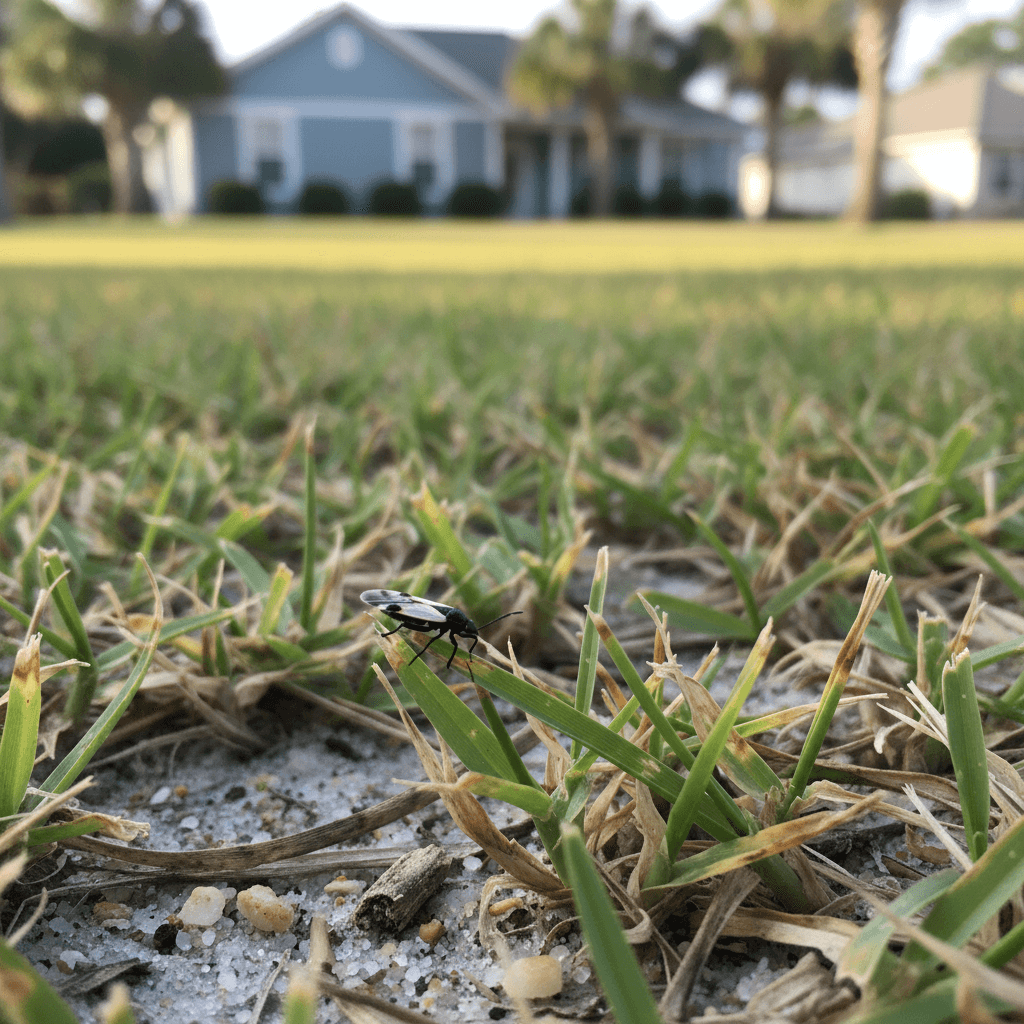
Chinch bugs are small, about 1/5 inch long, with a black body and white wings. Nymphs are reddish with a white band across their abdomen. Adults have fully developed wings and a characteristic white marking on their back.
Signs of Infestation
Look for irregular patches of yellowing or dead grass, especially during hot, dry periods in your Myrtle Beach lawn. Chinch bugs feed on grass blades, injecting toxins that cause the grass to turn brown and die. Check at the edges of damaged areas, looking for the small, dark-colored bugs near the soil surface.
Health Risks
Chinch bugs do not directly pose a health risk to humans or pets in Myrtle Beach. However, their feeding habits can destroy lawns, leading to increased allergens from exposed soil and dust. Dead and dying lawns can also attract other unwanted pests.
Our Treatment Method
MBPC offers targeted treatments for chinch bug infestations in Myrtle Beach, SC, using products approved by the SC Department of Pesticide Regulation. We recommend a thorough lawn inspection to assess the extent of the damage and then applying a liquid insecticide to the affected areas. Preventative treatments are also available to protect your Grand Strand lawn from future infestations.
Prevention Tips
Maintain a healthy lawn by watering deeply and infrequently, and avoid over-fertilizing with nitrogen, a common mistake on the Grand Strand. Remove excessive thatch buildup, as it provides shelter for chinch bugs. Consider using chinch bug-resistant varieties of turfgrass when establishing or renovating your Myrtle Beach lawn.
Habitat
Chinch bugs thrive in warm, sunny areas with dry soil, making Myrtle Beach lawns an ideal habitat, especially St. Augustine and Zoysia grasses. They are commonly found in coastal South Carolina due to the humid subtropical climate and sandy soils. Chinch bugs can survive year-round in our mild winters.
Peak activity: Spring-Summer
Identification Photos
Frequently Asked Questions About Chinch Bug
Chinch bugs suck sap from grass blades, injecting toxins that cause the grass to turn yellow, then brown, and eventually die. This creates irregular dead patches in the lawn, often mistaken for drought stress in our hot Myrtle Beach summers.
Carefully examine the edges of the damaged areas. Spread the grass blades and look for the small, dark-colored chinch bugs moving near the soil surface. You can also try the 'flotation test' – cut the bottom out of a coffee can, push it into the soil, fill with water, and watch for chinch bugs to float to the surface.
Chinch bug damage is most common during hot, dry periods in late spring and summer in Myrtle Beach. They thrive in these conditions and can quickly decimate a lawn if left untreated. Keep an eye on your lawn during these times and water appropriately to avoid stress.
Yes! Maintain a healthy lawn by watering deeply and infrequently, avoiding over-fertilization, and removing excessive thatch. Chinch bug-resistant turfgrass varieties are also available. Contact MBPC for preventative treatment options tailored to our coastal SC environment.
Don't Let Pests Win.
Take Back Your Home Today.
Every day you wait gives pests more time to multiply and cause damage. Our licensed technicians are ready to help — often the same day you call.
Free Inspection
No cost, no obligation
Same-Day Service
Fast response guaranteed
Eco-Friendly
Safe for family & pets
100% Guarantee
Pests return, so do we
Ready to get started?
Choose how you'd like to connect with us.
Available Mon-Fri 8am-6pm, Sat 9am-2pm