
Cicada
Magicicada spp.
insectsHow to Identify
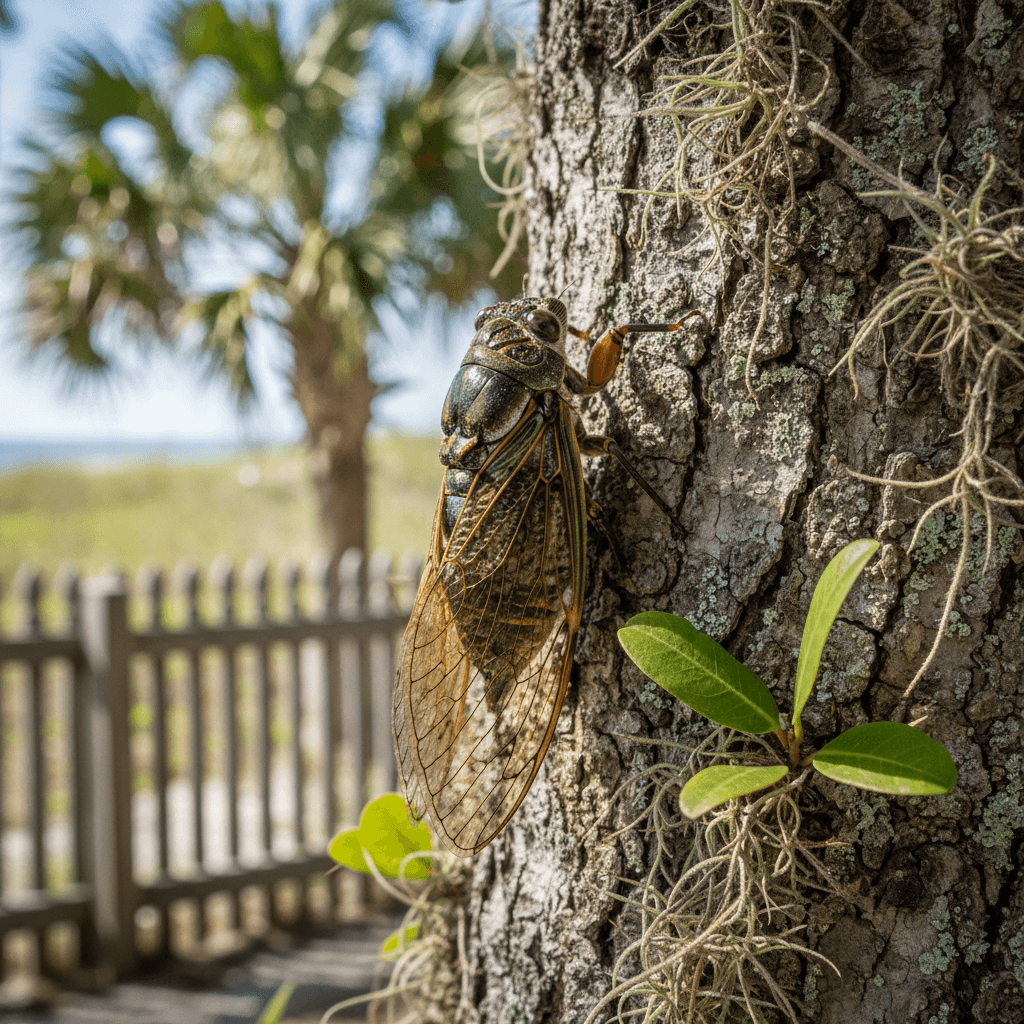
Cicadas are large, stout-bodied insects with prominent eyes and membranous wings. They are typically black or brown with green or orange markings, ranging from 1 to 2 inches in length. The most distinctive feature is the loud buzzing or clicking sound produced by males to attract mates.
Signs of Infestation
While cicadas don't infest homes, their presence is noticeable due to their loud mating calls and sheer numbers during emergence years. You may observe brown, twig-like remains of egg-laying sites on tree branches, indicating where females have deposited their eggs. Large numbers of shed exoskeletons on trees and the ground are also common signs.
Health Risks
Cicadas do not bite or sting and pose no direct health threat to humans or pets in Myrtle Beach. Their sheer numbers and loud noises can be a nuisance during emergence periods. The egg-laying activity of female cicadas can cause minor damage to young trees, but rarely causes significant harm in residential landscapes along the Grand Strand.
Our Treatment Method
Since cicadas don't typically require control, MBPC does not offer specific treatments for them. The SC Department of Pesticide Regulation recommends protecting young trees with netting during heavy emergence years. Our licensed technicians can advise on protecting your landscape plants from cicada egg-laying if needed.
Prevention Tips
Protect young or vulnerable trees with netting or cheesecloth during cicada emergence periods to prevent egg-laying damage. Avoid planting new trees in areas known for heavy cicada activity. Raking up and disposing of fallen twigs and branches with egg-laying damage can help reduce future populations in your Myrtle Beach yard.
Habitat
Cicadas are found in a variety of habitats throughout Myrtle Beach and coastal South Carolina, especially areas with mature trees. They spend most of their lives underground as nymphs, feeding on tree roots. The humid subtropical climate and abundant vegetation of the Grand Strand provide ideal conditions for cicada populations.
Peak activity: Spring-Summer
Identification Photos
Frequently Asked Questions About Cicada
Cicadas are not dangerous to humans or pets. They do not bite, sting, or carry diseases. While their loud noise can be annoying, they are generally harmless insects in Myrtle Beach.
Most cicadas live for several years as nymphs underground, feeding on tree roots. After emerging as adults, they typically live for only a few weeks, focusing on mating and laying eggs. Periodical cicadas can live for 13 or 17 years underground before emerging.
The loud buzzing or clicking sounds you hear are male cicadas singing to attract mates. These calls are a common sound of summer in Myrtle Beach and throughout the Southeast.
Female cicadas can cause minor damage to young trees when they lay their eggs in small branches. This can sometimes cause the branches to die off, but rarely causes significant harm to mature trees in the Myrtle Beach area. Protecting young trees with netting can prevent this damage.
Don't Let Pests Win.
Take Back Your Home Today.
Every day you wait gives pests more time to multiply and cause damage. Our licensed technicians are ready to help — often the same day you call.
Free Inspection
No cost, no obligation
Same-Day Service
Fast response guaranteed
Eco-Friendly
Safe for family & pets
100% Guarantee
Pests return, so do we
Ready to get started?
Choose how you'd like to connect with us.
Available Mon-Fri 8am-6pm, Sat 9am-2pm