Cliff Swallow
Petrochelidon pyrrhonota
birdsHow to Identify
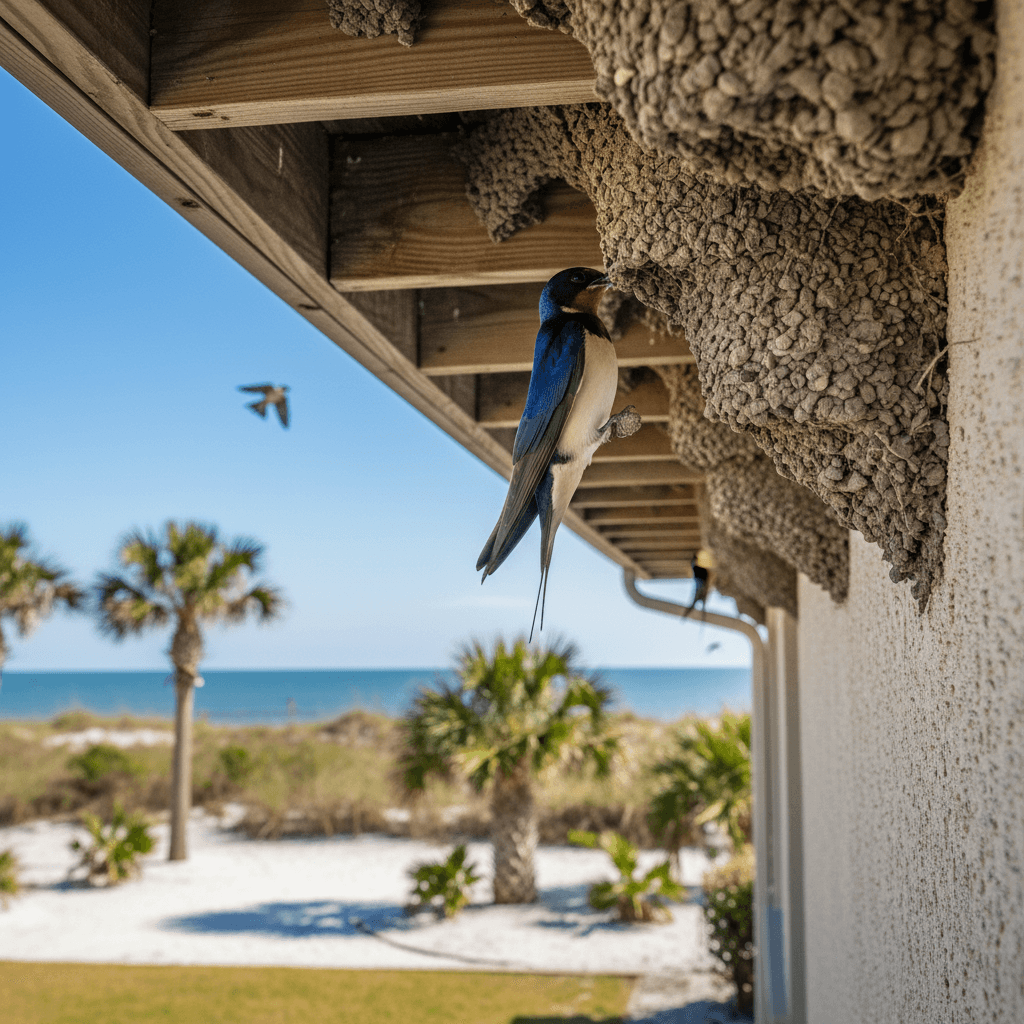
Cliff swallows are small birds with a distinctive square tail, a white forehead patch, and a rufous (reddish-brown) throat. They have dark iridescent blue-black backs and wings, and pale underparts. These birds are often seen flying in large groups near their nesting sites.
Signs of Infestation
The most obvious sign of cliff swallow activity is the presence of their mud nests, often built in colonies under eaves, bridges, or other structures. Large numbers of birds may gather, creating noise and potential mess from droppings. Nesting activity increases dramatically during the spring and summer months in Myrtle Beach.
Health Risks
While cliff swallows themselves do not pose a direct health threat, their droppings can accumulate and create unsanitary conditions around Myrtle Beach properties. Bird droppings can carry diseases like histoplasmosis. Large nesting colonies can also attract other pests such as mites and insects.
Our Treatment Method
MBPC provides exclusion services to prevent cliff swallows from nesting on your Grand Strand property. As cliff swallows are protected by federal law, relocation or nest removal during the nesting season requires permits from the SC Department of Natural Resources. We prioritize humane and legal solutions to manage bird populations.
Prevention Tips
Install bird netting or barriers under eaves and overhangs before the nesting season begins in the spring. Regularly clean up any bird droppings to prevent health hazards and property damage around your Myrtle Beach home. Consider architectural modifications to deter nesting, but be mindful of legal protections for migratory birds.
Habitat
Cliff swallows are common in coastal South Carolina, including Myrtle Beach, building nests under bridges, cliffs, and buildings. They thrive in open areas near water sources, readily adapting to human-made structures. Their presence is especially noticeable near salt marshes and tidal creeks, offering abundant insect food sources.
Peak activity: Spring-Summer
Identification Photos
Frequently Asked Questions About Cliff Swallow
Yes, cliff swallows are protected under the Migratory Bird Treaty Act. Disturbing or destroying active nests is illegal without proper permits from the US Fish and Wildlife Service and the SC Department of Natural Resources. Contact MBPC for legally compliant solutions.
Cliff swallows can create unsanitary conditions due to their droppings, which can stain buildings and potentially spread diseases. Large colonies can be noisy and create an unsightly mess around homes and businesses in the Myrtle Beach area. They can also attract other pests, such as bird mites.
The best time to prevent cliff swallows from nesting is before they begin building their nests in the spring. Once nesting begins, it becomes more difficult and requires permits to disturb the birds or their nests. Contact MBPC for preventative solutions before the nesting season begins in Myrtle Beach.
MBPC offers exclusion services to prevent cliff swallows from nesting on your property. This involves installing bird netting or other barriers to block access to nesting sites. We follow humane and legal practices, ensuring compliance with all applicable laws and regulations in the Grand Strand area.
Don't Let Pests Win.
Take Back Your Home Today.
Every day you wait gives pests more time to multiply and cause damage. Our licensed technicians are ready to help — often the same day you call.
Free Inspection
No cost, no obligation
Same-Day Service
Fast response guaranteed
Eco-Friendly
Safe for family & pets
100% Guarantee
Pests return, so do we
Ready to get started?
Choose how you'd like to connect with us.
Available Mon-Fri 8am-6pm, Sat 9am-2pm