Common Raven
Corvus corax
birdsHow to Identify
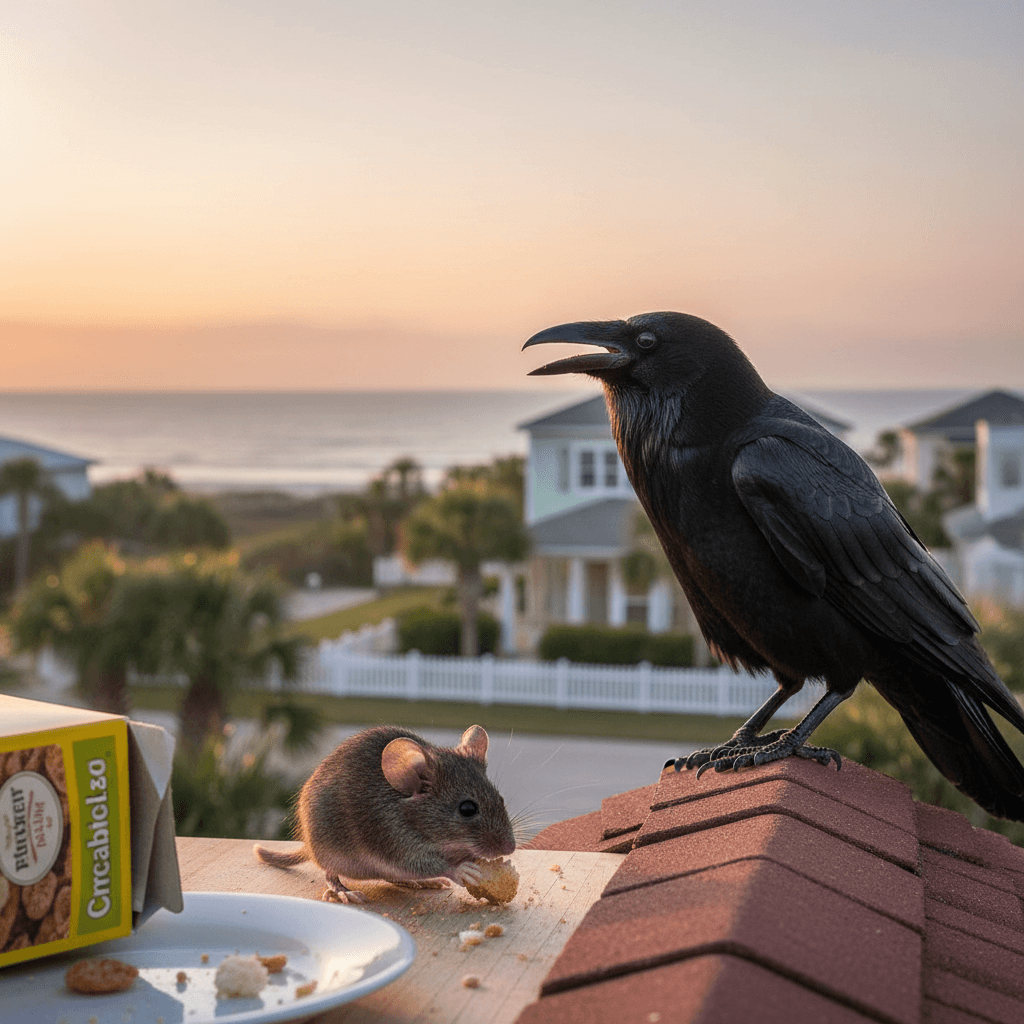
Common Ravens are large, black birds with a thick bill and shaggy throat feathers. They are larger than crows, with a wingspan of over four feet. Their call is a deep, croaking sound, distinct from the caw of a crow.
Signs of Infestation
While not an 'infestation' in the traditional sense, look for signs of ravens if you find large amounts of garbage scattered or persistent loud vocalizations. They may also leave droppings on outdoor furniture or structures.
Health Risks
Ravens themselves pose minimal direct health risks to humans in Myrtle Beach. However, their presence can indicate underlying issues like exposed garbage or dead animals, which can attract other pests and pose sanitary concerns. They can also damage property while searching for food.
Our Treatment Method
MBPC does not typically handle raven issues directly. Management primarily involves habitat modification and exclusion techniques. If ravens are causing significant property damage, consult with a wildlife specialist or the SC Department of Natural Resources (SCDNR) for guidance.
Prevention Tips
Secure garbage cans tightly to prevent ravens from accessing food scraps. Avoid leaving pet food outside and clean up any spilled birdseed promptly. Minimize potential nesting sites by trimming trees and removing debris from your property in Myrtle Beach.
Habitat
Common Ravens can be found in a variety of habitats, including coastal areas, forests, and urban environments. In Myrtle Beach, they may be seen scavenging along the beaches or in residential areas, taking advantage of readily available food sources.
Peak activity: Year-Round
Identification Photos
Frequently Asked Questions About Common Raven
Ravens are protected under the Migratory Bird Treaty Act. It is illegal to harm, harass, or kill them without a permit from the U.S. Fish and Wildlife Service, as well as authorization from SCDNR.
Ravens are attracted to readily available food sources, such as unsecured garbage, pet food left outdoors, and carrion. Open compost piles and bird feeders can also draw them in.
Ravens are generally not a threat to adult pets but may pose a risk to very small animals like kittens or puppies. They might also harass pets if they feel threatened or are competing for food.
Focus on removing food sources and potential nesting sites. Secure garbage cans, keep pet food indoors, and trim trees. Using visual deterrents like shiny objects or scarecrows might provide temporary relief.
Don't Let Pests Win.
Take Back Your Home Today.
Every day you wait gives pests more time to multiply and cause damage. Our licensed technicians are ready to help — often the same day you call.
Free Inspection
No cost, no obligation
Same-Day Service
Fast response guaranteed
Eco-Friendly
Safe for family & pets
100% Guarantee
Pests return, so do we
Ready to get started?
Choose how you'd like to connect with us.
Available Mon-Fri 8am-6pm, Sat 9am-2pm