Double-crested cormorant
Nannopterum auritum
birdsHow to Identify
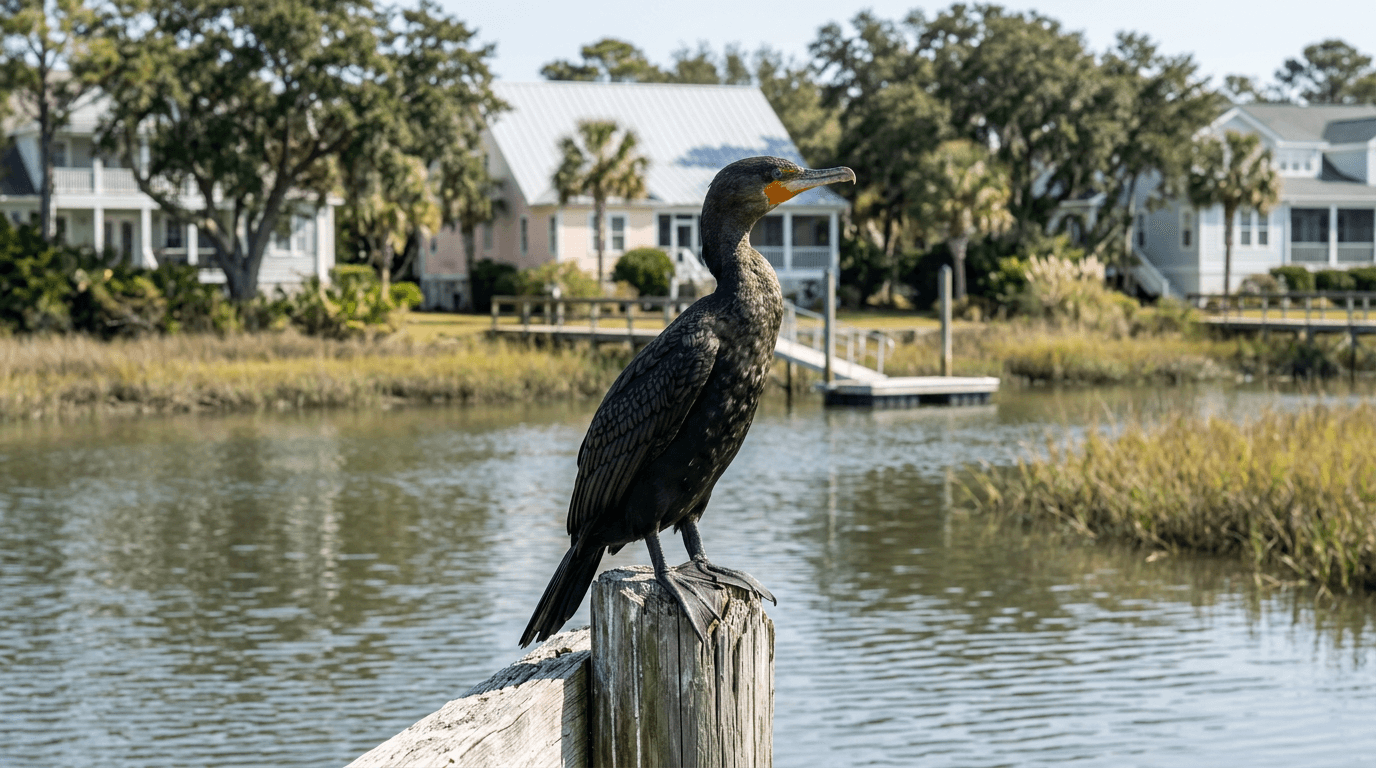
The double-crested cormorant is a large, black waterbird with a long, hooked bill and an orange throat pouch. During breeding season, adults develop small crests on either side of their head, giving them their name. Juveniles are brownish in color.
Signs of Infestation
While not an infestation in the traditional sense, large numbers of cormorants can be a nuisance. Look for excessive droppings on docks, boats, and other waterfront structures. Dead fish or unpleasant odors may also be present near roosting sites.
Health Risks
Cormorant droppings can be corrosive and unsightly, potentially damaging property in Myrtle Beach. Although they do not directly attack humans, large concentrations of bird droppings can harbor bacteria and fungi that pose a minor health risk, particularly to those with compromised immune systems or respiratory issues.
Our Treatment Method
MBPC does not typically handle cormorant control directly, as they are protected under the Migratory Bird Treaty Act. However, we can advise on deterrent methods and connect you with wildlife management specialists licensed by the SC Department of Natural Resources if needed for severe issues impacting Grand Strand properties.
Prevention Tips
To discourage cormorants from roosting on your property, consider installing bird netting, spikes, or other deterrents on docks and boat houses. Regularly clean up bird droppings to prevent buildup. Avoid feeding wild birds, as this can attract larger flocks.
Habitat
Double-crested cormorants are common along the coast of South Carolina, including Myrtle Beach. They prefer to nest and roost near water, utilizing docks, pilings, islands, and trees near salt marshes and tidal creeks. Their presence is especially noticeable during migration and winter.
Peak activity: Year-Round
Identification Photos
Frequently Asked Questions About Double-crested cormorant
Yes, double-crested cormorants are protected under the Migratory Bird Treaty Act. This means that it is illegal to harm, harass, or kill them without a permit. In Myrtle Beach, you should contact the SC DNR for guidance on managing any cormorant issues.
Myrtle Beach's coastal location and abundant fish populations make it an ideal habitat for cormorants. They are attracted to the area's waterways and readily available food sources, especially during migration and winter.
Effective cormorant management involves a combination of deterrents and habitat modification. Contact a wildlife specialist familiar with SC regulations for guidance. MBPC can advise on property modifications to make your property less attractive to these birds.
While cormorants are a natural part of the ecosystem, large populations can impact local fish stocks and vegetation in Myrtle Beach. Their droppings can also contribute to nutrient pollution in waterways. A balanced approach to management is essential to maintain a healthy environment.
Don't Let Pests Win.
Take Back Your Home Today.
Every day you wait gives pests more time to multiply and cause damage. Our licensed technicians are ready to help — often the same day you call.
Free Inspection
No cost, no obligation
Same-Day Service
Fast response guaranteed
Eco-Friendly
Safe for family & pets
100% Guarantee
Pests return, so do we
Ready to get started?
Choose how you'd like to connect with us.
Available Mon-Fri 8am-6pm, Sat 9am-2pm