Drywood termite
Cryptotermes brevis
insectsHow to Identify
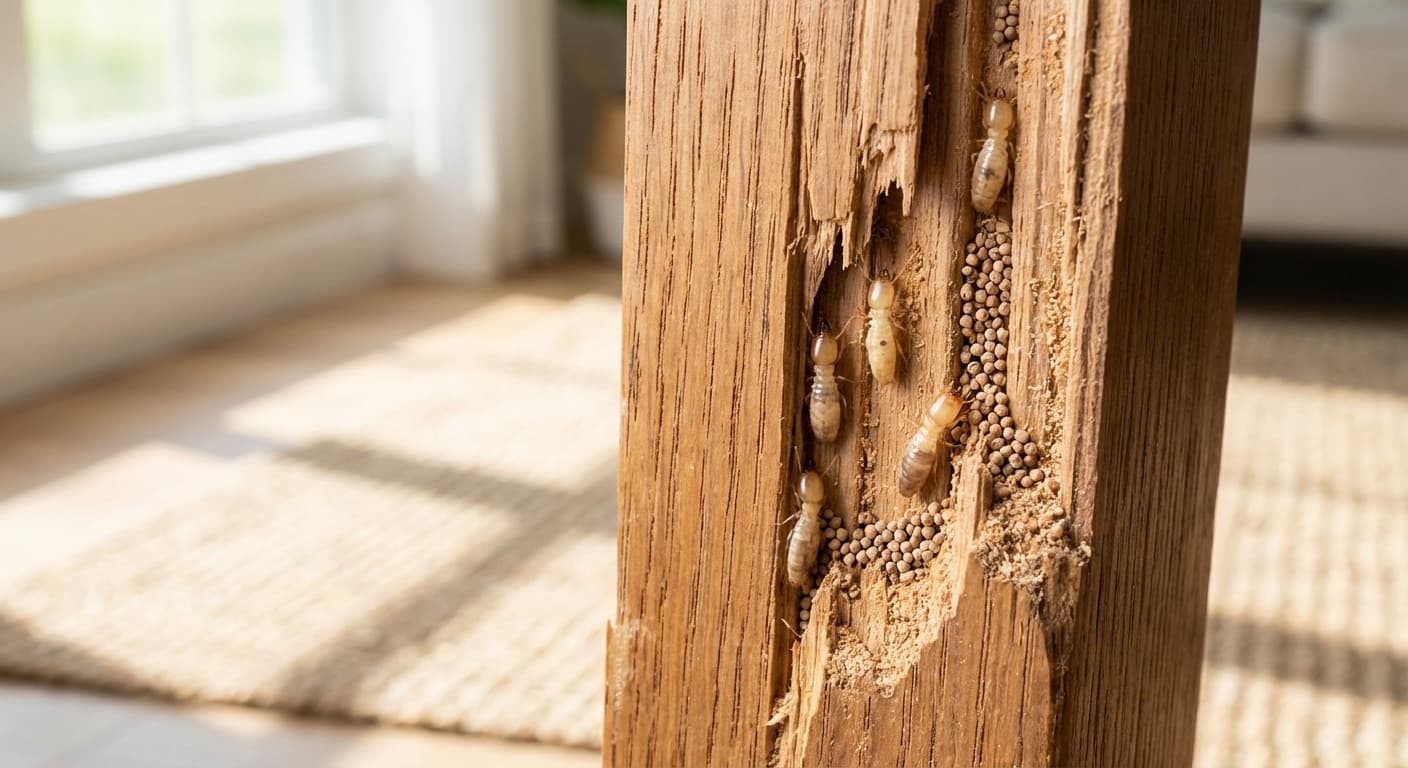
Drywood termites are typically larger than subterranean termites, around 3/8 to 1/2 inch long. They are light brown to dark brown and do not have a worker caste like subterranean termites. Swarmers have two pairs of wings that are heavily veined.
Signs of Infestation
Look for piles of fecal pellets (frass) near infested wood; these are dry, hard, and resemble tiny coffee grounds. Unlike subterranean termites, drywood termites do not build mud tubes. You may also see swarmers emerging from small kick-out holes in wood structures inside your Myrtle Beach home.
Health Risks
Drywood termites don't directly pose a health threat to humans, but their presence can compromise the structural integrity of your home, leading to costly repairs. Their frass can also be an allergen for sensitive individuals, especially given the humid conditions common in Myrtle Beach, SC homes.
Our Treatment Method
MBPC offers fumigation and localized wood treatments to eliminate drywood termite infestations in your Grand Strand property, in accordance with SC Department of Pesticide Regulation guidelines. Fumigation is often necessary for widespread infestations, while localized treatments can target smaller, contained areas. Call MBPC for an inspection and treatment plan.
Prevention Tips
Inspect wooden furniture and structures regularly for signs of infestation. Seal cracks and crevices in your home's exterior to prevent swarmers from entering. Control indoor humidity to make your home less attractive to drywood termites; this is particularly important in our coastal SC climate.
Habitat
Drywood termites infest dry, seasoned wood, unlike subterranean termites which require soil contact. They can establish colonies within furniture, wooden structural components, and even dead tree limbs inside homes in the humid subtropical climate of Myrtle Beach. They are often found in coastal areas, thriving in warm, stable environments.
Peak activity: Year-Round
Identification Photos
Frequently Asked Questions About Drywood termite
The best approach in Myrtle Beach depends on the extent of the infestation. Fumigation is usually required for widespread problems, while localized treatments may suffice for smaller infestations. Call MBPC for a professional assessment.
Drywood termites live entirely within dry wood and do not require contact with the soil, unlike subterranean termites. Drywood termites also produce distinctive fecal pellets (frass), which are absent with subterranean infestations in SC.
While you can take preventative measures like sealing cracks and reducing indoor humidity in your Myrtle Beach home, professional inspections are crucial. Early detection is key to preventing extensive damage.
Drywood termites typically cause damage more slowly than subterranean termites. However, over time, they can still weaken wooden structures. Regular inspections by MBPC are essential for early detection and mitigation in the Grand Strand area.
Don't Let Pests Win.
Take Back Your Home Today.
Every day you wait gives pests more time to multiply and cause damage. Our licensed technicians are ready to help — often the same day you call.
Free Inspection
No cost, no obligation
Same-Day Service
Fast response guaranteed
Eco-Friendly
Safe for family & pets
100% Guarantee
Pests return, so do we
Ready to get started?
Choose how you'd like to connect with us.
Available Mon-Fri 8am-6pm, Sat 9am-2pm