Eastern Mole
Scalopus aquaticus
wildlifeHow to Identify
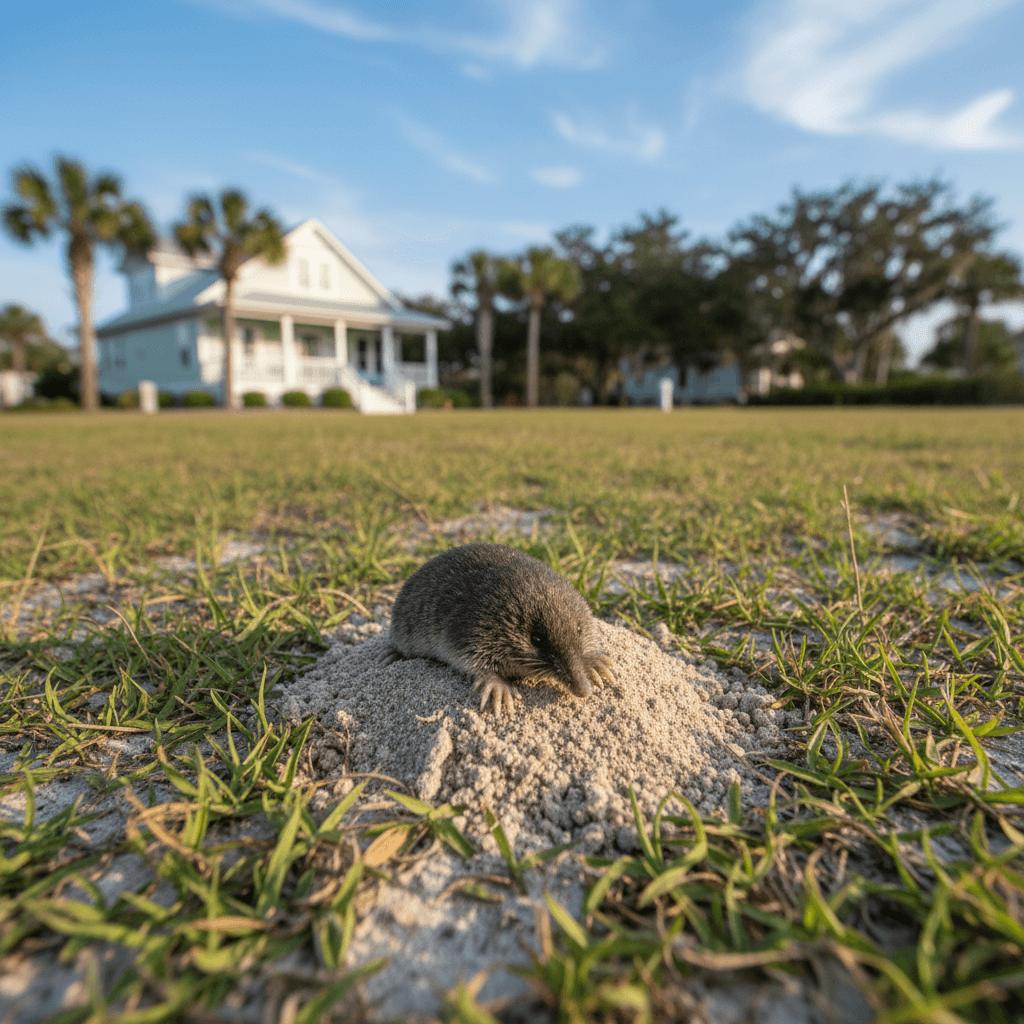
Eastern moles are small mammals, typically 5-8 inches long, with pointed snouts, small eyes hidden in their fur, and large, paddle-like front feet adapted for digging. They have velvety, gray-brown fur and lack external ears. Their bodies are cylindrical and streamlined for navigating tunnels.
Signs of Infestation
The most obvious sign of mole activity is raised ridges in your lawn, created by shallow tunneling. You may also notice molehills – small mounds of excavated soil pushed up to the surface. These tunnels and mounds can disrupt plant roots and create unsightly damage to lawns and gardens in Myrtle Beach.
Health Risks
Eastern moles are not a direct threat to human health. They do not carry diseases that are transmissible to humans. However, their tunneling can create tripping hazards in yards and gardens, and their activity can indirectly damage plants and landscaping, leading to potential financial losses for homeowners in the Grand Strand.
Our Treatment Method
MBPC offers trapping and relocation services for mole control in accordance with SC Department of Pesticide Regulation guidelines and local ordinances. Our licensed technicians can assess the extent of the mole activity on your property and implement a targeted trapping strategy to remove them humanely. We do not use poisons or chemicals for mole control.
Prevention Tips
Reduce grub populations in your lawn to limit the moles' food source – consider beneficial nematodes or other environmentally friendly grub control methods. Install underground fencing or mesh barriers around vulnerable garden areas to prevent moles from accessing them. Maintain good lawn drainage to make the soil less attractive to moles in coastal SC.
Habitat
Eastern moles thrive in the sandy soils of Myrtle Beach and the Grand Strand. They prefer moist, well-drained soils rich in earthworms and grubs, their primary food source. They create extensive tunnel systems underground, often near gardens, lawns, and wooded areas, and are active year-round due to the mild climate.
Peak activity: Year-Round
Identification Photos
Frequently Asked Questions About Eastern Mole
While moles don't eat the roots of your grass, their tunneling can disrupt the root systems and create unsightly ridges and mounds in your lawn. This can damage or kill grass and plants, requiring repair and reseeding.
Trapping and relocation are the most effective and humane methods for mole control. MBPC provides these services in Myrtle Beach, ensuring the moles are removed safely and in accordance with local regulations.
Moles are insectivores that primarily eat grubs and earthworms and create tunnels underground. Voles are rodents that eat plant roots and stems and create shallow surface runways. In Myrtle Beach, moles are more likely to cause raised ridges in lawns, while voles damage plants directly.
While unlikely, extensive mole tunneling close to your foundation *could* potentially contribute to soil erosion or instability over time, particularly in our sandy coastal soils. It's best to control mole populations to minimize any risk to your Myrtle Beach home.
Don't Let Pests Win.
Take Back Your Home Today.
Every day you wait gives pests more time to multiply and cause damage. Our licensed technicians are ready to help — often the same day you call.
Free Inspection
No cost, no obligation
Same-Day Service
Fast response guaranteed
Eco-Friendly
Safe for family & pets
100% Guarantee
Pests return, so do we
Ready to get started?
Choose how you'd like to connect with us.
Available Mon-Fri 8am-6pm, Sat 9am-2pm