European Starling
Sturnus vulgaris
birdsHow to Identify
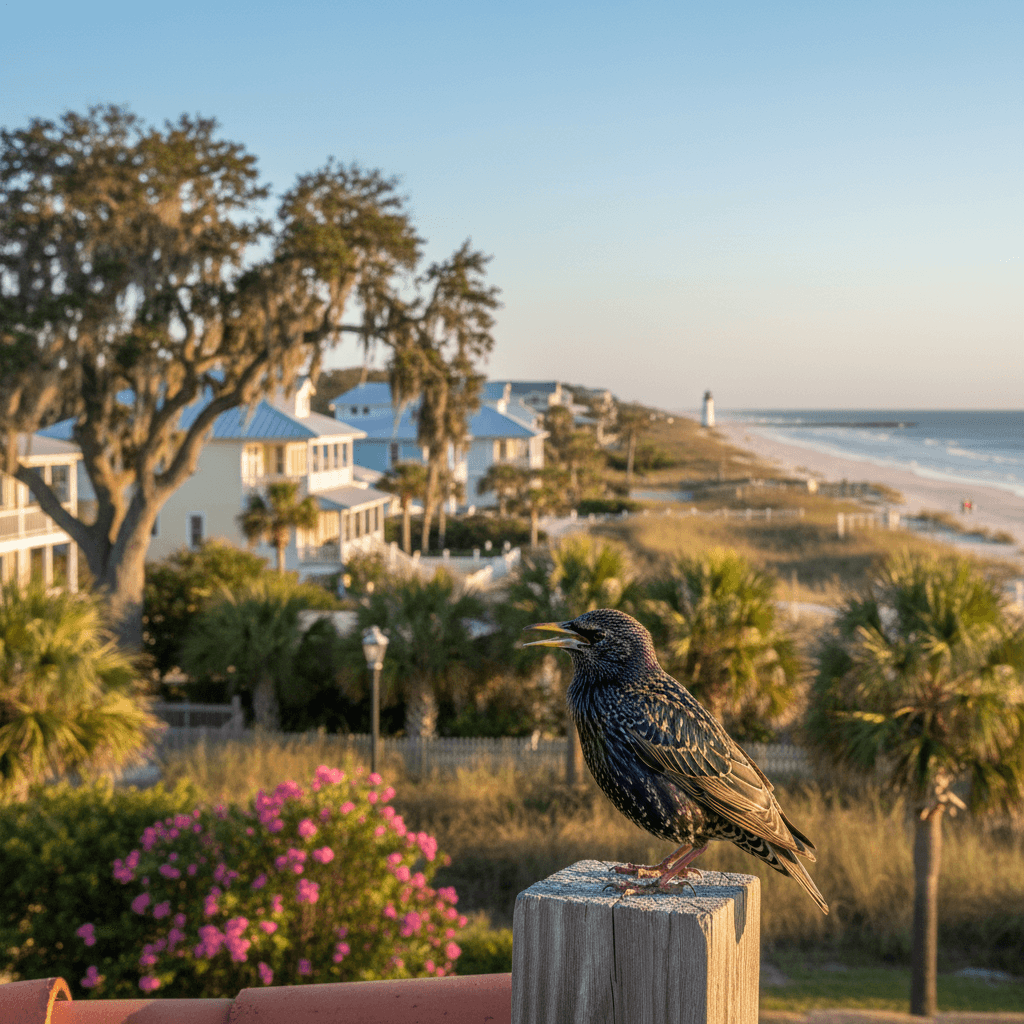
European starlings are medium-sized blackbirds with iridescent plumage that appears glossy green or purple, especially in sunlight. They have a characteristic yellow bill in the breeding season and are often seen walking or running on the ground while foraging. In winter, their plumage is more heavily speckled with white.
Signs of Infestation
Look for large flocks of birds congregating around buildings, especially around eaves, vents, and rooftops. You may notice excessive droppings on sidewalks, cars, and other surfaces, as well as nesting materials such as twigs and feathers accumulating near potential entry points.
Health Risks
Starling droppings can carry diseases such as histoplasmosis and cryptococcosis, posing a health risk, especially to vulnerable individuals in Myrtle Beach. Large flocks can create unsanitary conditions and contribute to the spread of bacteria. Nesting debris can also attract other pests, such as mites and insects, to your home.
Our Treatment Method
MBPC offers humane bird control solutions to deter starlings from your Grand Strand property. Our licensed technicians use exclusion methods such as netting and bird spikes to prevent roosting and nesting. We also provide cleaning and sanitation services to remove droppings and nesting materials, ensuring a safe and healthy environment, in accordance with SC Department of Pesticide Regulation guidelines.
Prevention Tips
Seal any potential entry points to your home, such as gaps around pipes, vents, and chimneys. Remove food sources by keeping garbage cans tightly closed and cleaning up spilled birdseed. Consider installing bird netting or bird spikes on roosting surfaces to deter starlings from landing on your Myrtle Beach property.
Habitat
European starlings are highly adaptable and can be found in various habitats throughout coastal SC, including urban and suburban areas. They often nest in cavities, such as holes in trees, buildings, and utility poles. In Myrtle Beach, they are commonly observed near open areas, parks, and agricultural fields, where they forage for food.
Peak activity: Year-Round
Identification Photos
Frequently Asked Questions About European Starling
While they are not native, European starlings are not protected under federal law in the United States. However, it's important to use humane and ethical methods for control, and to comply with any local regulations in Myrtle Beach.
Starlings are considered pests due to their tendency to form large, noisy flocks that can damage crops, contaminate food sources, and create unsanitary conditions in Myrtle Beach. Their droppings can also damage buildings and vehicles.
Starling droppings can carry diseases such as histoplasmosis, cryptococcosis, and salmonellosis. These diseases can be transmitted to humans through contact with contaminated droppings or airborne spores. These risks are particularly high in humid environments like Myrtle Beach.
Yes, MBPC offers humane and effective bird control solutions to deter starlings from your Myrtle Beach property. Our licensed technicians can assess the situation and recommend appropriate methods such as exclusion techniques and habitat modification.
Don't Let Pests Win.
Take Back Your Home Today.
Every day you wait gives pests more time to multiply and cause damage. Our licensed technicians are ready to help — often the same day you call.
Free Inspection
No cost, no obligation
Same-Day Service
Fast response guaranteed
Eco-Friendly
Safe for family & pets
100% Guarantee
Pests return, so do we
Ready to get started?
Choose how you'd like to connect with us.
Available Mon-Fri 8am-6pm, Sat 9am-2pm