Feral Hog
Sus scrofa
wildlifeHow to Identify
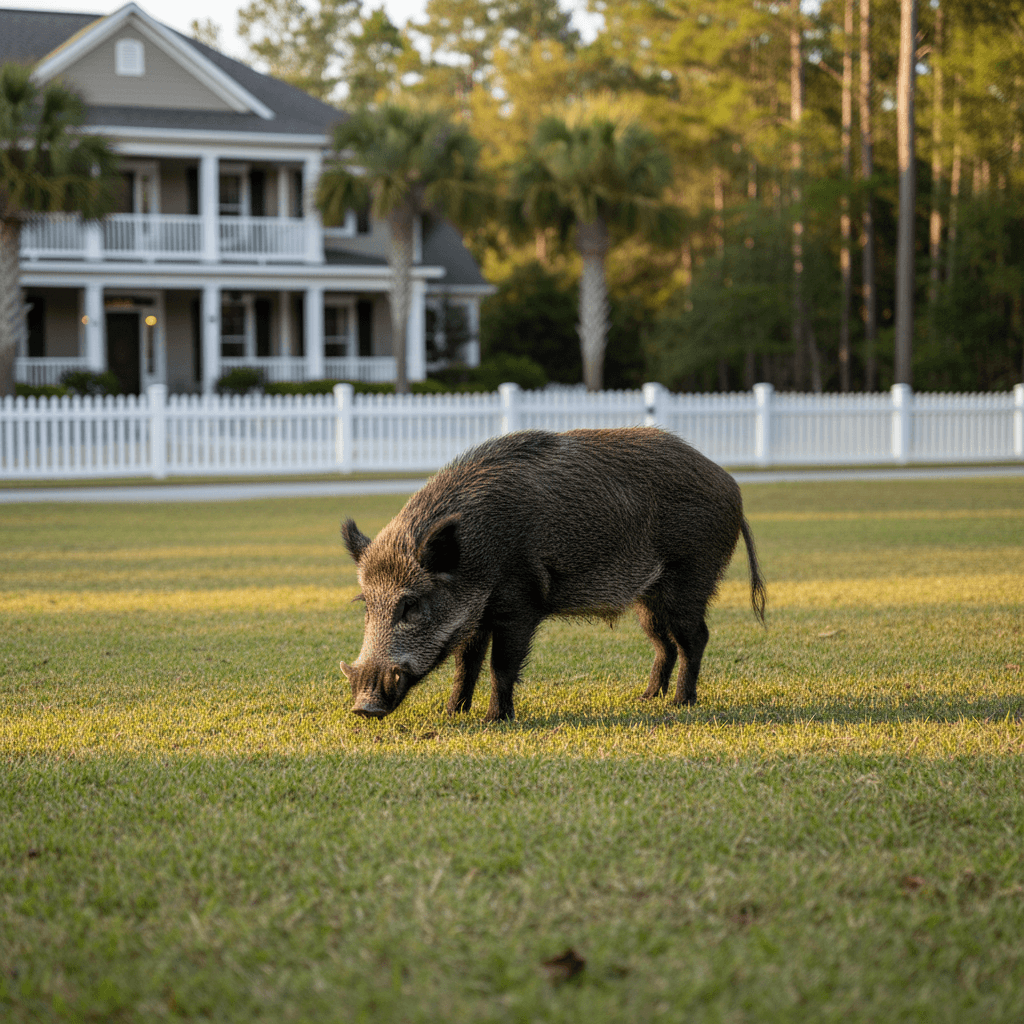
Feral hogs are medium to large-sized animals with coarse, bristly hair that can range in color from black to brown, red, or spotted. They have a long snout, small eyes, and relatively short legs. Adults can weigh between 100 to over 400 pounds, and their tusks (elongated canine teeth) are often visible.
Signs of Infestation
Look for extensive rooting or digging in lawns, gardens, and agricultural fields. Feral hogs create wallows in muddy areas and leave behind tracks and droppings that resemble those of deer but are typically larger and more irregular. You may also observe damage to fences, crops, and landscaping.
Health Risks
Feral hogs can carry diseases transmissible to humans and pets, such as brucellosis, leptospirosis, and trichinosis. Their aggressive behavior can pose a direct threat to people and domestic animals in Myrtle Beach, especially when sows are protecting their young. Rooting activity can also contaminate water sources with bacteria.
Our Treatment Method
MBPC does not directly handle feral hog removal due to SC Department of Pesticide Regulation restrictions on wildlife management. We recommend contacting a licensed wildlife removal service or the South Carolina Department of Natural Resources (SCDNR) for assistance. MBPC can provide recommendations for protecting your property after hog removal to deter future issues.
Prevention Tips
Install sturdy fencing around gardens, crops, and other vulnerable areas on your Myrtle Beach property. Remove potential food sources, such as fallen fruit or unsecured garbage. Consider using motion-activated lights or noise deterrents to discourage feral hogs from entering your property. Contact SCDNR for guidance on population management in your area.
Habitat
Feral hogs thrive in the diverse habitats of coastal South Carolina, including forests, swamps, agricultural lands, and residential areas near natural cover. They are highly adaptable and can be found throughout the Grand Strand, particularly in areas with abundant food sources and access to water. The humid subtropical climate and dense vegetation provide ideal conditions for their survival and reproduction.
Peak activity: Year-Round
Identification Photos
Frequently Asked Questions About Feral Hog
Yes, feral hogs can be dangerous, especially when protecting their young. They can be aggressive towards humans and pets. Avoid approaching them and report any sightings to local authorities in Myrtle Beach.
Feral hogs cause extensive damage by rooting up lawns, gardens, and agricultural fields. They can also damage fences, contaminate water sources, and destroy native vegetation throughout the Grand Strand.
Do not approach the hog. Keep a safe distance and contact your local animal control or the South Carolina Department of Natural Resources (SCDNR). Document the sighting with photos or videos if possible.
MBPC does not directly remove feral hogs. We recommend contacting a licensed wildlife removal service or SCDNR. We can assist with preventative measures to protect your property after removal.
Don't Let Pests Win.
Take Back Your Home Today.
Every day you wait gives pests more time to multiply and cause damage. Our licensed technicians are ready to help — often the same day you call.
Free Inspection
No cost, no obligation
Same-Day Service
Fast response guaranteed
Eco-Friendly
Safe for family & pets
100% Guarantee
Pests return, so do we
Ready to get started?
Choose how you'd like to connect with us.
Available Mon-Fri 8am-6pm, Sat 9am-2pm