Fruit Fly
Drosophila melanogaster
insectsHow to Identify
Fruit flies are small, about 1/8 inch long, and typically have red eyes. Their bodies are tan to brownish-yellow. They are most easily recognized by their erratic, hovering flight near ripe or fermenting foods.
Signs of Infestation
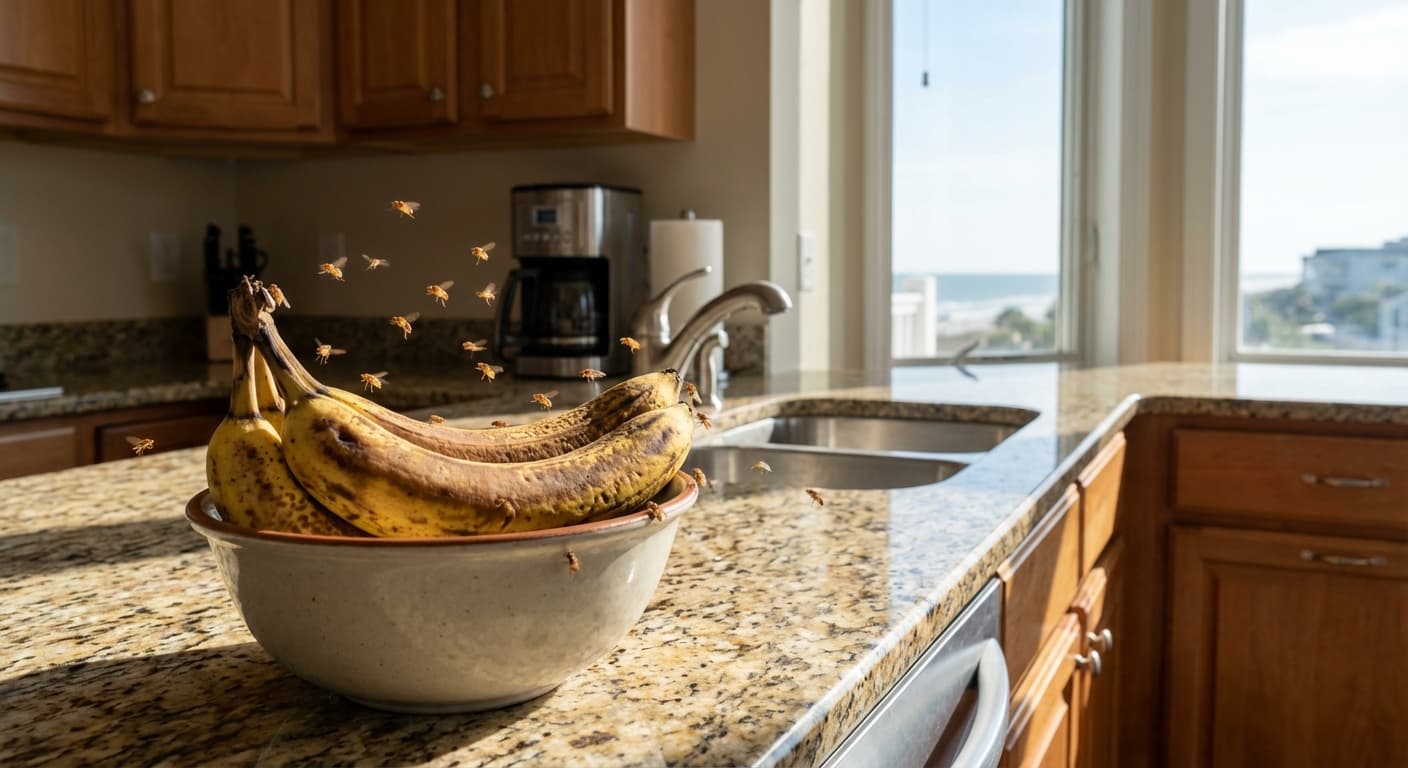
Look for small flies hovering around fruit bowls, garbage disposals, or near any source of decaying organic matter. You may also find their larvae (tiny, white maggots) in overripe fruit or unclean drains. A strong indication of a fruit fly problem is a sudden increase in their numbers, especially in the kitchen.
Health Risks
Fruit flies themselves do not bite or transmit diseases directly to humans. However, they can pick up bacteria and pathogens from unsanitary surfaces and transfer them to food, potentially causing illness. In Myrtle Beach, their presence can be especially problematic in homes or businesses with poor sanitation practices or exposed food sources.
Our Treatment Method
MBPC offers sanitation-focused fruit fly control for Myrtle Beach homes and businesses. Our licensed technicians will identify breeding sources and advise on proper cleaning and storage practices. In some cases, we may use insecticidal baits or traps approved by the SC Department of Pesticide Regulation to reduce populations and prevent future infestations in your Grand Strand property.
Prevention Tips
Eliminate breeding sites by promptly cleaning up spills, storing fruits and vegetables in sealed containers or the refrigerator, and regularly cleaning garbage disposals and drains. Empty trash cans frequently and ensure they have tight-fitting lids. Repair any leaky pipes or faucets that can create moisture and attract fruit flies in your Myrtle Beach home.
Habitat
Fruit flies thrive in warm, humid environments, making coastal South Carolina an ideal habitat. They are commonly found near ripe, rotting, or fermenting fruits and vegetables. Indoors, they breed in drains, garbage disposals, and other areas where organic matter accumulates, especially in Myrtle Beach homes with high humidity levels.
Peak activity: Year-Round
Identification Photos
Frequently Asked Questions About Fruit Fly
A sudden increase in fruit flies usually indicates a new source of ripe or decaying organic matter, such as forgotten fruit, a dirty garbage disposal, or spills under appliances. Locating and eliminating the breeding site is crucial for long-term control in your Myrtle Beach home.
Fruit flies don't bite or sting, but they can contaminate food with bacteria and pathogens, potentially causing illness. Controlling fruit flies is important for maintaining a sanitary environment in your Myrtle Beach home or business, especially in food preparation areas.
The most effective fruit fly control involves eliminating breeding sites through diligent cleaning and sanitation. Baited traps can also help reduce adult populations. For persistent infestations in your Myrtle Beach property, contact MBPC for professional assistance.
Yes, fruit flies can survive year-round in Myrtle Beach due to our mild winters. They can continue to breed indoors as long as there is a source of food and moisture. Consistent sanitation is essential for preventing winter infestations in your home.
Don't Let Pests Win.
Take Back Your Home Today.
Every day you wait gives pests more time to multiply and cause damage. Our licensed technicians are ready to help — often the same day you call.
Free Inspection
No cost, no obligation
Same-Day Service
Fast response guaranteed
Eco-Friendly
Safe for family & pets
100% Guarantee
Pests return, so do we
Ready to get started?
Choose how you'd like to connect with us.
Available Mon-Fri 8am-6pm, Sat 9am-2pm