
Granary Weevil
Sitophilus granarius
insectsHow to Identify
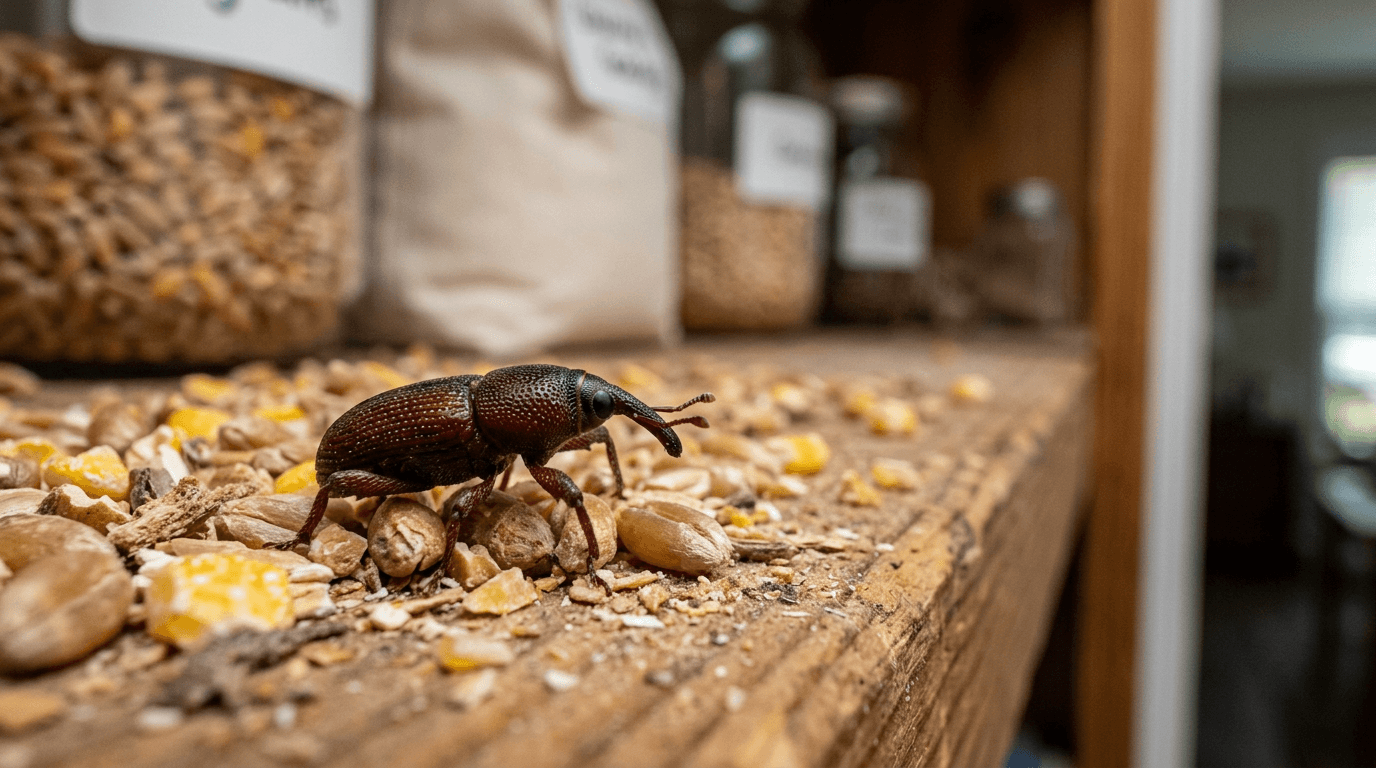
Granary weevils are small, dark brown to black beetles about 1/8 inch long. They have a characteristic elongated snout, and their wing covers (elytra) are fused, meaning they cannot fly. They are often confused with other grain-infesting beetles, so close inspection is key.
Signs of Infestation
Look for adult weevils crawling in stored grains like rice, wheat, corn, or pasta. You may also find small holes in kernels or packages, and a dusty residue (frass) near infested food items. In Myrtle Beach homes, check pantries, kitchen cabinets, and dry food storage areas regularly.
Health Risks
Granary weevils do not bite or sting and pose no direct health threat to humans or pets in Myrtle Beach. However, they contaminate food supplies, making them unpalatable and potentially causing allergic reactions in sensitive individuals. Discarding infested food is crucial to prevent further spread and food waste.
Our Treatment Method
MBPC offers thorough pantry pest inspections and targeted treatments for granary weevil infestations in the Grand Strand area. Treatment involves removing infested items, thoroughly cleaning affected areas, and applying residual insecticides approved by the SC Department of Pesticide Regulation to cracks and crevices where weevils may hide. Preventative measures and proper food storage are also emphasized.
Prevention Tips
Store grains and dry foods in airtight containers to prevent infestations. Regularly inspect pantry items for signs of weevils and discard any infested products immediately. Clean up spilled food and crumbs promptly to eliminate potential food sources in your Myrtle Beach home.
Habitat
Granary weevils thrive in stored grains and dry food products found in homes, warehouses, and grain storage facilities. In coastal SC, they can be found year-round due to the mild climate, infesting pantries and food storage areas. They prefer dark, undisturbed locations with readily available food sources.
Peak activity: Year-Round
Identification Photos
Frequently Asked Questions About Granary Weevil
Granary weevils are typically introduced through infested food products purchased from stores. They can also enter through cracks and crevices in your home's foundation or around windows and doors, especially in older homes along the Grand Strand.
Granary weevils do not bite, sting, or transmit diseases to humans or pets. However, they contaminate food supplies, rendering them unsuitable for consumption. Throwing out infested food is the best course of action for Myrtle Beach residents.
Yes, storing grains and dry goods in airtight containers is crucial for preventing granary weevil infestations. Regularly inspect pantry items and discard any infested products immediately. Keeping your pantry clean and free of spilled food will also help deter these pests.
Contact Myrtle Beach Pest Control for a professional inspection and treatment. Our licensed technicians can identify the source of the infestation and implement effective control measures to eliminate the weevils and prevent future outbreaks in your home.
Don't Let Pests Win.
Take Back Your Home Today.
Every day you wait gives pests more time to multiply and cause damage. Our licensed technicians are ready to help — often the same day you call.
Free Inspection
No cost, no obligation
Same-Day Service
Fast response guaranteed
Eco-Friendly
Safe for family & pets
100% Guarantee
Pests return, so do we
Ready to get started?
Choose how you'd like to connect with us.
Available Mon-Fri 8am-6pm, Sat 9am-2pm