
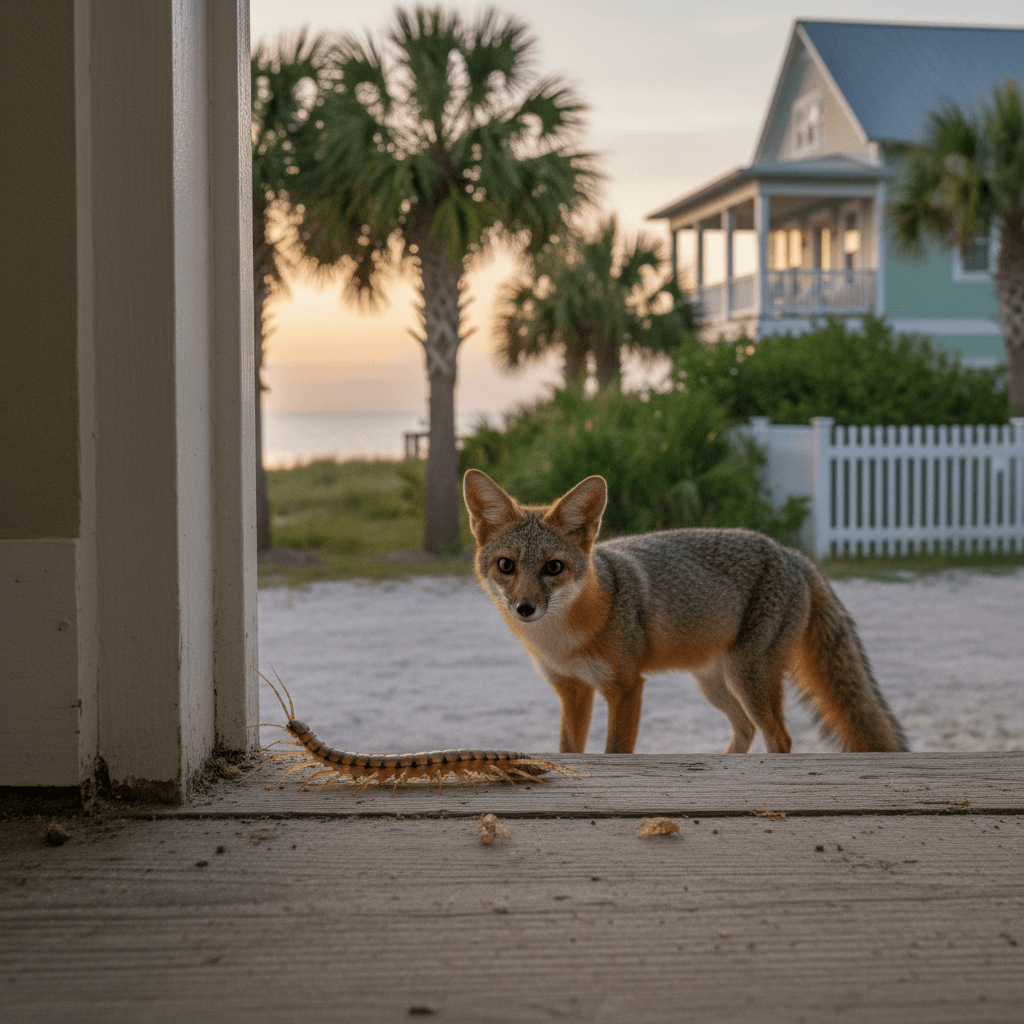
Gray fox
Urocyon cinereoargenteus
wildlifeHow to Identify
Gray foxes are medium-sized canids with a grizzled gray coat, reddish-brown legs and sides, and a long, bushy tail with a black stripe along the top and a black tip. They have a pointed muzzle and relatively short legs compared to their body size. Adults typically weigh between 7 and 13 pounds.
Signs of Infestation
While not an 'infestation,' signs of gray fox activity around Myrtle Beach homes include droppings (scat) in yards or under decks, scattered trash from overturned cans, and occasional sightings, especially at dawn or dusk. You may also notice small pets acting agitated or frightened. Damage to gardens or unsecured poultry pens can also indicate their presence.
Health Risks
Gray foxes can carry rabies and other diseases transmissible to humans and pets, though direct attacks are rare. While relatively shy, they may prey on small domestic animals. Their droppings can also pose a minor health risk if handled without gloves, particularly for children playing outdoors in the Myrtle Beach area.
Our Treatment Method
MBPC does not offer trapping or relocation services for foxes as that falls under the jurisdiction of the SC Department of Natural Resources. We can advise on preventative measures to deter foxes from your Grand Strand property. For persistent issues or concerns about sick or aggressive animals, contact your local animal control or SCDNR.
Prevention Tips
Secure trash cans tightly and avoid leaving pet food or other potential food sources outside. Clear brush and overgrown vegetation from around your home to reduce cover for foxes. Fencing can help protect small pets and gardens from access by foxes in your Myrtle Beach yard. Install motion-activated lights to deter them after dark.
Habitat
Gray foxes are common throughout South Carolina, including the coastal areas around Myrtle Beach. They are adaptable and can thrive in a variety of habitats, including forests, wetlands, and suburban neighborhoods. They often den in hollow logs, rock crevices, or underground burrows, and readily adapt to the edges of developed areas along the Grand Strand.
Peak activity: Year-Round
Identification Photos
Frequently Asked Questions About Gray fox
Gray foxes may prey on small pets like cats, rabbits, or small dogs, especially if they are left unattended outdoors. Keep pets supervised, particularly at dawn and dusk, to minimize risks.
Observe the fox from a distance. Do not approach or attempt to feed it. If the fox appears sick or aggressive, or if it is behaving unusually, contact Myrtle Beach Animal Control or the SC Department of Natural Resources.
Fencing is the most effective way to protect gardens. Motion-activated sprinklers can also deter foxes. Avoid leaving food scraps or ripe fruit on the ground, as these can attract them to your yard in Myrtle Beach.
Relocating foxes is generally discouraged and may be illegal without proper permits from the SC Department of Natural Resources. Contact SCDNR for guidance on legal and ethical wildlife management practices in the Myrtle Beach area.
Don't Let Pests Win.
Take Back Your Home Today.
Every day you wait gives pests more time to multiply and cause damage. Our licensed technicians are ready to help — often the same day you call.
Free Inspection
No cost, no obligation
Same-Day Service
Fast response guaranteed
Eco-Friendly
Safe for family & pets
100% Guarantee
Pests return, so do we
Ready to get started?
Choose how you'd like to connect with us.
Available Mon-Fri 8am-6pm, Sat 9am-2pm