
Gray wolf
Canis lupus
wildlifeHow to Identify
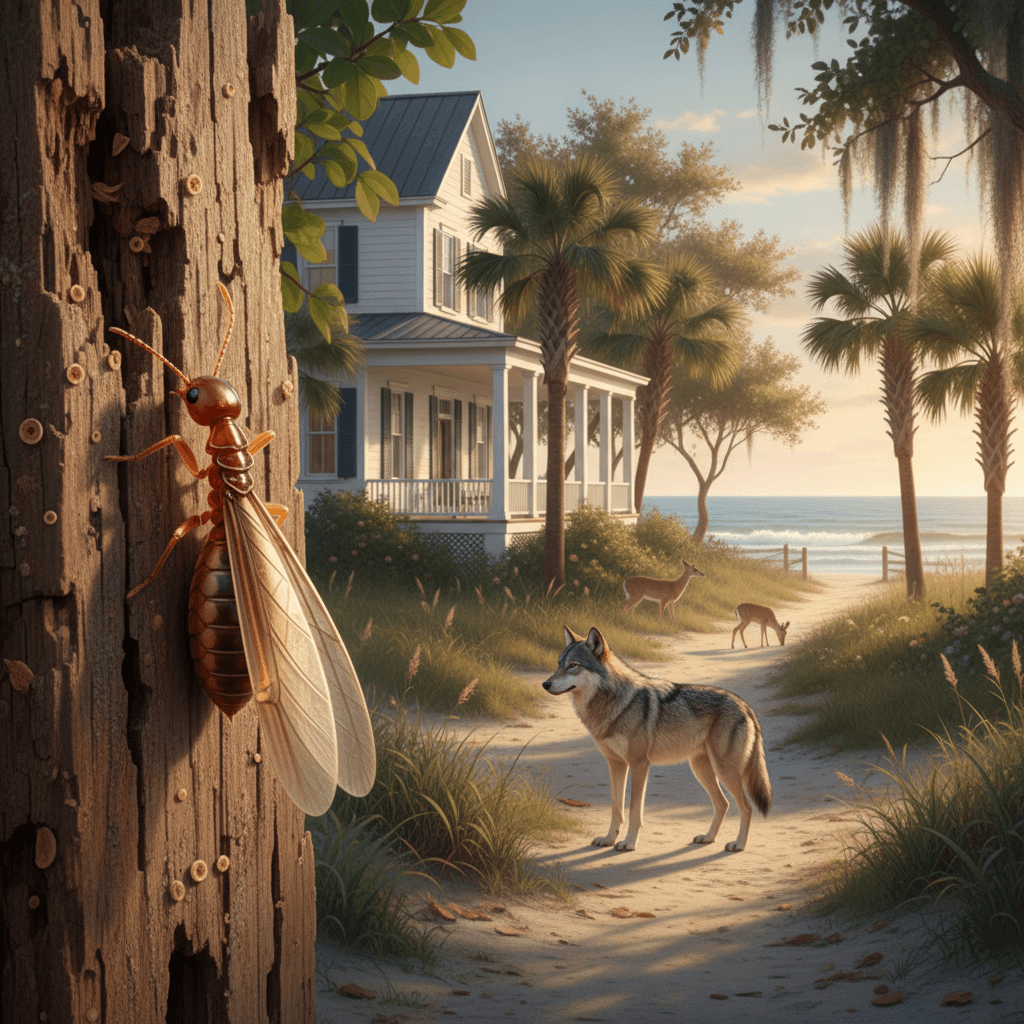
Gray wolves are large canids, typically weighing between 80 and 110 pounds, with a thick fur coat ranging in color from gray to black to nearly white. They have powerful jaws, a bushy tail, and erect, rounded ears. Their presence in suburban areas is rare but possible, especially near undeveloped regions of the Grand Strand.
Signs of Infestation
While not typically considered an infestation, signs of gray wolf presence include very large canine footprints (4-5 inches long), scat containing bones or fur, and the howling sounds at night. Pets left unattended outside, particularly smaller dogs, may exhibit extreme anxiety or go missing in areas where wolves are present. Contact animal control immediately if you suspect wolf activity near your Myrtle Beach property.
Health Risks
Gray wolves are not typically a direct threat to humans, but they are powerful predators that can pose a risk to pets and livestock. In extremely rare cases, habituated wolves may exhibit boldness towards humans. Because wolves can carry rabies and other diseases, any bite or scratch should be immediately reported to local health authorities in Myrtle Beach.
Our Treatment Method
As a SC Department of Pesticide Regulation licensed pest control company, MBPC does not handle gray wolf management. Wolf presence is a wildlife issue, not a pest control matter. If you encounter a wolf on your Grand Strand property, contact the South Carolina Department of Natural Resources (SCDNR) or local animal control. Never approach or feed a wolf.
Prevention Tips
The best way to prevent encounters with gray wolves (or any large predator) near your Myrtle Beach home is to avoid attracting them. Secure trash cans, never leave pet food outside, and keep pets leashed or fenced in. Install motion-activated lights and fencing to deter wildlife from entering your property. Educate yourself and your neighbors about wildlife safety.
Habitat
Gray wolves are not native to the coastal areas of South Carolina and are extremely rare. If present, they would likely be transient individuals or small packs moving through undeveloped areas, perhaps following prey animals. Suitable habitat would include dense forests or wetlands near the Grand Strand, though such sightings would be highly unusual in our humid subtropical climate.
Peak activity: Year-Round
Identification Photos
Frequently Asked Questions About Gray wolf
No, gray wolves are extremely rare in Myrtle Beach and the Grand Strand. They are not native to this region and are unlikely to be encountered. Sightings should be reported to SCDNR.
If you encounter a gray wolf in Myrtle Beach, do not approach it. Keep a safe distance, make noise to scare it away, and report the sighting to the South Carolina Department of Natural Resources (SCDNR) immediately.
No, Myrtle Beach Pest Control does not handle wildlife removal of gray wolves or other large animals. Contact SCDNR or a licensed wildlife removal specialist for assistance.
Gray wolves are large predators and can pose a threat to pets, especially smaller dogs and cats. Keep pets indoors or supervised, particularly at dawn and dusk, in areas where wolf sightings have been reported near Myrtle Beach.
Don't Let Pests Win.
Take Back Your Home Today.
Every day you wait gives pests more time to multiply and cause damage. Our licensed technicians are ready to help — often the same day you call.
Free Inspection
No cost, no obligation
Same-Day Service
Fast response guaranteed
Eco-Friendly
Safe for family & pets
100% Guarantee
Pests return, so do we
Ready to get started?
Choose how you'd like to connect with us.
Available Mon-Fri 8am-6pm, Sat 9am-2pm