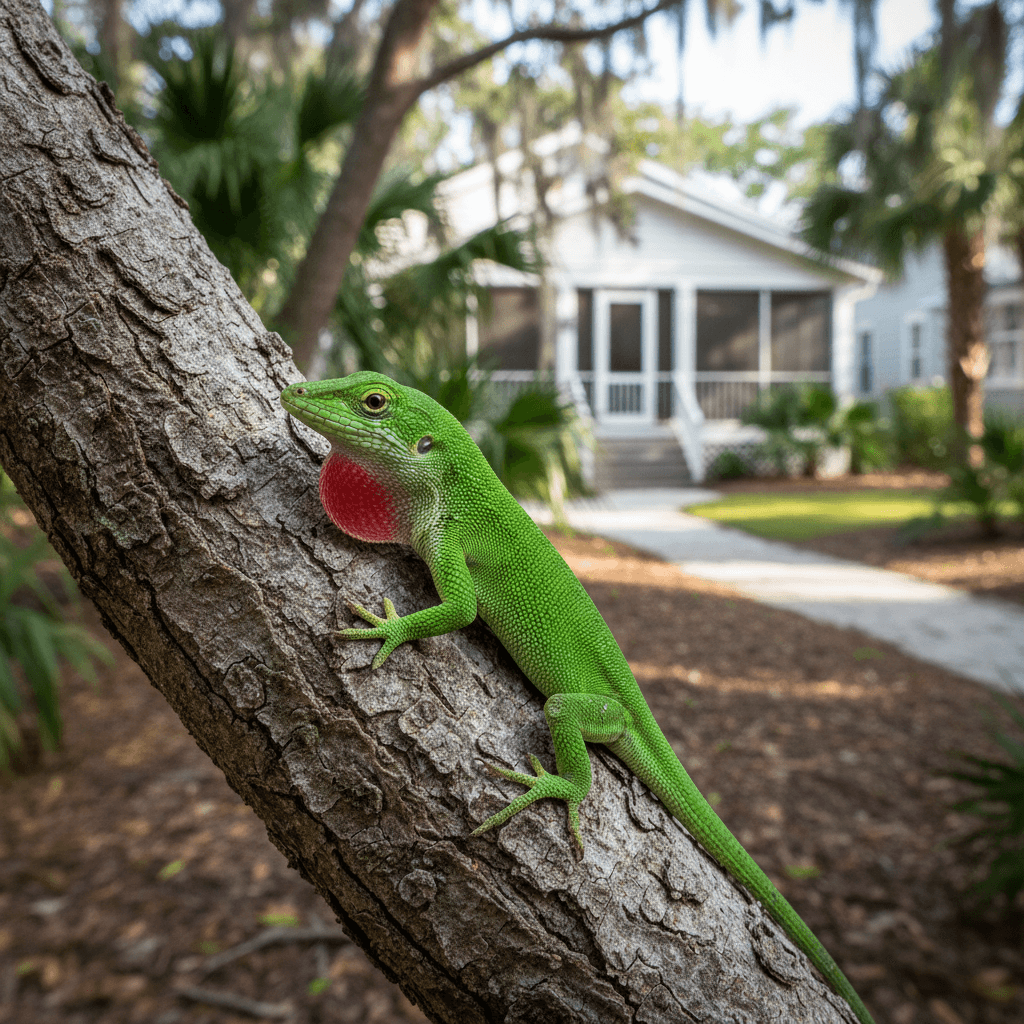
Green Anole
Anolis carolinensis
reptilesHow to Identify
Green anoles are small, slender lizards, typically 5-8 inches long, with a pointed snout and long tail. They are known for their ability to change color from bright green to brown, depending on their mood and environment. Males have a pink dewlap (throat fan) that they extend during courtship or territorial displays.
Signs of Infestation
Green anoles are generally solitary creatures and don't infest homes in the traditional sense. Finding one or two indoors occasionally isn't an infestation, but a sign that there may be entry points in your home's exterior. A large number of anoles in your yard may indicate an abundance of insects they're feeding on, which could be a problem.
Health Risks
Green anoles pose no direct health risks to humans in Myrtle Beach. They are non-venomous and do not bite unless severely provoked. They primarily eat insects, so they can actually be beneficial in controlling small pest populations around your Grand Strand home, provided their population doesn't get out of hand.
Our Treatment Method
Since green anoles are not typically considered pests, MBPC does not offer specific treatments for them. Exclusion methods, like sealing cracks and crevices, are the best way to prevent them from entering your home. If you're concerned about anole populations, contact the SC Department of Pesticide Regulation or a wildlife removal specialist.
Prevention Tips
Trim shrubs and vines away from your home's foundation to reduce hiding places for anoles and the insects they eat. Seal any cracks or crevices in your home's exterior to prevent them from entering. Reduce standing water and improve drainage to minimize insect populations, which are anoles' primary food source, around your Myrtle Beach property.
Habitat
Green anoles thrive in the humid subtropical climate of Myrtle Beach and are commonly found in gardens, shrubs, and trees. They prefer warm, sunny environments with access to moisture, making coastal South Carolina an ideal habitat. They are often seen near homes, basking on windowsills and patios, particularly in areas with dense vegetation.
Peak activity: Spring-Fall
Identification Photos
Frequently Asked Questions About Green Anole
Green anoles are not poisonous or dangerous to pets. Cats and dogs may be curious and attempt to play with or hunt them, but anoles are more likely to flee. Supervise your pets if they show excessive interest, but in general they pose no threat in your Myrtle Beach home.
Gently guide the anole towards an open door or window. Avoid trying to grab it, as this may stress or injure the animal. If anoles frequently enter your home, inspect for entry points and seal them to prevent future occurrences in your Grand Strand residence.
Green anoles primarily eat small insects, including mosquitoes, flies, and small caterpillars. While they won't completely eliminate mosquito populations, they contribute to natural pest control around your Myrtle Beach yard, offering a slight benefit.
Green anoles are not a protected species in South Carolina. However, they are a beneficial part of the ecosystem and should be treated humanely. Avoid using harmful pesticides that could negatively impact anole populations and the broader environment around your home.
Don't Let Pests Win.
Take Back Your Home Today.
Every day you wait gives pests more time to multiply and cause damage. Our licensed technicians are ready to help — often the same day you call.
Free Inspection
No cost, no obligation
Same-Day Service
Fast response guaranteed
Eco-Friendly
Safe for family & pets
100% Guarantee
Pests return, so do we
Ready to get started?
Choose how you'd like to connect with us.
Available Mon-Fri 8am-6pm, Sat 9am-2pm