Green Tree Frog
Hyla cinerea
amphibiansHow to Identify
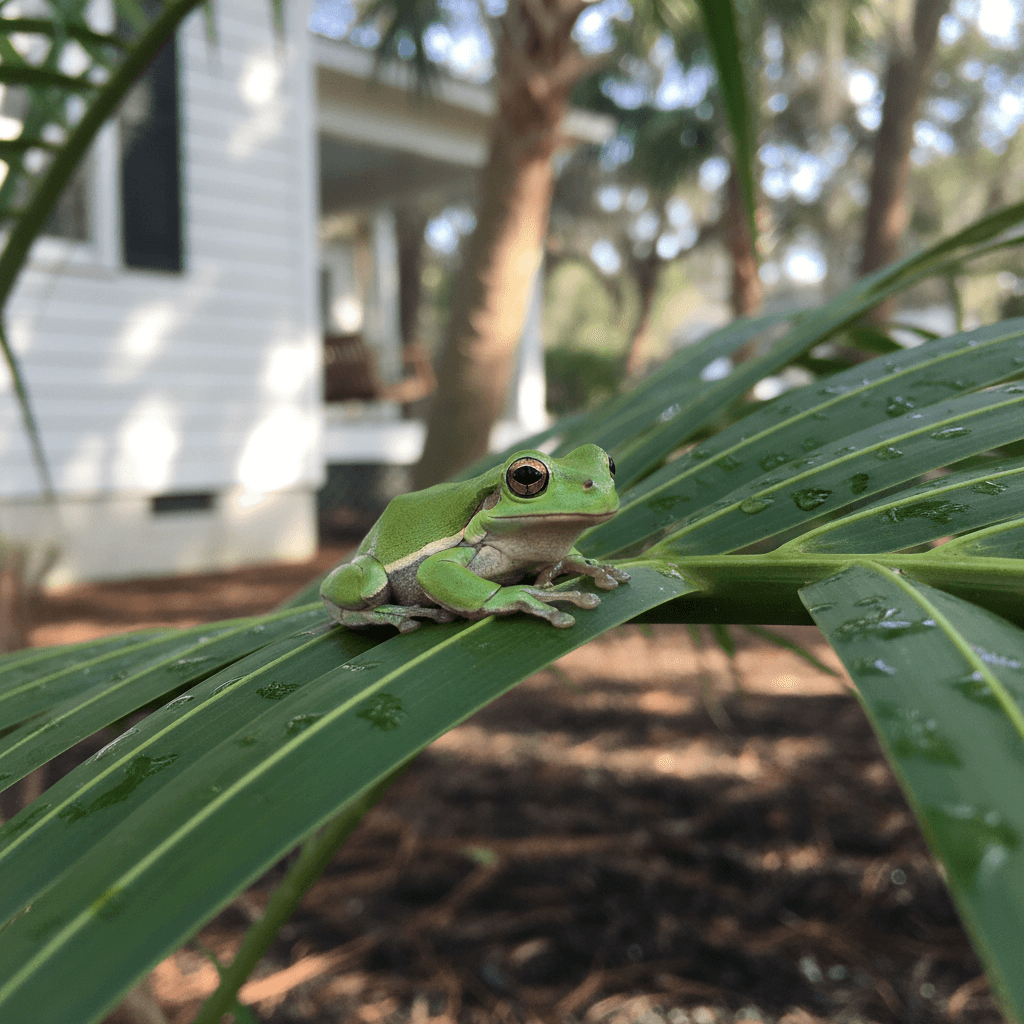
Green tree frogs are typically bright green, though they can vary to yellowish or grayish-green depending on temperature and surroundings. They have a creamy or pale yellow stripe extending from their jaw down their side and smooth skin. They are small, usually between 1 to 2.5 inches long.
Signs of Infestation
The most common sign is their distinctive call, a series of short, nasal 'quonks,' especially noticeable at night near standing water. You might also find them clinging to windows or siding, attracted to lights that also draw insects. While not an infestation in the traditional sense, their presence can be perceived as a nuisance.
Health Risks
Green tree frogs pose no direct health risk to humans in Myrtle Beach. They do not bite or carry diseases harmful to people. Some individuals may be concerned about allergens, but amphibians are not typically significant allergen sources inside homes.
Our Treatment Method
MBPC does not typically handle green tree frog 'infestations' as they are beneficial amphibians. Exclusion is the most appropriate approach. As a licensed pest control provider in SC, we advise residents to appreciate these creatures for their insect-eating habits, especially near the Grand Strand's many waterways.
Prevention Tips
Reduce standing water around your property to make it less attractive to breeding frogs. Ensure proper drainage around your home's foundation, a common challenge in sandy SC soils. Turning off outdoor lights can also reduce the insects that attract them to your home's exterior.
Habitat
Green tree frogs thrive in the humid subtropical climate of coastal South Carolina. They are commonly found near ponds, marshes, streams, and other bodies of fresh water. In residential areas, they often inhabit gardens, shrubs, and around structures with access to moisture, all common features of the Myrtle Beach landscape.
Peak activity: Spring-Fall
Identification Photos
Frequently Asked Questions About Green Tree Frog
Green tree frogs are not poisonous to pets, but it's best to discourage pets from eating them. Some frogs secrete skin irritants, although the effect is minimal. Keeping your pets away from standing water reduces encounters in Myrtle Beach.
Green tree frogs primarily eat insects, including mosquitoes, flies, and small beetles. They are beneficial predators in your yard, helping to control pest populations naturally around your Myrtle Beach home.
Create a frog-friendly habitat by providing standing water sources, such as a small pond or birdbath, and plenty of vegetation for cover. Avoid using pesticides in your garden to protect them and the insects they eat in your SC yard.
Green tree frogs are attracted to the insects that are drawn to outdoor lights on your home. Reduce outdoor lighting or switch to yellow 'bug' lights to reduce the number of insects, and therefore frogs, around your Myrtle Beach property.
Don't Let Pests Win.
Take Back Your Home Today.
Every day you wait gives pests more time to multiply and cause damage. Our licensed technicians are ready to help — often the same day you call.
Free Inspection
No cost, no obligation
Same-Day Service
Fast response guaranteed
Eco-Friendly
Safe for family & pets
100% Guarantee
Pests return, so do we
Ready to get started?
Choose how you'd like to connect with us.
Available Mon-Fri 8am-6pm, Sat 9am-2pm