Hairy Woodpecker
Leuconotopicus villosus
birdsHow to Identify
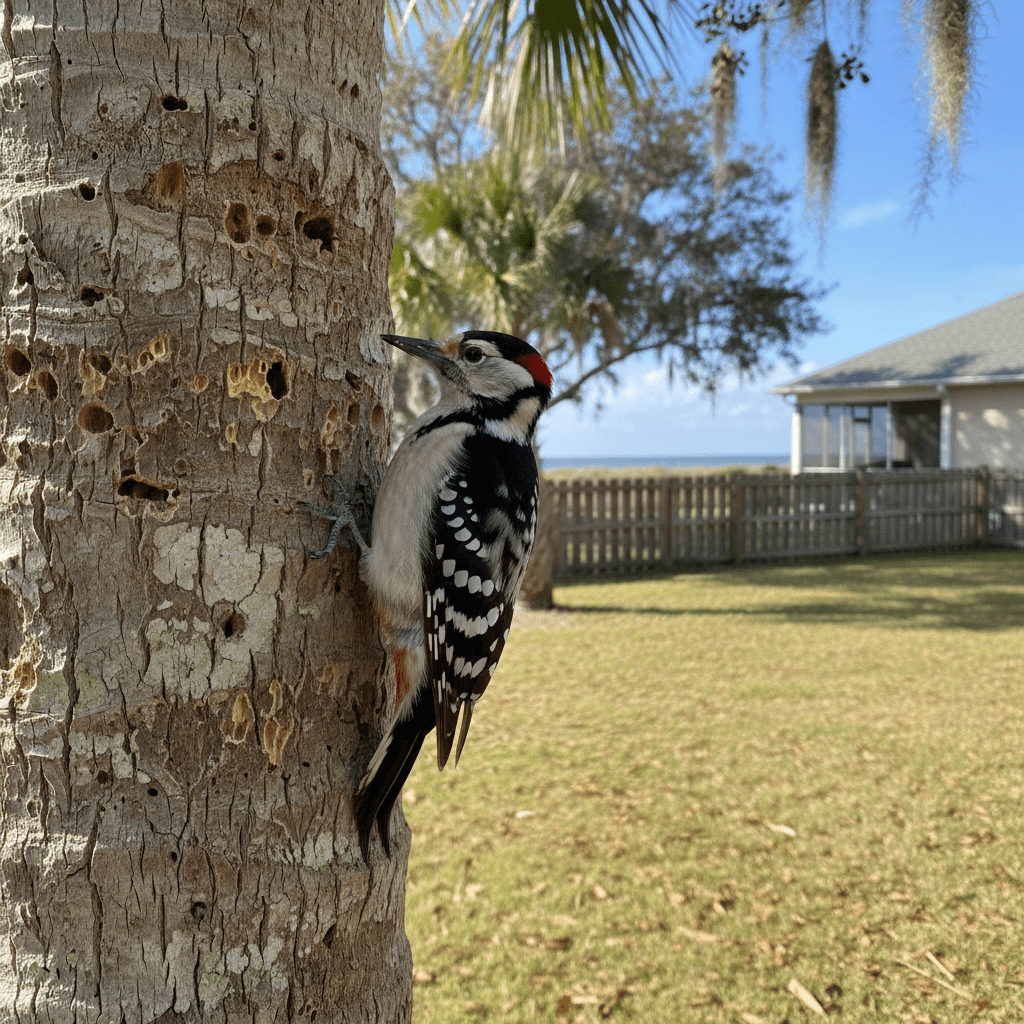
The Hairy Woodpecker is a medium-sized bird, about 7-10 inches long, with a mostly black and white body. It has a long, chisel-like bill, a white stripe down its back, and males have a red patch on the back of their head. They are often confused with Downy Woodpeckers, but Hairy Woodpeckers are significantly larger with a longer bill.
Signs of Infestation
Hairy Woodpeckers are not an infestation risk, but their presence can be indicated by small, evenly spaced holes in wood siding, fences, or trees. These holes are created as they search for insects or excavate nesting cavities. Persistent drumming sounds against structures, especially in the early morning, may also be a sign of their activity.
Health Risks
Hairy Woodpeckers do not pose a direct health risk to humans in Myrtle Beach. However, the damage they cause to wooden structures while searching for insects can lead to cosmetic issues and potentially compromise structural integrity over time. Their drumming can also be a nuisance to residents.
Our Treatment Method
MBPC does not typically handle Hairy Woodpecker issues, as they are a protected species. However, we can offer advice on preventative measures to deter them from damaging your Grand Strand property. As a licensed pest control provider, we advise against any harmful actions toward woodpeckers and recommend consulting with wildlife specialists if necessary.
Prevention Tips
To deter Hairy Woodpeckers, consider using visual deterrents like reflective tape or hanging shiny objects near areas where they are causing damage. Installing bird netting over vulnerable surfaces can also be effective. Addressing underlying insect infestations in wood siding can also discourage woodpeckers from foraging on your Myrtle Beach home.
Habitat
Hairy Woodpeckers are common in wooded areas throughout Myrtle Beach and coastal South Carolina. They prefer habitats with mature trees, both living and dead, where they can find insects and excavate nesting cavities. They are frequently observed in residential neighborhoods with mature trees and along the edges of wooded areas near salt marshes.
Peak activity: Year-Round
Identification Photos
Frequently Asked Questions About Hairy Woodpecker
Yes, Hairy Woodpeckers are protected under the Migratory Bird Treaty Act. It is illegal to harm, kill, or possess them without a permit. If you are experiencing issues with woodpeckers damaging your Myrtle Beach home, contact a wildlife professional for humane solutions.
Hairy Woodpeckers peck for several reasons: to find insects, to excavate nesting cavities, or to drum for territorial display. If they are pecking on your Myrtle Beach home, they may be searching for insects in the siding or attracted to the sound of the drumming on the structure.
Hairy Woodpeckers are larger than Downy Woodpeckers, with a longer bill relative to their head size. If you see one in your Myrtle Beach yard, observe its size – Hairy Woodpeckers are closer in size to a robin, while Downy Woodpeckers are smaller.
MBPC does not typically handle bird removal. We can, however, assess your property for conditions attracting woodpeckers, such as insect infestations, and advise on preventative measures that are SC Department of Pesticide Regulation compliant. We recommend contacting a wildlife removal specialist for humane relocation if necessary.
Don't Let Pests Win.
Take Back Your Home Today.
Every day you wait gives pests more time to multiply and cause damage. Our licensed technicians are ready to help — often the same day you call.
Free Inspection
No cost, no obligation
Same-Day Service
Fast response guaranteed
Eco-Friendly
Safe for family & pets
100% Guarantee
Pests return, so do we
Ready to get started?
Choose how you'd like to connect with us.
Available Mon-Fri 8am-6pm, Sat 9am-2pm