Hoary bat
Lasiurus cinereus
wildlifeHow to Identify
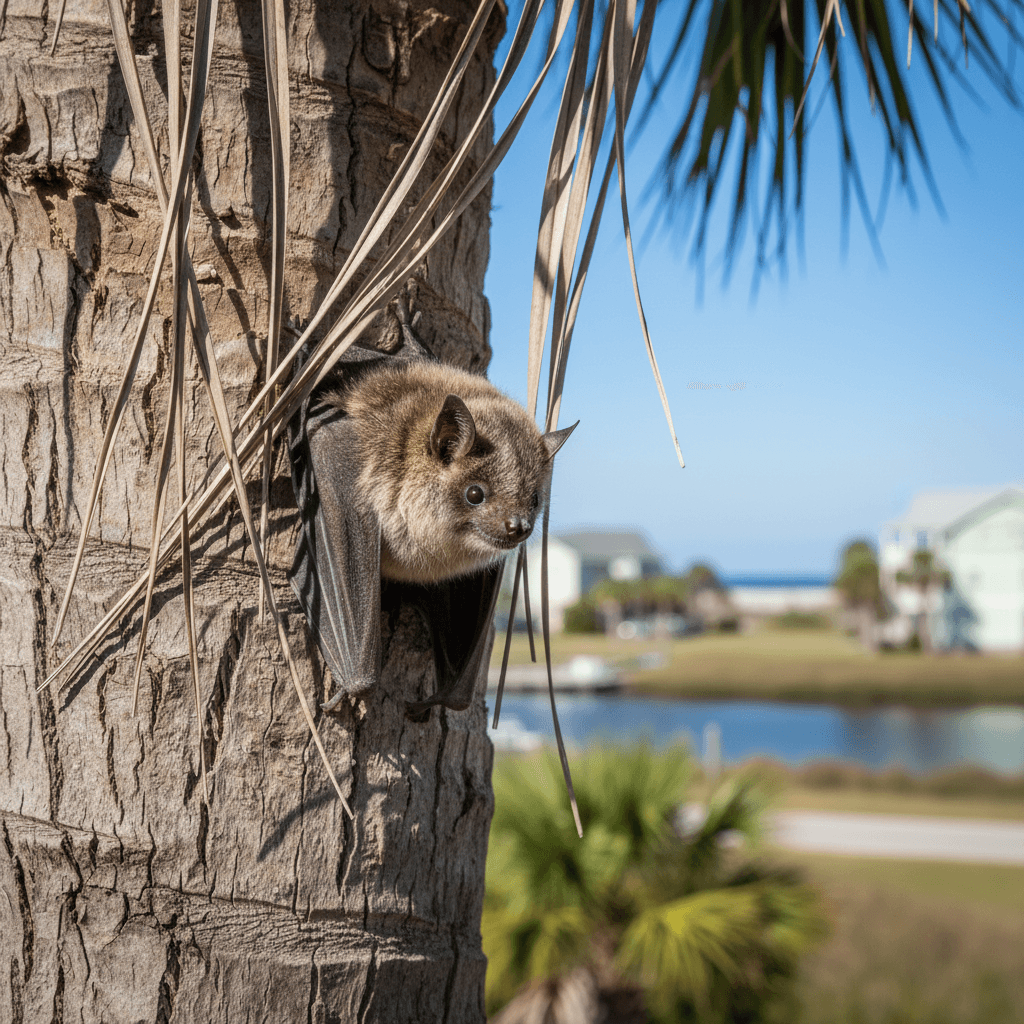
Hoary bats are large bats, typically 5-6 inches long, with a wingspan of 13-17 inches. They are distinguished by their frosted or 'hoary' appearance due to the white-tipped fur. Their fur is a mix of dark brown, gray, and white, and they have a distinctive yellow or orange throat patch.
Signs of Infestation
Hoary bats are solitary and rarely roost in buildings. However, their presence might be indicated by guano (bat droppings) near entry points to attics or sheds, though this is less common than with colonial bat species. You may also occasionally see them flying around dusk as they forage for insects near your Myrtle Beach property.
Health Risks
While hoary bats are not typically aggressive, they can carry rabies, like any mammal. Direct contact should be avoided. Guano accumulation, although unlikely with this species, can potentially harbor histoplasmosis spores if it occurs in enclosed spaces in your Myrtle Beach home.
Our Treatment Method
MBPC does not typically handle hoary bat removal, as they are a protected species and are solitary. If a hoary bat is found inside a building, contacting a wildlife rehabilitator is recommended. Exclusion methods can be implemented to prevent bats from entering structures, in accordance with SC Department of Pesticide Regulation guidelines.
Prevention Tips
Seal any potential entry points to your home, such as gaps around pipes or vents. Ensure screens on windows and doors are intact to prevent bats from accidentally entering living spaces. Remove standing water sources that can attract insects, their primary food source, around your Grand Strand property.
Habitat
Hoary bats prefer wooded areas near open spaces, such as parks, golf courses, and waterfronts, which are common in the Myrtle Beach area. They roost primarily in trees, often at the edge of forests or along tree lines. They are well-adapted to the humid subtropical climate of coastal South Carolina and forage for insects throughout the warmer months.
Peak activity: Spring-Fall
Identification Photos
Frequently Asked Questions About Hoary bat
Hoary bats are not typically aggressive but can bite if handled. Like all mammals, they can carry rabies. Avoid direct contact. If you find a bat behaving strangely, contact animal control in Myrtle Beach.
If a bat is in your living space, confine it to a single room and open a window or door to the outside. The bat will usually find its way out. Do not attempt to handle it. If the bat cannot be safely removed, contact a wildlife removal service.
Yes, hoary bats are protected under South Carolina state law. It is illegal to harm or kill them. Exclusion methods, when necessary, should be performed by qualified professionals in accordance with state regulations. Contacting SC DNR is always recommended before taking action.
Hoary bats are insectivores. They primarily feed on moths, beetles, and other flying insects, providing a natural form of pest control in the Myrtle Beach area. They forage at dusk and dawn, often in open areas near forests.
Don't Let Pests Win.
Take Back Your Home Today.
Every day you wait gives pests more time to multiply and cause damage. Our licensed technicians are ready to help — often the same day you call.
Free Inspection
No cost, no obligation
Same-Day Service
Fast response guaranteed
Eco-Friendly
Safe for family & pets
100% Guarantee
Pests return, so do we
Ready to get started?
Choose how you'd like to connect with us.
Available Mon-Fri 8am-6pm, Sat 9am-2pm