Horse fly
Tabanus atratus
insectsHow to Identify
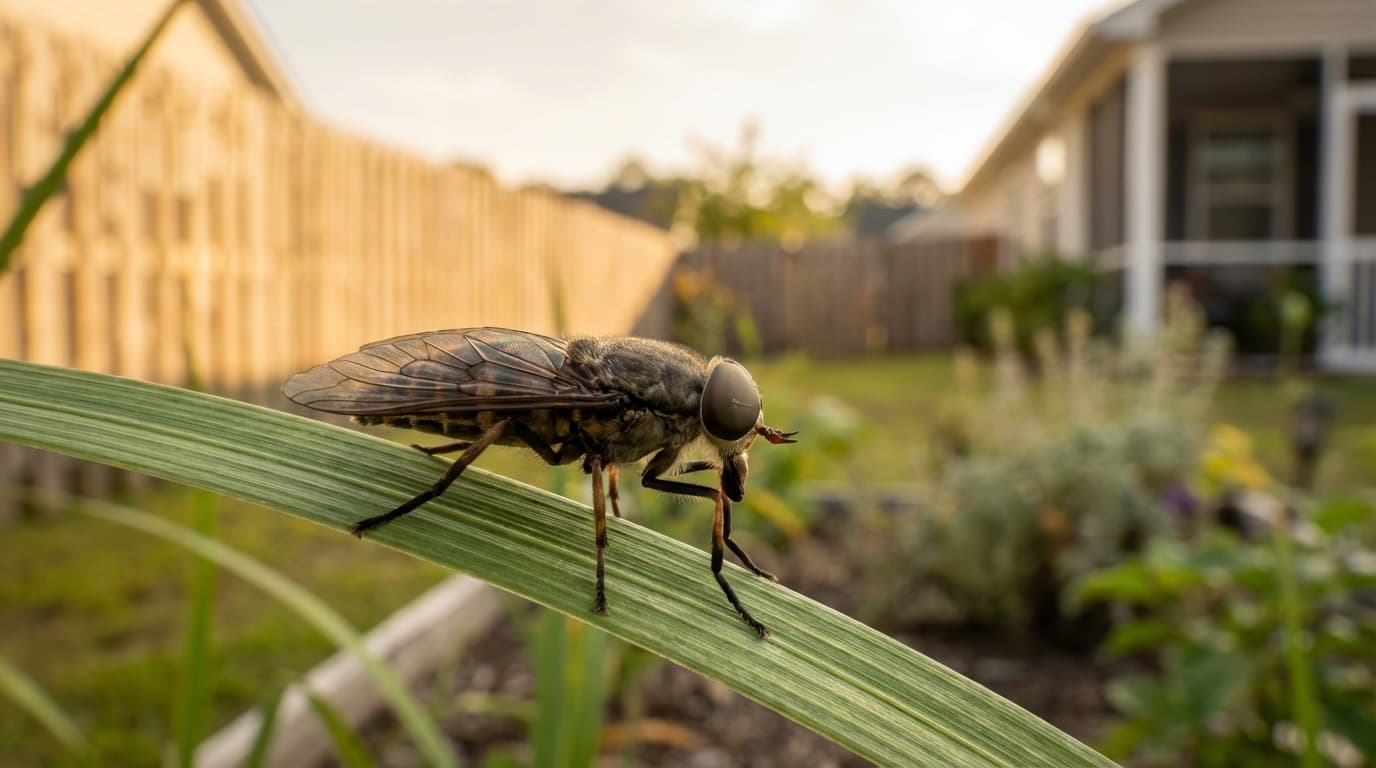
Horse flies are large, robust flies, typically 3/4 to 1 1/4 inches long. They are characterized by their large, iridescent eyes and piercing-sucking mouthparts. Their coloration ranges from gray to dark brown, with some species having banded abdomens.
Signs of Infestation
While horse flies don't infest homes, their presence is noticeable due to their painful bites, especially during daylight hours. Look for them in areas with standing water or near livestock, as these are common breeding grounds. Increased activity around your property, especially near the Waccamaw River or Intracoastal Waterway, may indicate a larger local population.
Health Risks
Horse fly bites are painful and can cause welts, itching, and localized swelling. In some individuals, bites may trigger allergic reactions. Because they feed on blood, there is a potential (though rare) risk of disease transmission, especially if they have previously fed on an infected animal. Be particularly cautious around marshes and horse stables in Myrtle Beach.
Our Treatment Method
Due to their wide-ranging habits, direct treatment of horse flies is challenging. MBPC can advise on habitat modification strategies to reduce breeding sites. For properties with severe horse fly issues, area fogging treatments can provide temporary relief, but must be conducted by licensed applicators per SC Department of Pesticide Regulation guidelines. Contact us for consultation.
Prevention Tips
Wear long sleeves and pants when spending time outdoors, especially during peak horse fly season in Myrtle Beach. Use insect repellent containing DEET or picaridin. Eliminate standing water around your property to reduce breeding sites. Consider using fly traps or screens to minimize horse flies near your home or stables.
Habitat
Horse flies thrive in the humid subtropical climate and coastal environment of Myrtle Beach, SC. They are commonly found near marshes, swamps, and other bodies of water, where the females lay their eggs. Larvae develop in moist soil or shallow water, making coastal areas with salt marshes and tidal creeks ideal breeding grounds.
Peak activity: Summer
Identification Photos
Frequently Asked Questions About Horse fly
Horse flies are attracted to movement, dark colors, carbon dioxide, and moisture. Properties near standing water, marshes, or with livestock are particularly susceptible in the Grand Strand.
Horse flies are not inherently dangerous but their bites are painful and can cause allergic reactions in sensitive individuals. They can also transmit diseases, although this is rare. Take precautions to avoid bites when outdoors in Myrtle Beach.
Complete eradication of horse flies is difficult due to their breeding habits. Reducing standing water, using insect repellent, and wearing protective clothing can help. MBPC can assess your property and recommend targeted strategies to minimize their presence.
No, horse flies will bite any warm-blooded animal, including humans. They are opportunistic feeders and are not limited to horses, especially in residential areas around Myrtle Beach.
Don't Let Pests Win.
Take Back Your Home Today.
Every day you wait gives pests more time to multiply and cause damage. Our licensed technicians are ready to help — often the same day you call.
Free Inspection
No cost, no obligation
Same-Day Service
Fast response guaranteed
Eco-Friendly
Safe for family & pets
100% Guarantee
Pests return, so do we
Ready to get started?
Choose how you'd like to connect with us.
Available Mon-Fri 8am-6pm, Sat 9am-2pm