House Centipede
Scutigera coleoptrata
myriapodsHow to Identify
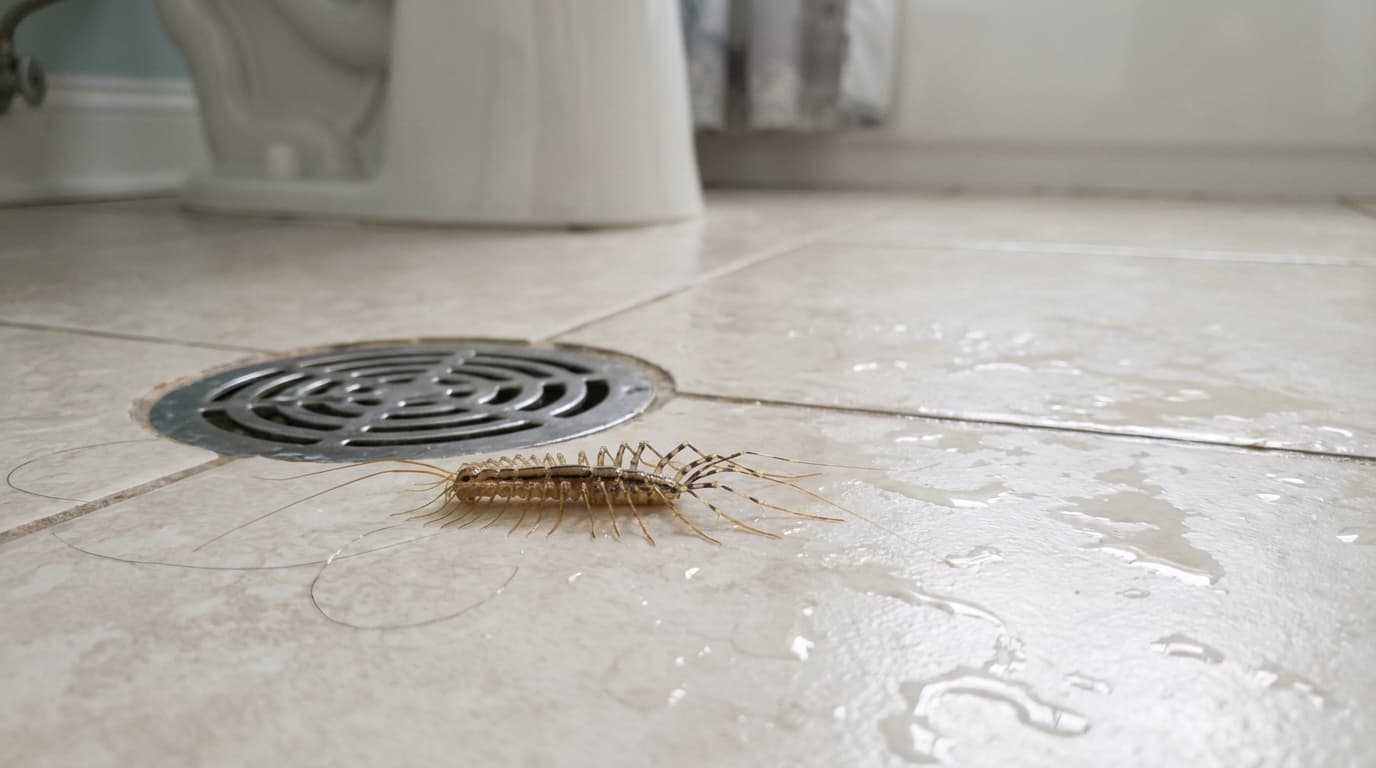
House centipedes are yellowish-gray with dark stripes and 15 pairs of long, banded legs, allowing for rapid movement. They can grow up to 1-1.5 inches long and have a pair of long, thread-like antennae. Their many legs distinguish them from other common household pests.
Signs of Infestation
Spotting one or two house centipedes isn't usually cause for alarm, but frequent sightings may indicate a larger population and an underlying moisture problem. Look for them in damp areas like bathrooms, basements, and crawl spaces, as well as under rocks and debris near the foundation of your Myrtle Beach home. They hunt other insects, so their presence can indicate other pest issues.
Health Risks
House centipedes are generally considered nuisance pests in Myrtle Beach and pose little direct threat to human health. They can bite if threatened, but their bite is typically no more painful than a bee sting and rarely causes serious medical issues. Their presence may, however, indicate other pest problems that could pose health risks.
Our Treatment Method
MBPC provides targeted treatments to reduce house centipede populations, focusing on addressing underlying moisture issues and eliminating their food sources. Our licensed technicians can apply residual insecticides in cracks and crevices where they harbor, following all SC Department of Pesticide Regulation guidelines. We also offer preventative measures to help keep these pests out of your Grand Strand home.
Prevention Tips
Reduce moisture in and around your Myrtle Beach home by fixing leaky pipes and improving ventilation in crawl spaces and basements. Seal cracks and crevices in the foundation and around windows and doors to prevent entry. Clear away leaf litter, mulch, and other debris from around the perimeter of your home to eliminate potential harborage sites.
Habitat
House centipedes thrive in the humid subtropical climate of coastal South Carolina, seeking shelter in damp, dark places. They are commonly found in basements, crawl spaces, and bathrooms, as well as under rocks, logs, and mulch around the foundation of homes along the Grand Strand. Their preference for moisture makes them common in areas with poor drainage or high humidity.
Peak activity: Year-Round
Identification Photos
Frequently Asked Questions About House Centipede
House centipedes are not considered dangerous in Myrtle Beach. They can bite if threatened, but their bite is usually mild. They are more of a nuisance pest than a threat to your health.
House centipedes are attracted to damp environments and feed on other insects. If you have a moisture problem or other pests in your Myrtle Beach home, you may be attracting house centipedes.
Reducing moisture and eliminating their food source (other insects) is key. Contacting MBPC for a professional inspection and treatment is the most effective way to control house centipede populations in your Grand Strand home.
Seal cracks and crevices, reduce moisture, and remove debris around your foundation to prevent house centipedes from entering your Myrtle Beach home. Regular pest control treatments from MBPC can also help.
Don't Let Pests Win.
Take Back Your Home Today.
Every day you wait gives pests more time to multiply and cause damage. Our licensed technicians are ready to help — often the same day you call.
Free Inspection
No cost, no obligation
Same-Day Service
Fast response guaranteed
Eco-Friendly
Safe for family & pets
100% Guarantee
Pests return, so do we
Ready to get started?
Choose how you'd like to connect with us.
Available Mon-Fri 8am-6pm, Sat 9am-2pm