House Finch
Haemorhous mexicanus
birdsHow to Identify
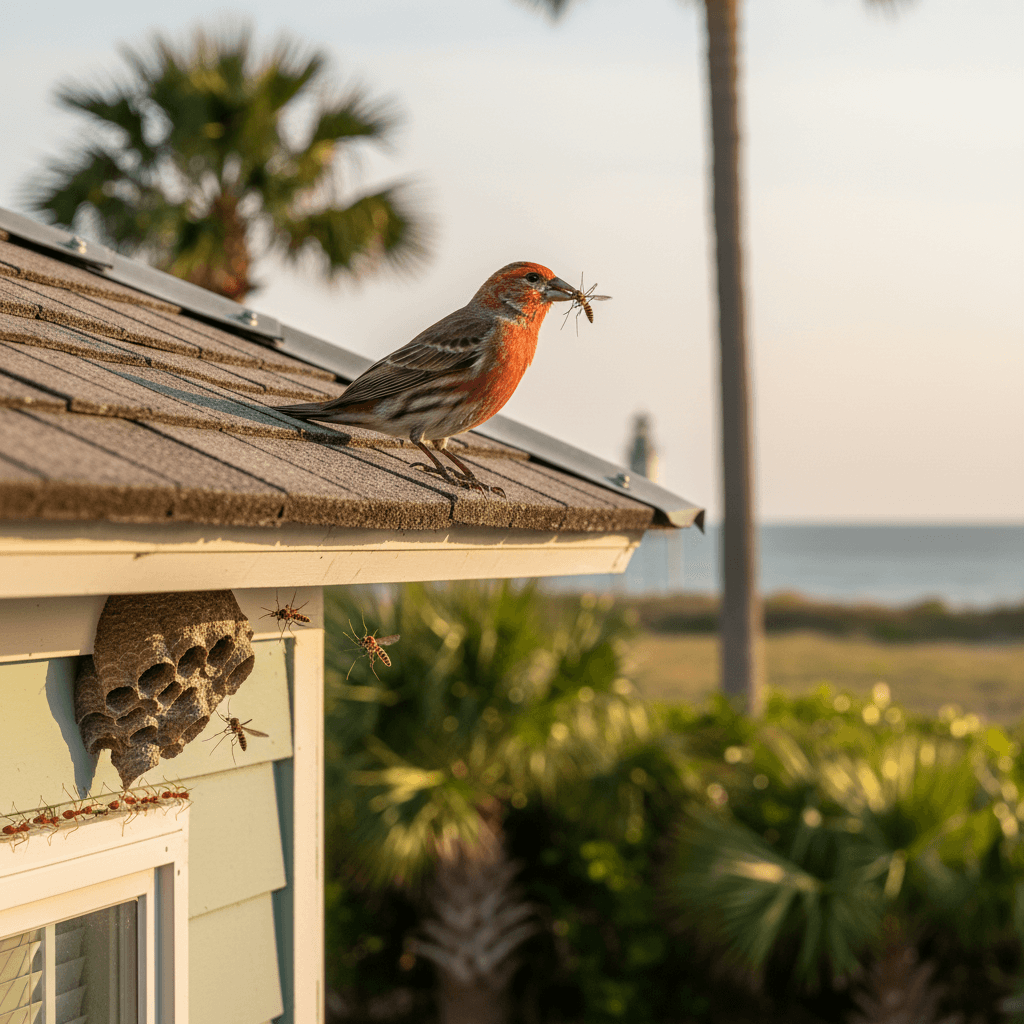
Male house finches are easily recognized by their reddish-orange head and breast, while females have more subdued brown streaking. They are small birds, typically around 5-6 inches long, with a conical bill perfect for cracking seeds. Listen for their cheerful, warbling song.
Signs of Infestation
House finches are attracted to bird feeders, so excessive bird activity around your yard can be a sign. You might also find nests built in sheltered areas around your home, such as eaves, hanging plants, or dense shrubs. Droppings may accumulate under favored perches.
Health Risks
While generally harmless, large populations of house finches can create unsanitary conditions with their droppings, which may carry diseases transmissible to humans. Nesting materials can also attract other pests to your Myrtle Beach home. Bird mites, though rare, can sometimes bite humans if their bird hosts leave the nest.
Our Treatment Method
MBPC does not typically handle bird removal directly, as many species are protected. We can advise on humane deterrents and exclusion methods to discourage house finches from nesting on your property. Our licensed technicians can also address any secondary pest issues, such as mites, that may arise. Contact the SC Department of Natural Resources for bird relocation guidelines.
Prevention Tips
Regularly clean up birdseed spills around feeders to avoid attracting large flocks. Consider using feeders designed to prevent spillage. Trim back overgrown shrubs and vines around your Myrtle Beach home to reduce potential nesting sites.
Habitat
House finches are common throughout Myrtle Beach, adapting well to both urban and suburban environments. They are frequently found in areas with access to seeds and water, such as backyard bird feeders, gardens, and parks. These birds often nest in shrubs, trees, and even artificial structures like building ledges.
Peak activity: Year-Round
Identification Photos
Frequently Asked Questions About House Finch
Yes, house finches are protected under the Migratory Bird Treaty Act. It is illegal to harm or kill them, or to disturb their nests during nesting season without proper permits. Contact the SC Department of Natural Resources for guidance.
Remove potential nesting sites by clearing away debris and trimming overgrown vegetation. You can also try hanging shiny, reflective objects or using bird netting to deter them. Avoid leaving out nesting materials like yarn or string.
House finches primarily eat seeds, buds, and berries. They are commonly attracted to bird feeders offering sunflower seeds and nyjer seed. In Myrtle Beach, they also forage on wild seeds and berries in parks and gardens.
While house finches themselves are not directly related to other pest infestations, their nests can sometimes harbor bird mites. If you suspect a mite problem, contact MBPC for an inspection and treatment plan.
Don't Let Pests Win.
Take Back Your Home Today.
Every day you wait gives pests more time to multiply and cause damage. Our licensed technicians are ready to help — often the same day you call.
Free Inspection
No cost, no obligation
Same-Day Service
Fast response guaranteed
Eco-Friendly
Safe for family & pets
100% Guarantee
Pests return, so do we
Ready to get started?
Choose how you'd like to connect with us.
Available Mon-Fri 8am-6pm, Sat 9am-2pm