House gecko
Hemidactylus frenatus
reptilesHow to Identify
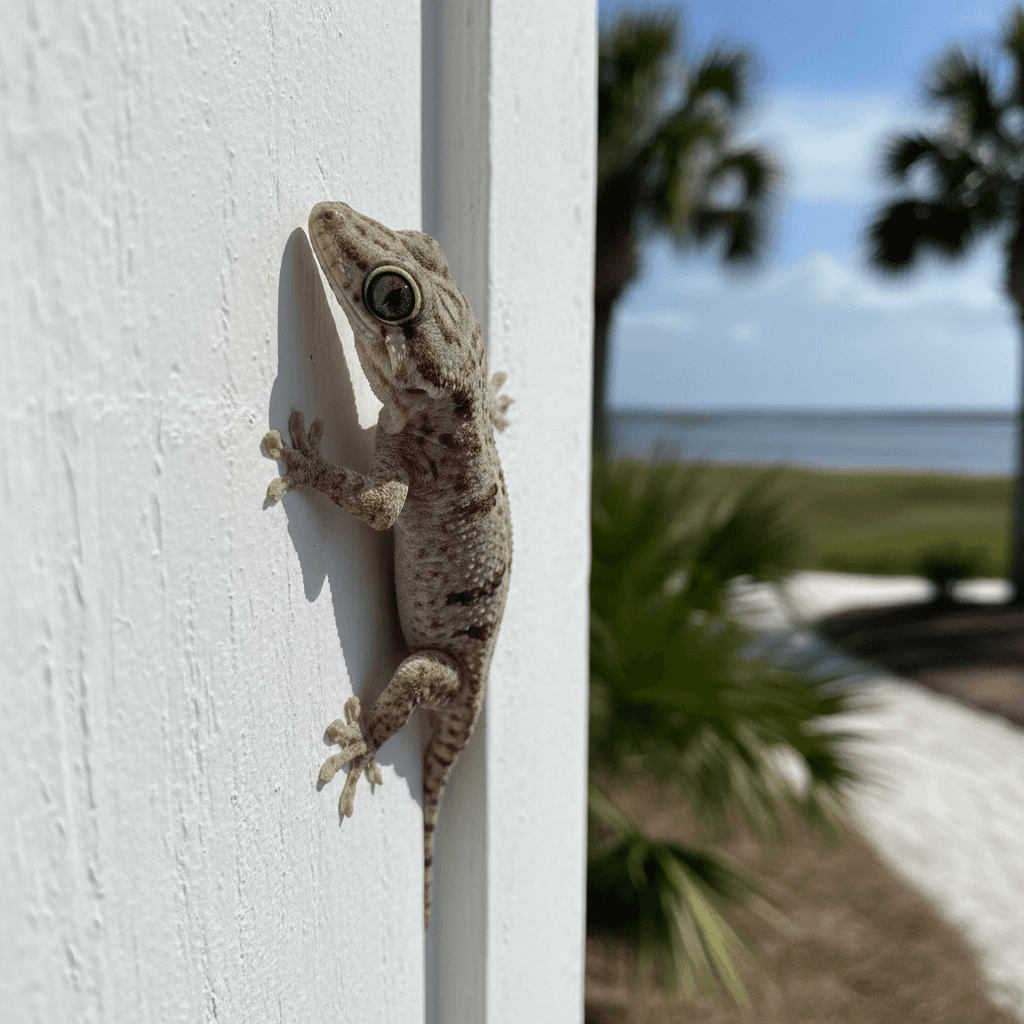
House geckos are small, slender lizards, typically 3-6 inches long. They are pale gray or tan with slightly bumpy skin and large, lidless eyes. Their toes have specialized pads that allow them to climb smooth surfaces, even upside down.
Signs of Infestation
You might notice house geckos by their presence on walls, ceilings, or around lights at night, especially in warmer months in Myrtle Beach. Small, dark droppings, similar in size to mouse droppings, are another common sign. Their soft chirping or clicking vocalizations can also indicate their presence.
Health Risks
House geckos are not considered dangerous to humans in Myrtle Beach. They don't bite or carry diseases harmful to people. However, their droppings can be a nuisance and may potentially carry bacteria, though the risk is low. Some residents may be startled by their presence indoors.
Our Treatment Method
MBPC does not typically treat for house geckos, as they are generally considered harmless and can even help control insect populations. Sealing entry points and reducing outdoor lighting are the most effective methods for discouraging them from entering your Grand Strand home. If you have concerns, our SC-licensed technicians can provide exclusion advice.
Prevention Tips
Reduce outdoor lighting to minimize the attraction of insects, their primary food source. Seal cracks and crevices around windows, doors, and foundations to prevent entry into your Myrtle Beach home. Clear vegetation away from the foundation to reduce harborage areas in our sandy soil.
Habitat
House geckos thrive in warm, humid environments like Myrtle Beach. They are commonly found in coastal areas, taking refuge in homes, garages, and sheds. They seek out sheltered spots during the day and are active at night, hunting insects around lights in our subtropical climate.
Peak activity: Year-Round
Identification Photos
Frequently Asked Questions About House gecko
No, house geckos are not poisonous or venomous. They are harmless to humans and pets in Myrtle Beach.
House geckos primarily eat insects, spiders, and other small invertebrates. They are beneficial in controlling insect populations around your Myrtle Beach home.
You can discourage house geckos by reducing outdoor lighting, sealing entry points, and removing potential food sources. However, because they are harmless and eat insects, many Myrtle Beach residents tolerate their presence.
No, house geckos are not native to South Carolina. They are believed to have been introduced to the area. They've become common due to our warm, humid climate along the Grand Strand.
Don't Let Pests Win.
Take Back Your Home Today.
Every day you wait gives pests more time to multiply and cause damage. Our licensed technicians are ready to help — often the same day you call.
Free Inspection
No cost, no obligation
Same-Day Service
Fast response guaranteed
Eco-Friendly
Safe for family & pets
100% Guarantee
Pests return, so do we
Ready to get started?
Choose how you'd like to connect with us.
Available Mon-Fri 8am-6pm, Sat 9am-2pm