
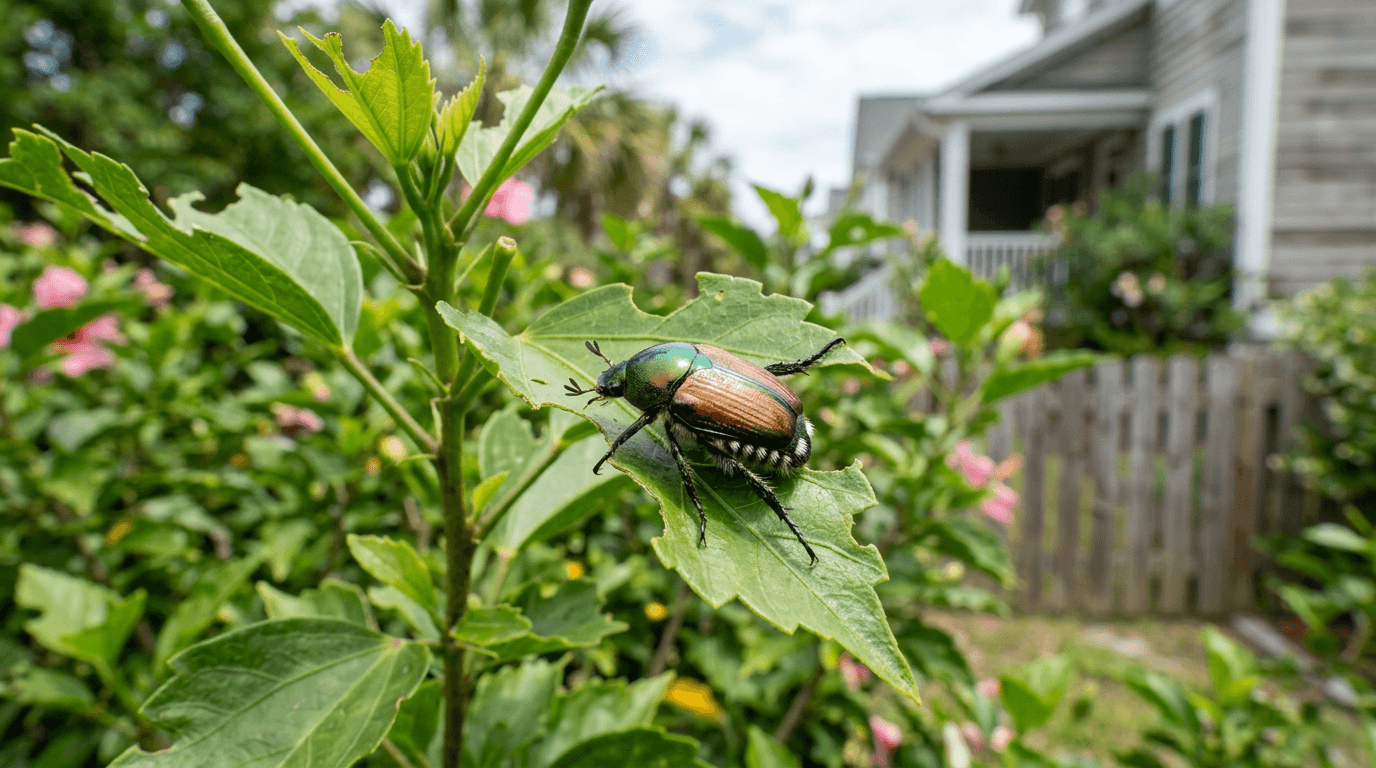
Japanese beetle
Popillia japonica
insectsHow to Identify
Japanese beetles are metallic green beetles about 1/2 inch long with bronze-colored wing covers. They have five patches of white hairs along each side of their abdomen, making them easily identifiable. These beetles often congregate in large numbers, causing significant damage to plants.
Signs of Infestation
Look for skeletonized leaves, where only the veins remain after beetles have consumed the tissue between them. You might also notice large numbers of beetles actively feeding on flowers, fruits, and foliage. In lawns, grub infestations can cause brown patches as they feed on grass roots.
Health Risks
Japanese beetles do not directly pose health risks to humans in Myrtle Beach. However, their damage to ornamental plants and gardens can be frustrating. Allergic reactions to beetle exoskeletons are possible but uncommon, especially with significant exposure.
Our Treatment Method
MBPC offers targeted treatments to control Japanese beetle populations in the Grand Strand area. Our licensed technicians can apply insecticides to protect vulnerable plants. We also recommend grub control treatments in lawns to reduce the beetle population the following year, in accordance with SC Department of Pesticide Regulation standards.
Prevention Tips
Inspect new plants for beetles before introducing them to your garden. Use netting or row covers to protect vulnerable plants during peak beetle activity in Myrtle Beach. Encourage natural predators like birds and beneficial nematodes in your yard to help control beetle populations.
Habitat
Japanese beetles thrive in the humid subtropical climate of Myrtle Beach. They are commonly found on ornamental plants, turf grass, and various agricultural crops. Grubs live in the soil, feeding on roots, while adults are active above ground, devouring foliage and flowers throughout coastal SC.
Peak activity: Summer
Identification Photos
Frequently Asked Questions About Japanese beetle
Japanese beetles are notorious for damaging roses, crape myrtles, and fruit trees in Myrtle Beach gardens. They also feed on beans, grapes, and various ornamental plants. Regular monitoring is essential to protect your valuable landscape.
Yes, Japanese beetle grubs feed on grass roots, causing brown patches and thinning turf in Myrtle Beach lawns. Significant grub infestations can weaken the turf, making it more susceptible to other pests and diseases. Consider a grub control treatment to prevent damage.
Japanese beetles are most active during the summer months (June-August) in Myrtle Beach. They emerge from the soil as adults and feed voraciously on plants. This is the time to implement control measures to minimize damage.
Yes, you can handpick beetles from plants and drop them into soapy water. Netting can also protect vulnerable plants. Introducing beneficial nematodes to your lawn can control grubs naturally. However, for severe infestations, professional treatment from MBPC may be necessary.
Don't Let Pests Win.
Take Back Your Home Today.
Every day you wait gives pests more time to multiply and cause damage. Our licensed technicians are ready to help — often the same day you call.
Free Inspection
No cost, no obligation
Same-Day Service
Fast response guaranteed
Eco-Friendly
Safe for family & pets
100% Guarantee
Pests return, so do we
Ready to get started?
Choose how you'd like to connect with us.
Available Mon-Fri 8am-6pm, Sat 9am-2pm