Lone star tick
Amblyomma americanum
arachnidsHow to Identify
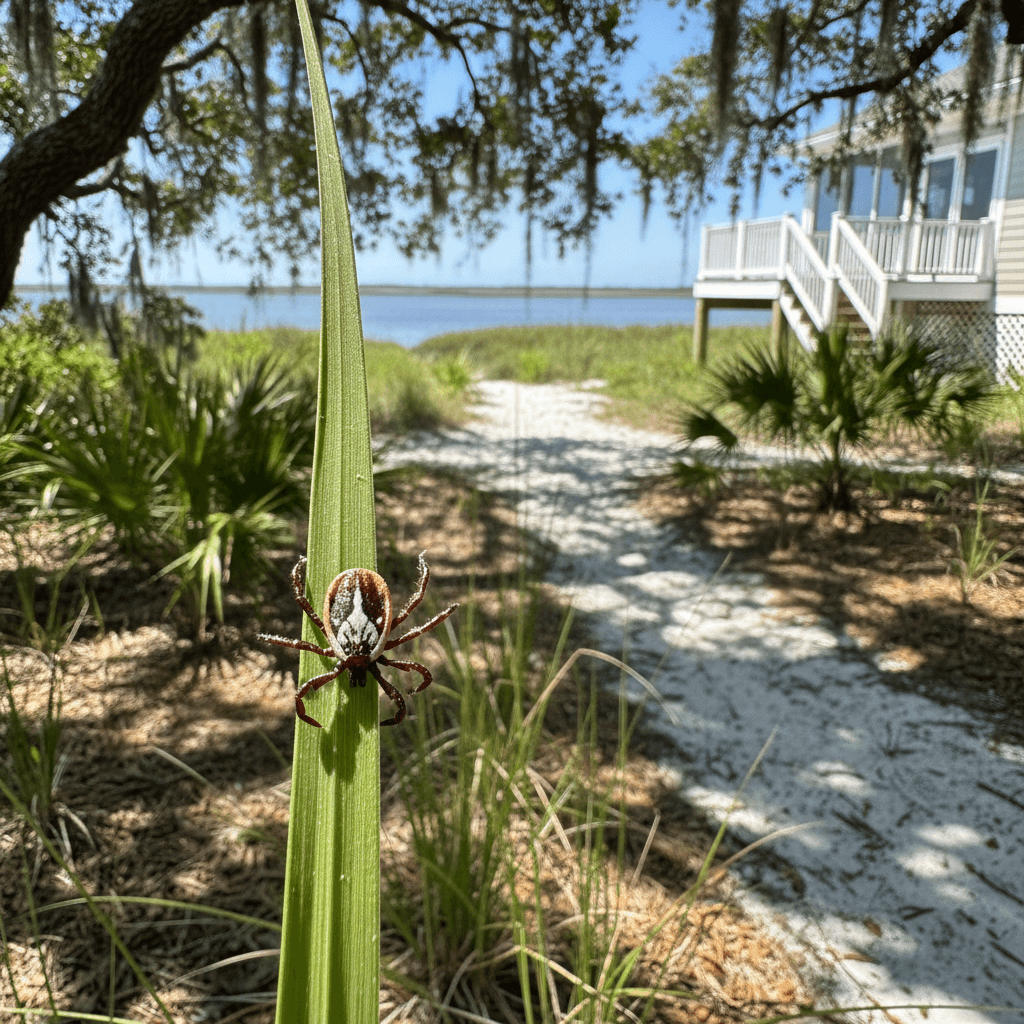
Lone star ticks are reddish-brown, and adult females have a distinctive white dot or 'lone star' on their backs. They are aggressive biters and can be found in wooded areas and tall grasses. Adults are about 1/4 inch long before feeding, but swell considerably after a blood meal.
Signs of Infestation
Finding ticks crawling on clothing or pets after spending time outdoors is a primary sign. Frequent tick bites, especially after walking in grassy or wooded areas near your Myrtle Beach home, indicate a local population. Inspect your pets regularly for ticks, paying close attention to areas around the ears, neck, and between the toes.
Health Risks
Lone star ticks can transmit diseases like ehrlichiosis, STARI (Southern Tick-Associated Rash Illness), and tularemia. Their bites can also cause alpha-gal syndrome, a red meat allergy. Given the high tick population in Myrtle Beach, prompt tick removal and medical attention after a bite is crucial.
Our Treatment Method
MBPC offers targeted tick control treatments for your Grand Strand property, focusing on areas where ticks are likely to harbor, such as wooded edges and tall grass. Our licensed technicians use EPA-approved insecticides applied according to SC Department of Pesticide Regulation guidelines to reduce tick populations. We can also advise on landscape modifications to minimize tick habitat.
Prevention Tips
Wear long sleeves and pants when venturing into wooded areas near Myrtle Beach. Use insect repellent containing DEET on exposed skin. Perform regular tick checks on yourself, your children, and your pets after spending time outdoors, especially after visiting local parks and trails.
Habitat
Lone star ticks thrive in the humid subtropical climate and wooded areas of coastal South Carolina. They are commonly found in forests, grasslands, and along the edges of wooded areas, especially near deer trails. In Myrtle Beach, they are prevalent in areas with dense vegetation and high humidity, including yards backing up to wooded areas or salt marshes.
Peak activity: Spring-Fall
Identification Photos
Frequently Asked Questions About Lone star tick
Lone star ticks in the Myrtle Beach area are known to transmit ehrlichiosis, STARI (Southern Tick-Associated Rash Illness), and can cause alpha-gal syndrome (red meat allergy). Prompt medical attention is crucial after a tick bite.
Use fine-tipped tweezers to grasp the tick as close to the skin's surface as possible. Pull upward with steady, even pressure. Do not twist or jerk the tick, as this can cause the mouthparts to break off and remain in the skin. After removing the tick, clean the bite area and your hands with rubbing alcohol or soap and water.
Yes, lone star ticks are known to be more aggressive biters than some other tick species found in South Carolina. They actively seek out hosts and are attracted to carbon dioxide and movement, making them a common nuisance in Myrtle Beach yards and wooded areas.
MBPC can apply targeted insecticide treatments to areas where ticks are likely to harbor, such as wooded edges, tall grass, and underbrush on your Myrtle Beach property. We can also provide recommendations for landscaping modifications to reduce tick habitat and minimize your family's exposure to these pests.
Don't Let Pests Win.
Take Back Your Home Today.
Every day you wait gives pests more time to multiply and cause damage. Our licensed technicians are ready to help — often the same day you call.
Free Inspection
No cost, no obligation
Same-Day Service
Fast response guaranteed
Eco-Friendly
Safe for family & pets
100% Guarantee
Pests return, so do we
Ready to get started?
Choose how you'd like to connect with us.
Available Mon-Fri 8am-6pm, Sat 9am-2pm