
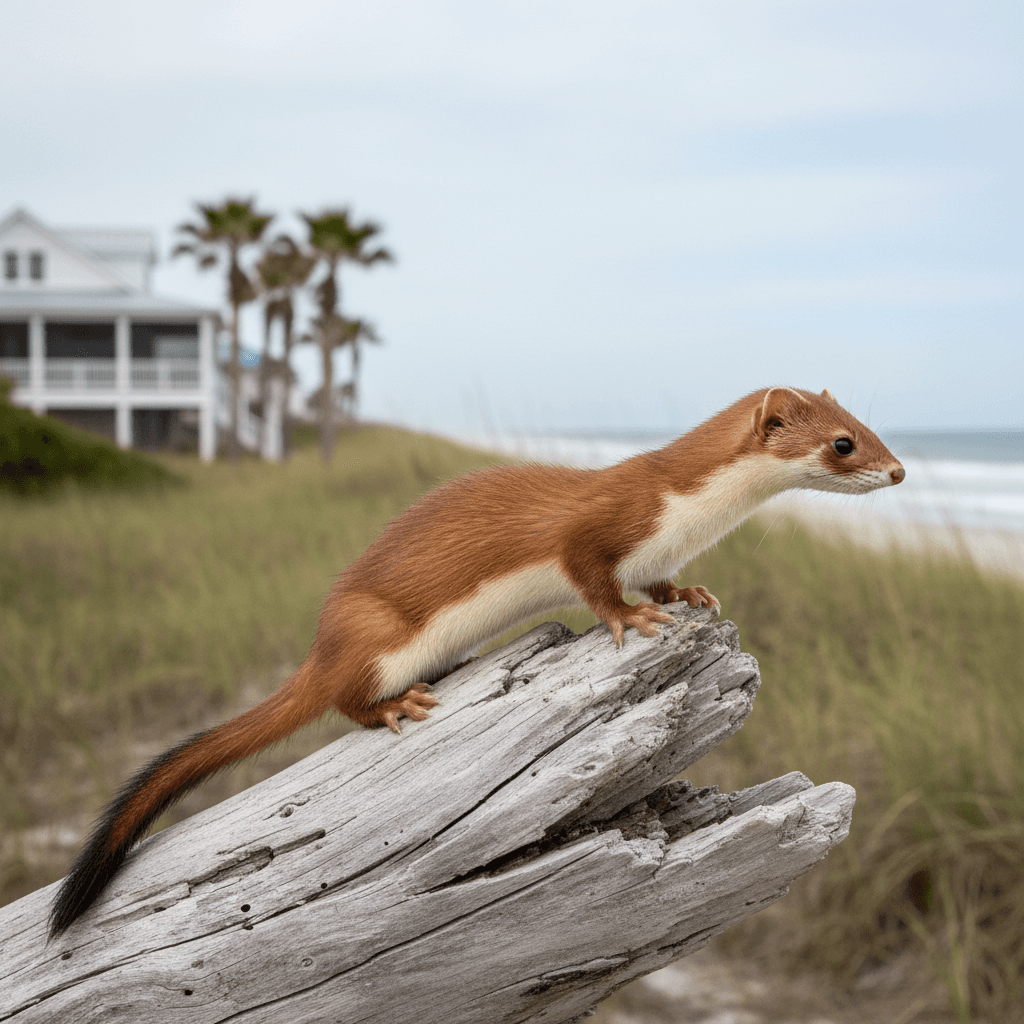
Long-tailed Weasel
Mustela frenata
wildlifeHow to Identify
Long-tailed weasels are slender mammals with a long body and a distinctive long tail, which is about half the length of their body. They have a brown back and a creamy white or yellowish belly. In winter, northern populations turn completely white except for the black tip of their tail.
Signs of Infestation
While not typical household pests, their presence might be indicated by increased rodent activity around the property. You may also find small burrows or dens near your foundation or outbuildings. Additionally, the presence of their scat, which is small and dark, can indicate their presence.
Health Risks
Long-tailed weasels are primarily predators of rodents and pose little direct threat to humans in Myrtle Beach. However, they can occasionally prey on small pets like rabbits or chickens. As wild animals, they can carry diseases and parasites, so avoid direct contact if you encounter one on your Grand Strand property.
Our Treatment Method
MBPC does not typically handle long-tailed weasel removal, as they are a protected wildlife species. If you are experiencing issues with weasels on your property, contact a licensed wildlife removal specialist in the Myrtle Beach area. SC Department of Pesticide Regulation does not regulate wildlife removal; this is managed by SC DNR.
Prevention Tips
Secure your poultry and small pets in sturdy enclosures to prevent access by weasels. Eliminate potential food sources, such as uncovered pet food or spilled birdseed. Seal any openings in your foundation or outbuildings to prevent them from establishing dens near your Myrtle Beach home.
Habitat
Long-tailed weasels prefer wooded areas, grasslands, and areas near water, making the coastal environment of Myrtle Beach suitable habitat. They can be found near salt marshes, tidal creeks, and even residential areas bordering natural spaces. They are adaptable and can thrive in various environments within the humid subtropical climate of coastal SC.
Peak activity: Year-Round
Identification Photos
Frequently Asked Questions About Long-tailed Weasel
Long-tailed weasels are not typically dangerous to humans, but like any wild animal, they should not be approached or handled. They may bite if they feel threatened. Contact animal control if you are concerned about a weasel near your Myrtle Beach home.
Their diet primarily consists of rodents, small mammals, and occasionally birds or eggs. They are efficient predators and play a role in controlling rodent populations in the Myrtle Beach area.
The best way to deter them is to eliminate food sources like rodents, secure chicken coops, and seal any potential entry points into outbuildings. Consult a wildlife specialist for more specific advice for your Grand Strand property.
Regulations vary, and trapping or killing them may be restricted. Contact the South Carolina Department of Natural Resources (SCDNR) for current regulations and permits before taking any action on your Myrtle Beach property.
Don't Let Pests Win.
Take Back Your Home Today.
Every day you wait gives pests more time to multiply and cause damage. Our licensed technicians are ready to help — often the same day you call.
Free Inspection
No cost, no obligation
Same-Day Service
Fast response guaranteed
Eco-Friendly
Safe for family & pets
100% Guarantee
Pests return, so do we
Ready to get started?
Choose how you'd like to connect with us.
Available Mon-Fri 8am-6pm, Sat 9am-2pm