Louse
Pediculus humanus
insectsHow to Identify
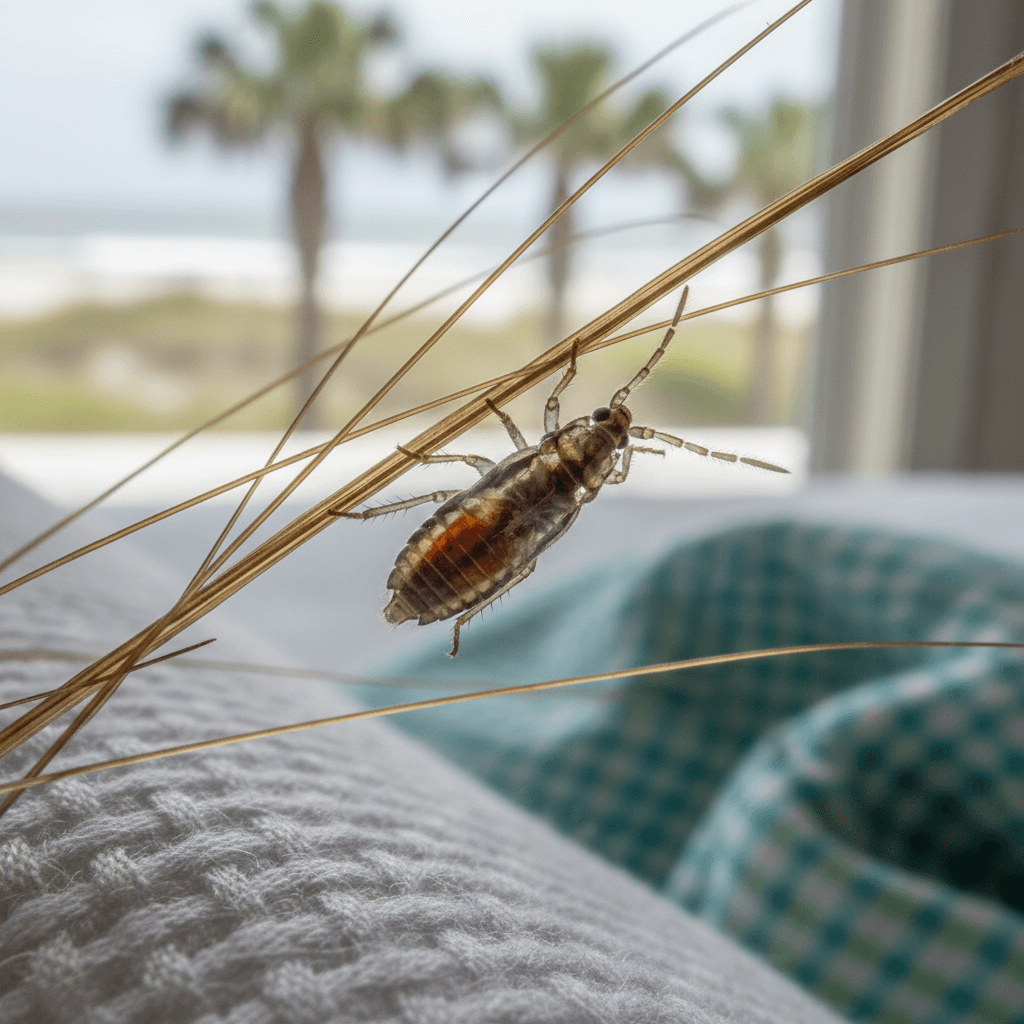
Adult lice are small, wingless insects, about the size of a sesame seed. They are grayish-white to tan and have six legs, each with a claw for gripping hair. Nits (lice eggs) are small, oval-shaped, and firmly attached to hair shafts.
Signs of Infestation
Intense itching, especially on the scalp, body, or pubic area, is the most common sign. You may also see live lice crawling on the skin or nits attached to hair shafts. Small red bumps or sores from scratching can also indicate an infestation.
Health Risks
While lice infestations are generally not dangerous, they can cause intense itching and discomfort, leading to secondary skin infections from scratching. In Myrtle Beach, secondary infections can be exacerbated by the humid climate. Body lice, in rare cases, can transmit diseases, although this is uncommon in the United States.
Our Treatment Method
MBPC does not directly treat human or animal louse infestations, but we can advise on sanitation practices in the home. Consult a medical professional or veterinarian for appropriate treatments such as medicated shampoos, lotions, or oral medications. Always follow product instructions carefully and comply with SC Department of Pesticide Regulation guidelines.
Prevention Tips
Avoid sharing personal items such as hats, combs, brushes, towels, and bedding. Regularly wash and dry clothing and bedding in hot water. In Myrtle Beach, teaching children about personal hygiene and avoiding head-to-head contact can help prevent the spread of head lice.
Habitat
Lice are obligate parasites, meaning they can only survive on a host. Head lice are commonly found on the scalp and hair of humans, while body lice live in clothing and bedding. The humid subtropical climate of coastal SC does not directly impact lice, but overcrowded living conditions can contribute to infestations.
Peak activity: Year-Round
Identification Photos
Frequently Asked Questions About Louse
Lice are spread through direct contact with an infested person or their belongings. Sharing hats, combs, brushes, and bedding can facilitate the spread of lice in Myrtle Beach schools and households.
Lice can only survive for a short time off of a human host, typically 1-2 days. While it's unlikely they'll infest furniture or carpets, vacuuming and washing bedding are recommended to eliminate any stray lice or nits in your Myrtle Beach home.
No, lice infestations can occur regardless of personal hygiene habits. They are common among children in schools and daycare centers. Regular checks for lice, especially among children in Myrtle Beach, can help prevent infestations.
Consult a doctor or pharmacist for appropriate treatment options. Follow product instructions carefully and thoroughly clean bedding and clothing. Alerting close contacts can help prevent further spread of lice in your Myrtle Beach community.
Don't Let Pests Win.
Take Back Your Home Today.
Every day you wait gives pests more time to multiply and cause damage. Our licensed technicians are ready to help — often the same day you call.
Free Inspection
No cost, no obligation
Same-Day Service
Fast response guaranteed
Eco-Friendly
Safe for family & pets
100% Guarantee
Pests return, so do we
Ready to get started?
Choose how you'd like to connect with us.
Available Mon-Fri 8am-6pm, Sat 9am-2pm