
Mediterranean Flour Moth
Ephestia kuehniella
insectsHow to Identify
Mediterranean flour moths are small, about ½ inch long, with pale gray wings that have darker zigzag patterns. When at rest, they fold their wings over their body, giving them a slender appearance. Larvae are creamy-white with a dark head capsule.
Signs of Infestation
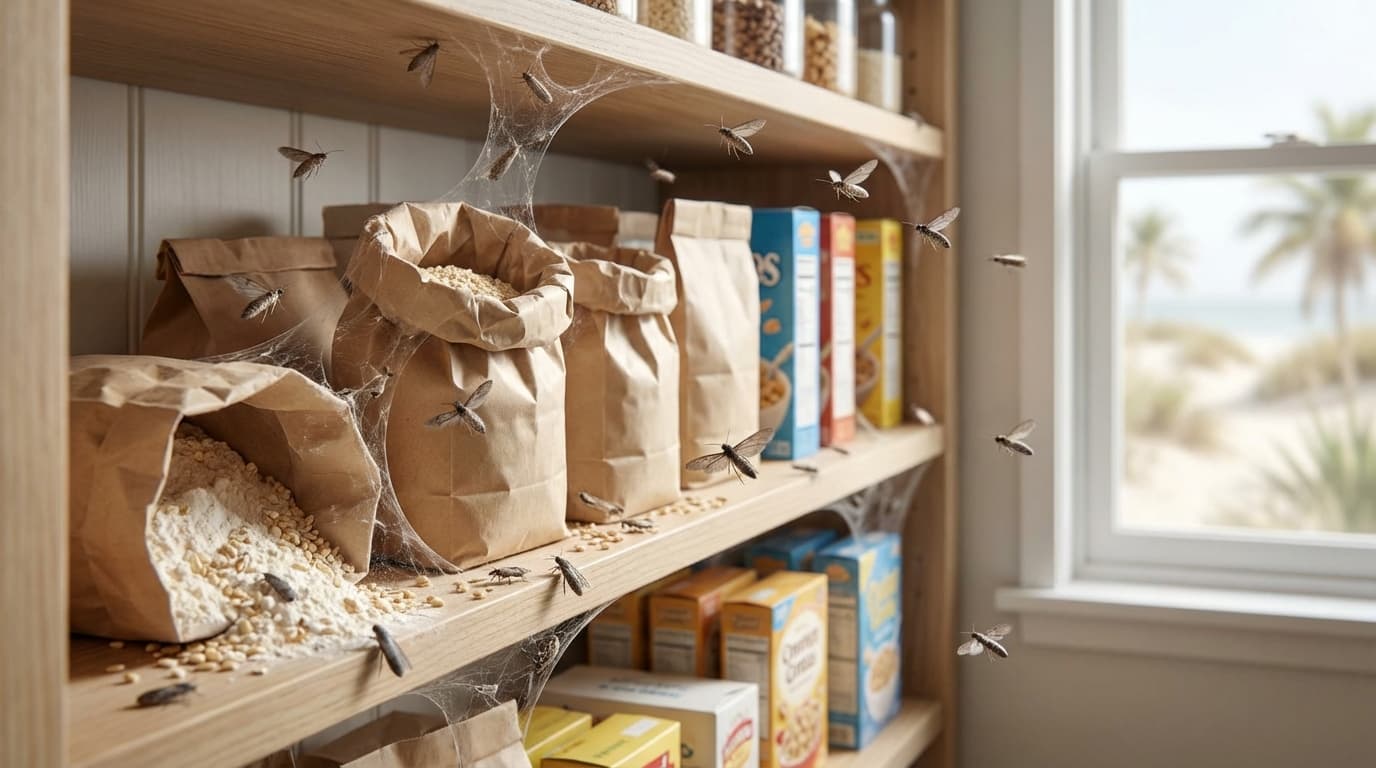
Look for webbing in stored food products like flour, grains, and cereals. You might also find larvae or moths flying around your pantry or kitchen. Clumps of infested food stuck together with silken threads are a common sign.
Health Risks
Mediterranean flour moths do not bite or transmit diseases, but their presence contaminates food products. Consuming infested food can cause allergic reactions in some individuals. In Myrtle Beach, the warm, humid climate encourages rapid reproduction, exacerbating infestations if left unchecked.
Our Treatment Method
MBPC offers thorough inspections and targeted treatments to eliminate Mediterranean flour moth infestations. Our SC-licensed technicians use food-safe methods to remove infested products and apply residual treatments in affected areas. We also provide guidance on proper food storage to prevent future infestations on your Grand Strand property.
Prevention Tips
Store all dry goods, including flour, cereal, and pet food, in airtight containers. Regularly clean pantry shelves and vacuum up any spilled food particles. Consider storing susceptible items in the refrigerator, especially during hot and humid months in Myrtle Beach.
Habitat
These moths thrive in warm, humid environments and are commonly found in kitchens, pantries, and food storage areas in Myrtle Beach homes. They can infest grain mills, food processing plants, and even pet food storage areas. The coastal climate of SC provides ideal conditions for their reproduction and survival.
Peak activity: Year-Round
Identification Photos
Frequently Asked Questions About Mediterranean Flour Moth
First, discard any infested food items in sealed bags. Thoroughly clean your pantry shelves with soap and water, then contact MBPC for professional treatment. We can identify the source of the infestation and apply safe, effective treatments.
Flour moths don't bite or spread diseases, but they contaminate food, making it unappetizing and potentially allergenic. The larvae also create webbing that can clog machinery in food processing plants, causing economic losses in the Grand Strand area.
While airtight containers help, flour moths can enter your home through infested food purchased from the store. They can also sneak in through small cracks or openings in packaging. Inspect dry goods carefully before storing them, especially in humid SC conditions.
Store all dry goods in airtight containers, rotate your stock regularly, and clean your pantry frequently. Consider using bay leaves or other natural repellents in your pantry. If you suspect an infestation, call MBPC for a professional inspection.
Don't Let Pests Win.
Take Back Your Home Today.
Every day you wait gives pests more time to multiply and cause damage. Our licensed technicians are ready to help — often the same day you call.
Free Inspection
No cost, no obligation
Same-Day Service
Fast response guaranteed
Eco-Friendly
Safe for family & pets
100% Guarantee
Pests return, so do we
Ready to get started?
Choose how you'd like to connect with us.
Available Mon-Fri 8am-6pm, Sat 9am-2pm