Mule Deer
Odocoileus hemionus
wildlifeHow to Identify
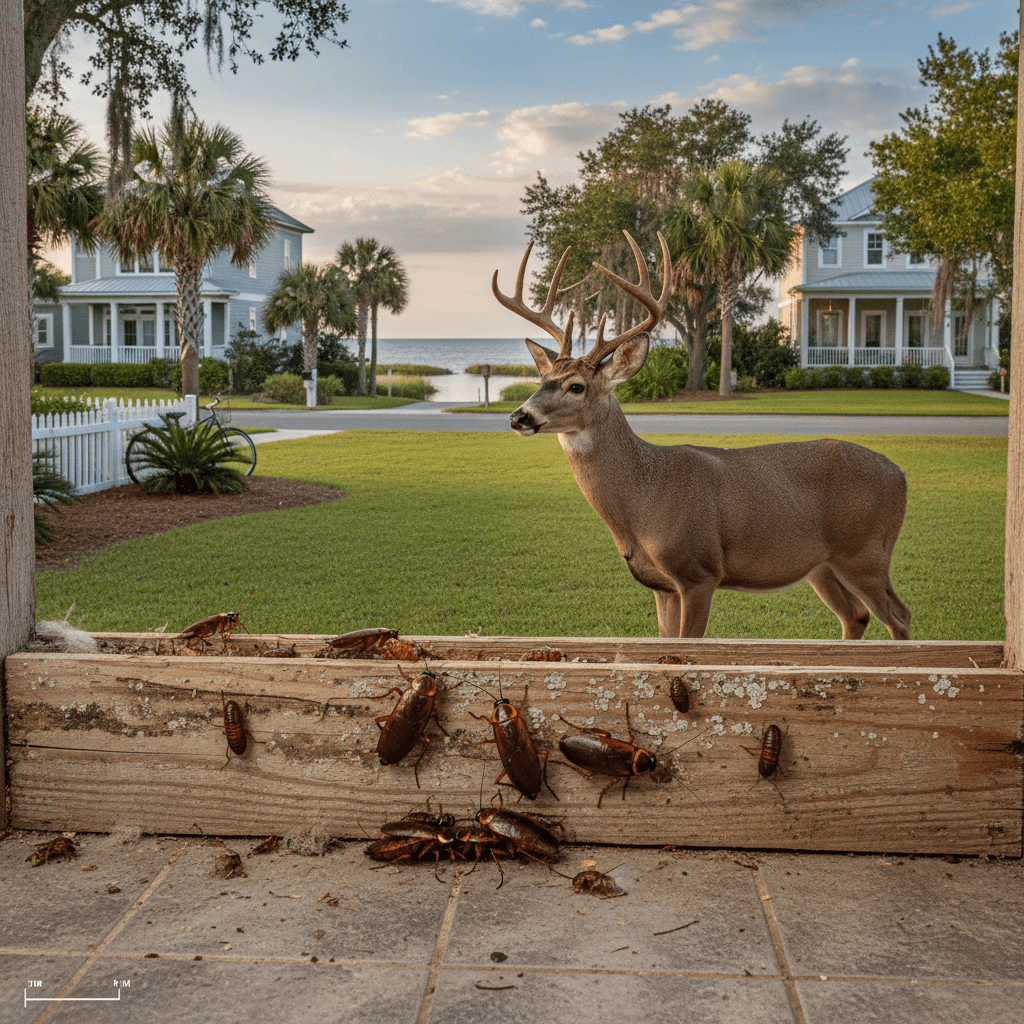
Mule deer are recognized by their large, mule-like ears and forked antlers in bucks. They are generally grayish-brown with a white rump patch and a relatively short, white tail with a black tip. Adults can weigh between 125 and 300 pounds.
Signs of Infestation
In residential areas, look for signs of browsing on ornamental plants, shrubs, and trees. You might also notice deer droppings (pellets) and tracks in gardens or yards. Damage to fencing or vegetable gardens is also a key indicator of deer presence.
Health Risks
While mule deer themselves are not typically aggressive, they can carry ticks that transmit Lyme disease and other illnesses relevant to Myrtle Beach residents. Their presence can also increase the risk of deer-vehicle collisions, especially during dawn and dusk. Damage to landscaping is also a cost concern.
Our Treatment Method
As a wildlife control issue, MBPC does not directly handle mule deer removal. However, we can advise on preventative measures to protect your Grand Strand property. For deer-related concerns, contact the SC Department of Natural Resources or a licensed wildlife specialist.
Prevention Tips
Protect vulnerable plants with fencing, netting, or deer-resistant plant varieties suitable for the SC climate. Motion-activated sprinklers or ultrasonic devices may deter deer from entering your yard. Remove any potential food sources, like fallen fruit or unsecured pet food.
Habitat
Mule deer are not native to coastal South Carolina and are rarely found in the Myrtle Beach area. Their typical habitat includes open woodlands, shrublands, and mountainous regions. Given the humid subtropical climate and coastal geography, they would struggle to thrive here.
Peak activity: Year-Round
Identification Photos
Frequently Asked Questions About Mule Deer
Mule deer are not native and are exceedingly rare in the Myrtle Beach area. White-tailed deer are the prevalent deer species in coastal South Carolina.
Report the sighting to the SC Department of Natural Resources. It is important to document the location and any details about the deer's behavior.
Fencing, netting, and deer-resistant plants are effective deterrents. Contact local Myrtle Beach nurseries for advice on deer-resistant varieties that thrive in our climate.
White-tailed deer are a protected game species, with regulated hunting seasons. Rules around mule deer would fall under SCDNR jurisdiction if any established population was to be found within the state.
Don't Let Pests Win.
Take Back Your Home Today.
Every day you wait gives pests more time to multiply and cause damage. Our licensed technicians are ready to help — often the same day you call.
Free Inspection
No cost, no obligation
Same-Day Service
Fast response guaranteed
Eco-Friendly
Safe for family & pets
100% Guarantee
Pests return, so do we
Ready to get started?
Choose how you'd like to connect with us.
Available Mon-Fri 8am-6pm, Sat 9am-2pm