Muskrat
Ondatra zibethicus
wildlifeHow to Identify
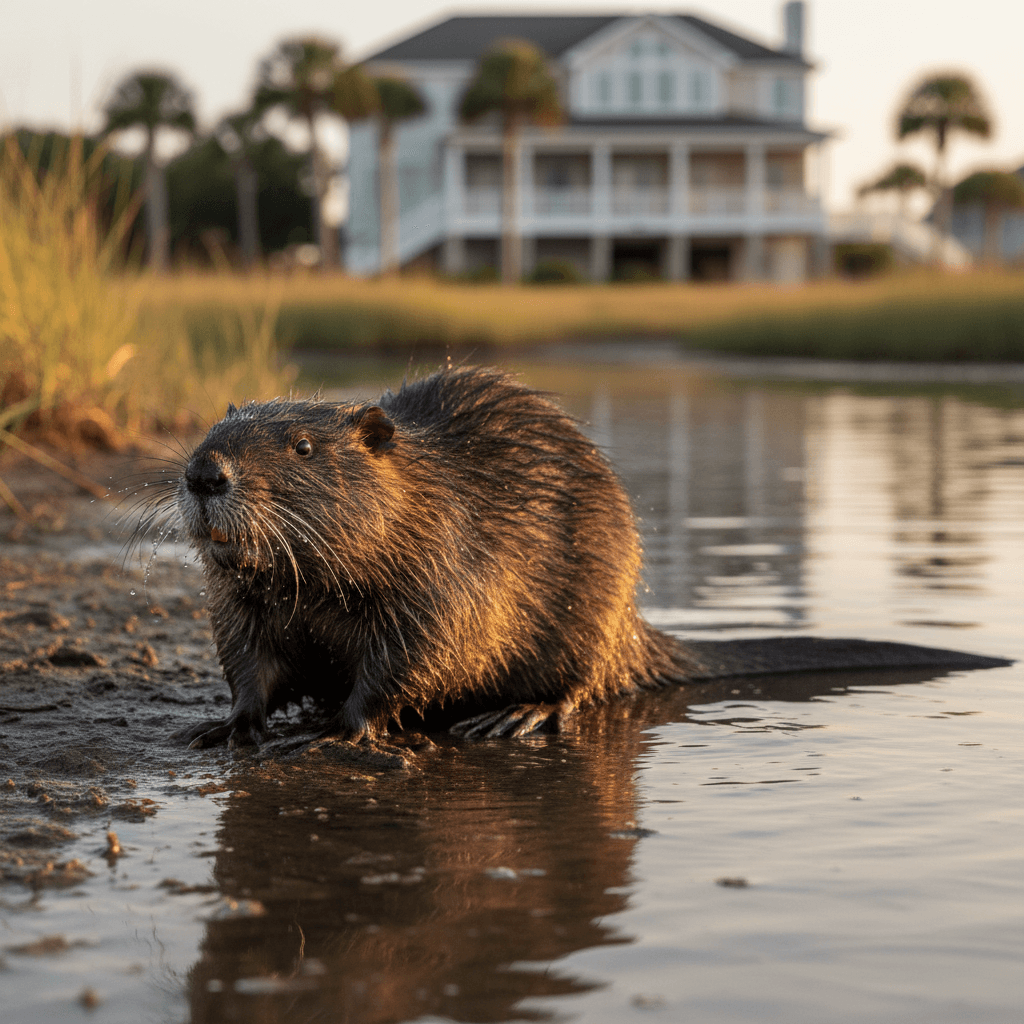
Muskrats are semi-aquatic rodents with a body length of 10-14 inches and a tail of 8-11 inches. They have dense, brown fur, partially webbed hind feet, and a flattened, scaly tail used for propulsion in the water. Their small ears are mostly hidden in their fur.
Signs of Infestation
Look for burrow entrances along the banks of ponds, creeks, or drainage ditches on your property. You may also notice damage to vegetation near the water's edge, such as gnawed stems or uprooted plants. Muskrats can also cause damage to docks and other waterfront structures.
Health Risks
While muskrats are not typically aggressive, they can carry diseases such as leptospirosis and tularemia, posing a potential risk to humans and pets in Myrtle Beach. Their burrowing activity can also undermine the structural integrity of waterfront properties, potentially leading to costly repairs. Exercise caution and avoid direct contact with these animals.
Our Treatment Method
MBPC provides humane wildlife removal and exclusion services to address muskrat issues on your Grand Strand property. Our SC Department of Pesticide Regulation-licensed technicians can assess the situation, implement trapping and removal strategies, and recommend preventative measures to discourage future muskrat activity. We prioritize ethical and environmentally responsible solutions.
Prevention Tips
Clear vegetation along the water's edge to reduce muskrat harborage. Protect vulnerable structures, such as docks and seawalls, with wire mesh or other barriers. Maintain proper drainage around your property to minimize standing water, which can attract muskrats to your Myrtle Beach home.
Habitat
Muskrats are commonly found in marshes, swamps, ponds, and slow-moving rivers throughout the coastal areas of South Carolina. They thrive in the humid subtropical climate of Myrtle Beach, where abundant aquatic vegetation and readily available water sources provide ideal habitat. Salt marshes and tidal creeks along the Grand Strand offer prime muskrat territory.
Peak activity: Year-Round
Identification Photos
Frequently Asked Questions About Muskrat
Muskrats are not typically aggressive, but they can bite if threatened. They can also carry diseases. It's best to avoid direct contact and call MBPC for safe removal in the Myrtle Beach area.
Muskrats burrow into banks, weakening them and potentially causing erosion and structural damage to docks and seawalls in Myrtle Beach. Their feeding can also impact aquatic vegetation.
Trapping and removal by a licensed professional like MBPC is the most effective method. We can also implement preventative measures to discourage them from returning to your Grand Strand property.
Muskrats are attracted to areas with readily available water sources and abundant aquatic vegetation, common in Myrtle Beach. Reducing vegetation and improving drainage can help deter them.
Don't Let Pests Win.
Take Back Your Home Today.
Every day you wait gives pests more time to multiply and cause damage. Our licensed technicians are ready to help — often the same day you call.
Free Inspection
No cost, no obligation
Same-Day Service
Fast response guaranteed
Eco-Friendly
Safe for family & pets
100% Guarantee
Pests return, so do we
Ready to get started?
Choose how you'd like to connect with us.
Available Mon-Fri 8am-6pm, Sat 9am-2pm