Nine-banded armadillo
Dasypus novemcinctus
wildlifeHow to Identify
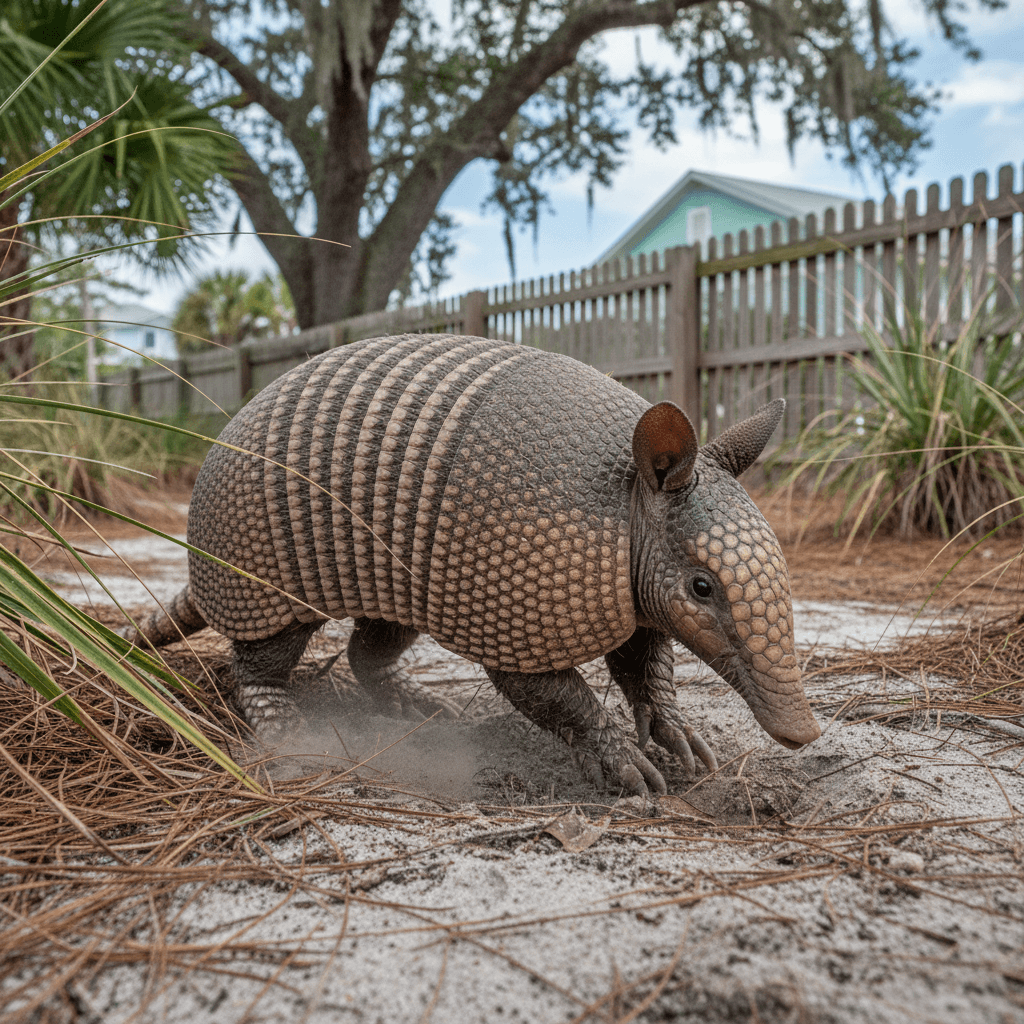
Nine-banded armadillos are easily recognized by their bony, armored shell and nine distinctive bands. They are typically about the size of a cat, with a long, tapered snout, short legs, and strong claws used for digging. Their coloration is generally grayish-brown.
Signs of Infestation
Signs of armadillo activity include shallow holes dug in lawns and gardens as they forage for insects and grubs. You might also find disturbed flowerbeds or damage to underground pipes and wiring. Their burrows, which are often located near structures, can also be a telltale sign.
Health Risks
While armadillos are not aggressive, they can carry diseases like leprosy (though transmission to humans is rare) and parasites. Their digging can also create tripping hazards and undermine building foundations in the sandy soils common in Myrtle Beach. They can also damage lawns and gardens, causing aesthetic and financial concerns for homeowners in the Grand Strand area.
Our Treatment Method
MBPC does not directly handle armadillo removal but can advise on exclusion and deterrent methods. Trapping and relocation are often regulated by the SC Department of Natural Resources. We recommend contacting a licensed wildlife removal specialist for safe and humane handling of armadillos on your Myrtle Beach property.
Prevention Tips
Reduce potential food sources by controlling grubs and other soil insects in your yard. Install fencing around vulnerable areas like gardens or the base of your home's foundation to prevent armadillos from digging. Clear brush and debris from around your property to eliminate potential harborage sites – a common recommendation for properties in Myrtle Beach.
Habitat
In coastal South Carolina, nine-banded armadillos thrive in various habitats, including woodlands, forests, and grasslands. They prefer areas with loose soil for digging burrows and are often found near water sources like tidal creeks and salt marshes in the Myrtle Beach area. Their presence has become increasingly common along the Grand Strand due to the humid subtropical climate and expanding habitat.
Peak activity: Year-Round
Identification Photos
Frequently Asked Questions About Nine-banded armadillo
Armadillos are generally not aggressive but can carry diseases and parasites. Avoid direct contact. Their digging can also create hazards on your Myrtle Beach property. Contact a professional if you have concerns.
Armadillos are attracted to yards with abundant insects, grubs, and other invertebrates. They also seek shelter in brush piles and other debris. Controlling insects and removing harborage can help deter them from your Grand Strand property.
Install fencing around vulnerable areas, reduce soil insect populations, and eliminate potential harborage sites. Motion-activated sprinklers may also deter them. MBPC can assess your property and suggest appropriate measures for your Myrtle Beach home.
Trapping and relocating wildlife is regulated by the SC Department of Natural Resources. Contact them or a licensed wildlife removal specialist for guidance. Relocating armadillos can be harmful to both the animal and the environment.
Don't Let Pests Win.
Take Back Your Home Today.
Every day you wait gives pests more time to multiply and cause damage. Our licensed technicians are ready to help — often the same day you call.
Free Inspection
No cost, no obligation
Same-Day Service
Fast response guaranteed
Eco-Friendly
Safe for family & pets
100% Guarantee
Pests return, so do we
Ready to get started?
Choose how you'd like to connect with us.
Available Mon-Fri 8am-6pm, Sat 9am-2pm