Northern Flying Squirrel
Glaucomys sabrinus
wildlifeHow to Identify
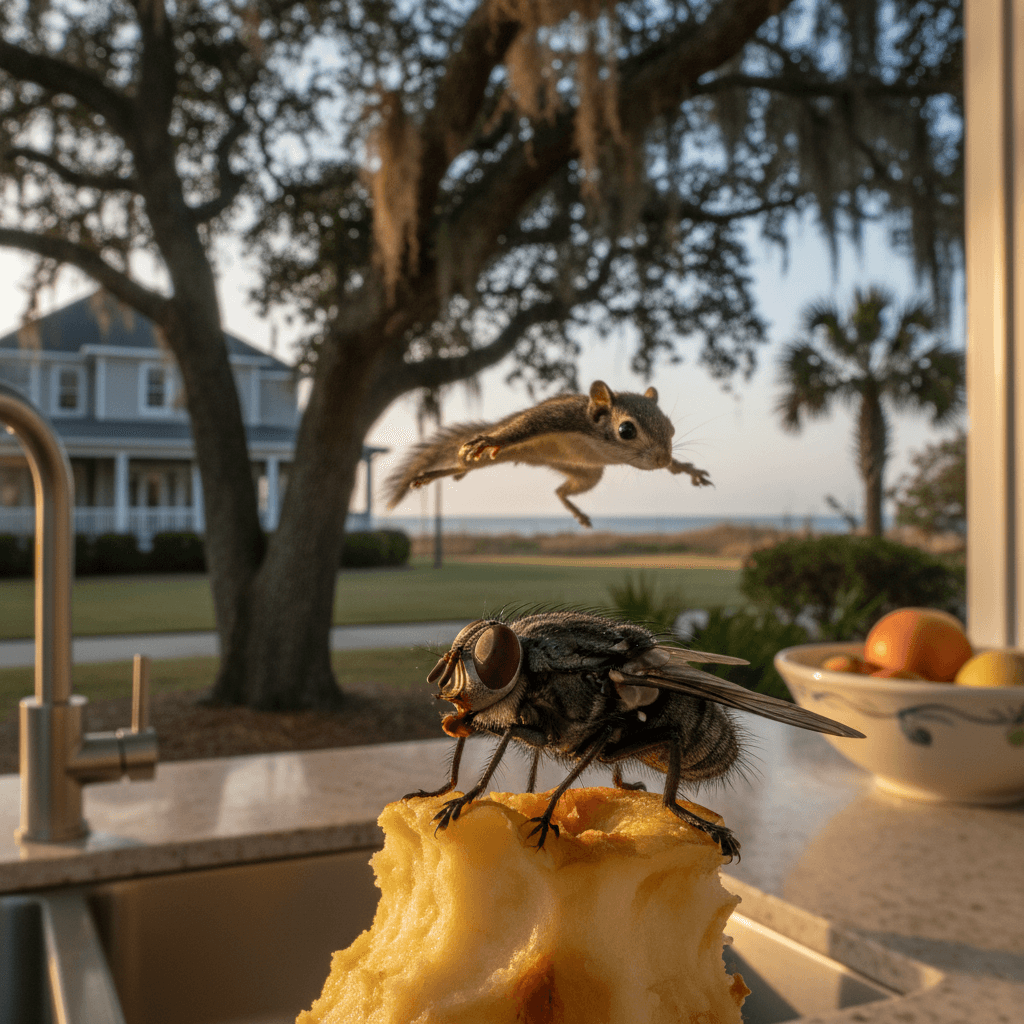
Northern flying squirrels are small rodents with large, dark eyes and a flattened tail. They are typically grayish-brown with a white or cream-colored underside. A distinctive feature is the fur-covered membrane (patagium) extending between their front and hind legs, allowing them to glide through the air.
Signs of Infestation
Homeowners in Myrtle Beach might notice signs such as scratching noises in attics or walls, especially at night. You may also find small piles of droppings (similar to those of a mouse but slightly larger) or shredded nesting materials like insulation or paper in secluded areas. Chewed wiring is another serious sign of their presence.
Health Risks
While northern flying squirrels rarely attack humans, they can carry parasites and diseases. Their droppings and urine can contaminate insulation and air ducts, potentially leading to respiratory problems or allergic reactions, especially in the humid Myrtle Beach environment. Chewed electrical wiring poses a significant fire hazard.
Our Treatment Method
MBPC offers humane trapping and removal services for northern flying squirrels in the Grand Strand area. Our licensed technicians will assess the entry points and seal them to prevent future infestations, following SC Department of Pesticide Regulation guidelines. We also provide recommendations for cleaning and sanitizing affected areas to eliminate potential health hazards.
Prevention Tips
Trim tree branches that overhang your roof to prevent easy access for squirrels. Seal any holes or cracks in your foundation, siding, or roof, particularly around pipes and vents – common entry points in Myrtle Beach homes. Store food in tightly sealed containers and eliminate potential food sources like pet food left outdoors.
Habitat
Northern flying squirrels are adapted to forested areas, but in coastal South Carolina, they may also be found in wooded residential areas, especially near the Intracoastal Waterway. They prefer mature trees with cavities for nesting and readily adapt to attics and wall voids in homes. They are active year-round in our humid subtropical climate.
Peak activity: Year-Round
Identification Photos
Frequently Asked Questions About Northern Flying Squirrel
While not aggressive, flying squirrels can carry diseases and parasites. Their droppings and urine can contaminate indoor air, and their chewing habits can damage property, creating hazards for Myrtle Beach homeowners.
They can squeeze through surprisingly small openings, often entering through gaps around pipes, vents, or damaged siding. Overhanging tree branches provide easy access to roofs, making it simple for them to find entry points into your Myrtle Beach home.
Do not attempt to handle it yourself. Contact MBPC for professional trapping and removal services. Our technicians are trained to safely and humanely remove flying squirrels and prevent future infestations in your Grand Strand property.
After removal, seal all entry points and trim overhanging branches. Consider installing wire mesh over vents and chimneys. MBPC can provide a thorough inspection and recommend preventative measures to protect your Myrtle Beach home long-term.
Don't Let Pests Win.
Take Back Your Home Today.
Every day you wait gives pests more time to multiply and cause damage. Our licensed technicians are ready to help — often the same day you call.
Free Inspection
No cost, no obligation
Same-Day Service
Fast response guaranteed
Eco-Friendly
Safe for family & pets
100% Guarantee
Pests return, so do we
Ready to get started?
Choose how you'd like to connect with us.
Available Mon-Fri 8am-6pm, Sat 9am-2pm