Northern Mockingbird
Mimus polyglottos
birdsHow to Identify
Northern mockingbirds are medium-sized songbirds with a long tail, gray upperparts, and whitish underparts. They have distinctive white wing patches visible in flight and a slightly downcurved bill. Juveniles are similar but have dark streaks on their breast.
Signs of Infestation
While not an 'infestation' in the traditional sense, signs include persistent loud singing at dawn or dusk, especially near windows or rooftops. Also, aggressive behavior towards people or pets near nesting sites, especially during breeding season, can be a sign of a territorial mockingbird.
Health Risks
Northern mockingbirds don't pose direct health risks in Myrtle Beach, but their aggressive territorial behavior during nesting season (spring/summer) can be startling or even lead to minor pecking injuries. Their droppings can also accumulate on patios or cars, creating a nuisance.
Our Treatment Method
MBPC does not handle bird removal or relocation due to SC Department of Pesticide Regulation guidelines. However, our technicians can advise on humane deterrent strategies to discourage nesting near your home, such as netting or visual repellents. We can also clean and sanitize affected areas to remove droppings and nesting materials.
Prevention Tips
Avoid intentionally feeding mockingbirds, as this encourages them to frequent your property. Trim shrubs and trees to reduce potential nesting sites close to your home. If aggressive behavior is a concern during nesting season, consider using temporary visual deterrents.
Habitat
Northern mockingbirds are common year-round residents in Myrtle Beach, thriving in open woodlands, parks, gardens, and suburban areas. They are highly adaptable and can be found near coastal areas, salt marshes, and residential neighborhoods throughout the Grand Strand.
Peak activity: Year-Round
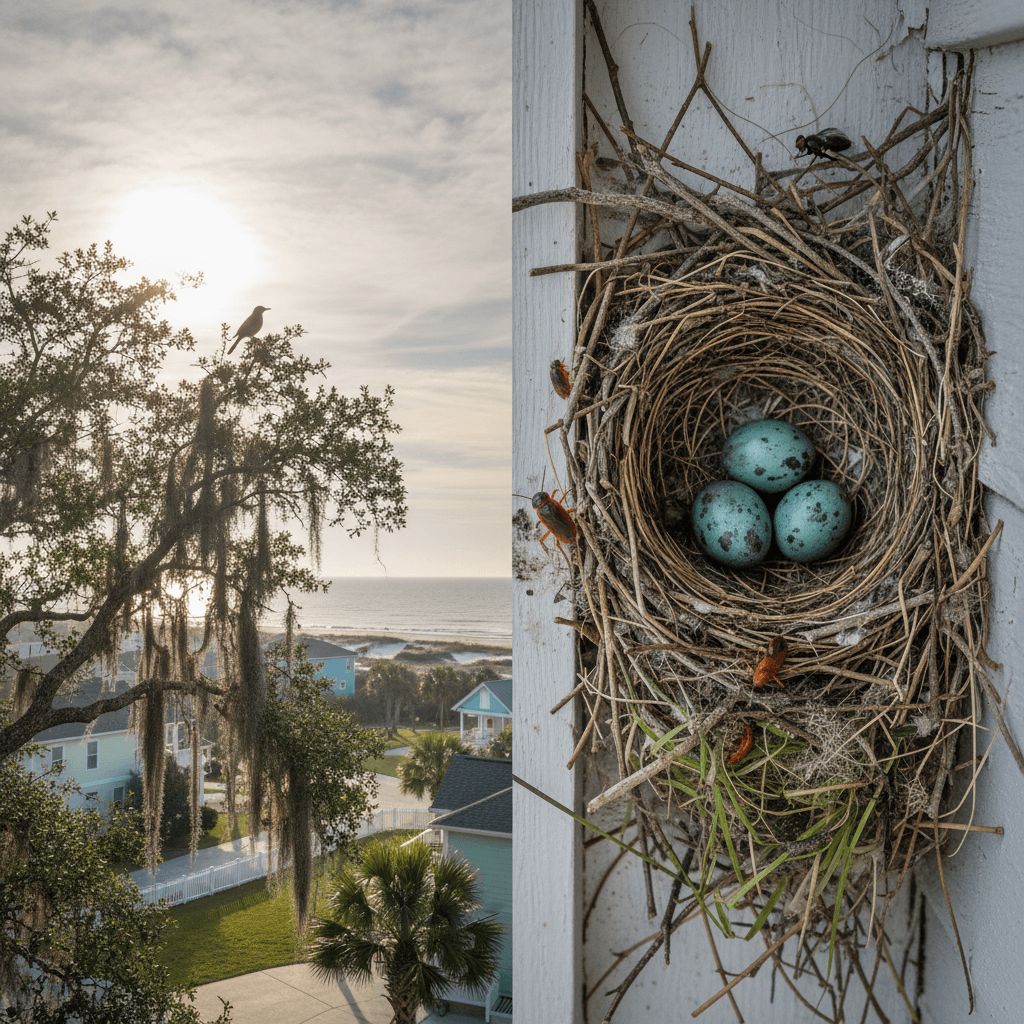
Identification Photos
Frequently Asked Questions About Northern Mockingbird
Yes, Northern Mockingbirds are protected under the Migratory Bird Treaty Act. It's illegal to harm, harass, or kill them, or to destroy their nests during breeding season in South Carolina.
Mockingbirds are fiercely territorial during nesting season (typically spring/summer). If they perceive you as a threat to their nest or young, they may dive-bomb or peck at you. Avoid the area if possible during this time in Myrtle Beach.
Try using visual deterrents like shiny streamers or aluminum foil strips to discourage nesting. Netting over shrubs can also prevent them from building nests. MBPC can advise on humane deterrents suitable for Grand Strand properties.
While rare, birds can carry diseases like West Nile virus or salmonella. It's best to avoid direct contact with birds or their droppings. If you're concerned about bird droppings near your Myrtle Beach home, MBPC can provide cleaning and sanitation services.
Don't Let Pests Win.
Take Back Your Home Today.
Every day you wait gives pests more time to multiply and cause damage. Our licensed technicians are ready to help — often the same day you call.
Free Inspection
No cost, no obligation
Same-Day Service
Fast response guaranteed
Eco-Friendly
Safe for family & pets
100% Guarantee
Pests return, so do we
Ready to get started?
Choose how you'd like to connect with us.
Available Mon-Fri 8am-6pm, Sat 9am-2pm