Nutria
Myocastor coypus
wildlifeHow to Identify
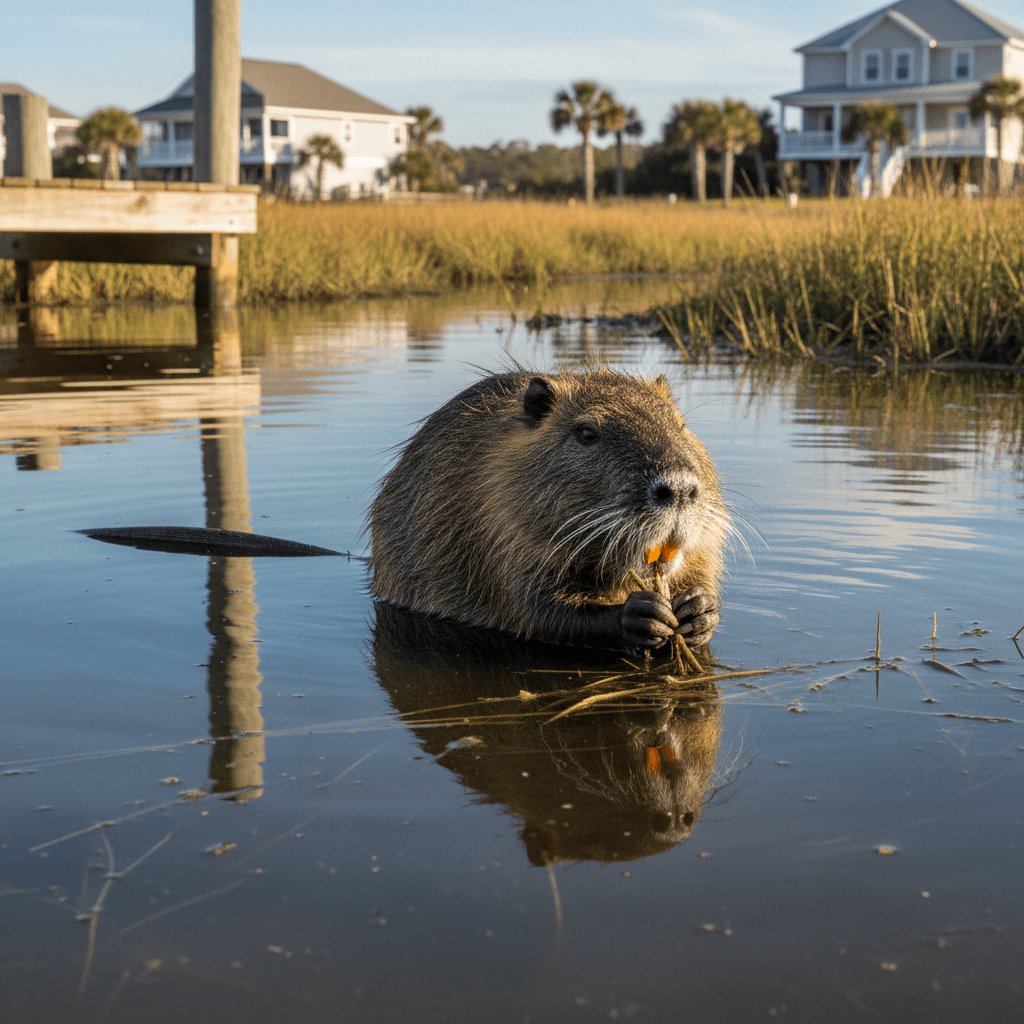
Nutria are large, semi-aquatic rodents with dark brown fur and a long, rounded tail. They have distinctive white whiskers and large, bright orange incisors that are visible even when their mouth is closed. Adults can weigh between 12 and 20 pounds.
Signs of Infestation
Nutria can damage lawns and gardens by digging for roots and tubers. They may create burrows along the banks of ponds, canals, and other waterways, leading to erosion. Look for their distinctive three-toed tracks with webbing between the toes in muddy areas near water.
Health Risks
While nutria are not known to directly transmit diseases to humans, their burrows can destabilize banks and dikes, leading to potential flooding issues in low-lying areas of Myrtle Beach. Their foraging can also damage valuable crops and ornamental plants in coastal South Carolina.
Our Treatment Method
MBPC offers trapping and removal services for nutria in accordance with SC Department of Pesticide Regulation guidelines and local ordinances. Our trained technicians will assess the situation and implement humane removal strategies. Contact us for a consultation and customized plan to address nutria issues on your Grand Strand property.
Prevention Tips
Protect gardens and landscaping with fencing to deter nutria from feeding. Remove dense vegetation near waterways to reduce their harborage. Report any signs of extensive nutria activity to local wildlife authorities or MBPC for professional assistance in the Myrtle Beach area.
Habitat
Nutria thrive in the wetlands, marshes, and waterways of coastal South Carolina. They prefer habitats with readily available water and abundant vegetation, such as the salt marshes and tidal creeks around Myrtle Beach. They are well-adapted to the humid subtropical climate.
Peak activity: Year-Round
Identification Photos
Frequently Asked Questions About Nutria
Nutria are generally not aggressive towards humans or pets, but they can bite if threatened or cornered. It's best to keep a safe distance and avoid direct contact with these animals, especially in public parks and waterways around Myrtle Beach.
Nutria can cause significant damage to crops, gardens, and landscaping. Their burrowing activity can also destabilize banks and levees, increasing the risk of erosion and flooding, especially in low-lying areas of the Grand Strand.
Trapping and removal are the most effective methods for controlling nutria populations. Contact MBPC for professional nutria removal services in Myrtle Beach. We use humane and ethical trapping techniques in accordance with SC regulations.
Nutria are not a protected species in South Carolina and can be legally trapped or hunted with the proper licenses and permits. However, it's essential to follow all state and local regulations regarding wildlife management. Contact the SC Department of Natural Resources for details or consult with MBPC.
Don't Let Pests Win.
Take Back Your Home Today.
Every day you wait gives pests more time to multiply and cause damage. Our licensed technicians are ready to help — often the same day you call.
Free Inspection
No cost, no obligation
Same-Day Service
Fast response guaranteed
Eco-Friendly
Safe for family & pets
100% Guarantee
Pests return, so do we
Ready to get started?
Choose how you'd like to connect with us.
Available Mon-Fri 8am-6pm, Sat 9am-2pm