Purple Martin
Progne subis
birdsHow to Identify
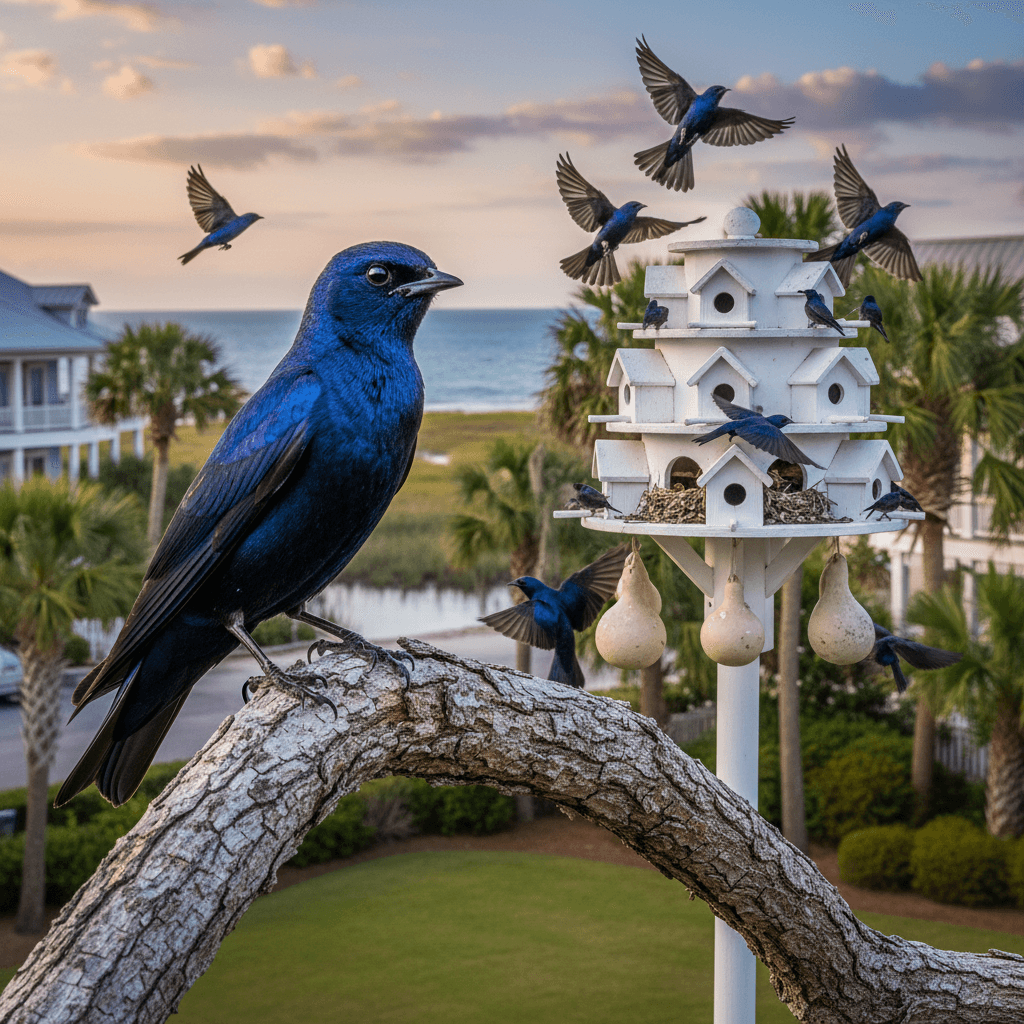
Purple martins are the largest North American swallows, with males a glossy blue-black color and females a duller purple-gray. They have a slightly forked tail and a broad chest. Juvenile birds have lighter underparts.
Signs of Infestation
The presence of a purple martin colony is often indicated by their chattering calls and activity around multi-compartment birdhouses, especially in open areas. Look for droppings accumulating beneath the birdhouse and signs of nest building in the spring.
Health Risks
While purple martins themselves pose minimal direct health risks to humans in Myrtle Beach, large colonies can lead to an accumulation of droppings, potentially causing nuisance odors. In rare cases, histoplasmosis, a fungal disease associated with bird droppings, could be a concern for sensitive individuals.
Our Treatment Method
MBPC does not typically handle purple martin management, as they are a protected species and beneficial insectivores. Our focus is on educating homeowners in the Grand Strand about responsible birdhouse placement to minimize potential nuisance issues. SC Department of Pesticide Regulation guidelines must always be followed regarding any avian interactions.
Prevention Tips
Regularly clean purple martin birdhouses after the nesting season to prevent the buildup of mites and other pests. Consider the location of the birdhouse to minimize potential conflicts with neighbors, ensuring it is placed away from decks or patios where droppings might be a concern in your Myrtle Beach home.
Habitat
Purple martins prefer open habitats near water, making the coastal areas of Myrtle Beach ideal. They nest almost exclusively in human-provided housing, such as multi-compartment birdhouses, often placed in fields, parks, and backyards near the salt marshes and tidal creeks of coastal SC.
Peak activity: Spring-Summer
Identification Photos
Frequently Asked Questions About Purple Martin
Yes, purple martins are protected under the Migratory Bird Treaty Act. It is illegal to harm or harass them or their nests. Landlords in Myrtle Beach should be aware of these protections.
Purple martins are aerial insectivores, meaning they primarily eat insects caught in flight. They consume a wide variety of flying insects, including mosquitoes, flies, and beetles, making them beneficial to the Myrtle Beach ecosystem.
Purple martins typically arrive in Myrtle Beach in early spring, usually around February or March, to establish nesting colonies. They depart in late summer after the breeding season.
The best way to attract purple martins is to provide suitable housing, such as a multi-compartment birdhouse, placed in an open area away from trees. Keep the house clean and free of other bird species to encourage purple martins to colonize it in your Grand Strand yard.
Don't Let Pests Win.
Take Back Your Home Today.
Every day you wait gives pests more time to multiply and cause damage. Our licensed technicians are ready to help — often the same day you call.
Free Inspection
No cost, no obligation
Same-Day Service
Fast response guaranteed
Eco-Friendly
Safe for family & pets
100% Guarantee
Pests return, so do we
Ready to get started?
Choose how you'd like to connect with us.
Available Mon-Fri 8am-6pm, Sat 9am-2pm