Raccoon
Procyon lotor
wildlifeHow to Identify
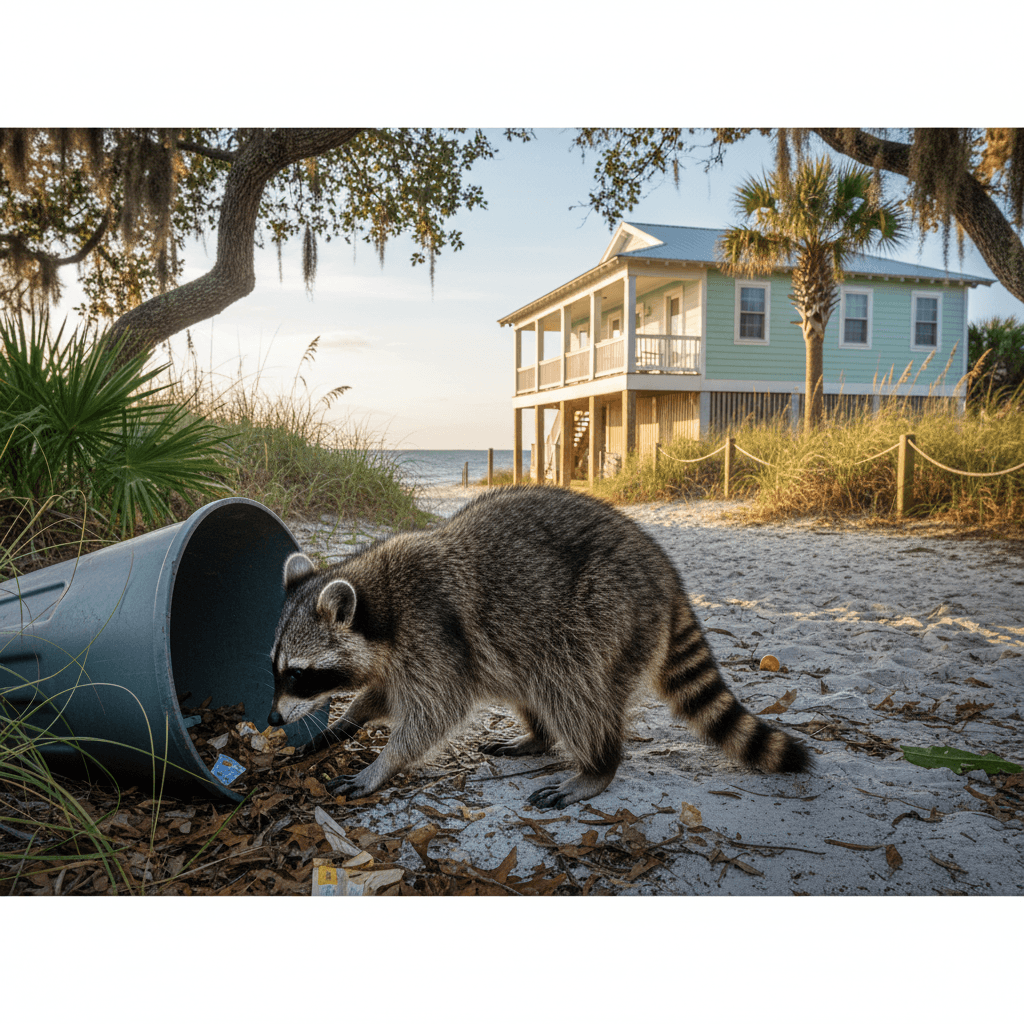
Raccoons are medium-sized mammals with a distinctive black mask across their eyes and a bushy, ringed tail. They have grayish-brown fur, pointed snouts, and dexterous front paws that resemble hands. Adults typically weigh between 10 and 30 pounds.
Signs of Infestation
Look for overturned garbage cans, scattered trash, and raided bird feeders. Raccoons may also create dens in attics, chimneys, or under decks, leaving behind droppings and causing damage. Scratching or thumping sounds in the attic at night are another common sign.
Health Risks
Raccoons can carry rabies, roundworm, and leptospirosis, posing a health risk to humans and pets in Myrtle Beach. Their droppings can contaminate soil and water sources, and their scavenging behavior can spread diseases. Contact with raccoons should be avoided.
Our Treatment Method
MBPC provides humane raccoon removal and exclusion services in the Grand Strand. Our SC Department of Pesticide Regulation-licensed technicians will trap and relocate raccoons according to state regulations. We also offer preventative measures, such as sealing entry points and securing garbage cans.
Prevention Tips
Secure garbage cans with tight-fitting lids and store them in a garage or shed. Trim tree branches that overhang your roof to prevent raccoons from accessing your attic. Seal any potential entry points around your home, such as gaps in siding or loose screens, to prevent them from entering.
Habitat
Raccoons are highly adaptable and thrive in both urban and rural environments across coastal South Carolina. They are commonly found near water sources, such as salt marshes and tidal creeks, and readily adapt to residential areas, seeking food and shelter in attics, under decks, and in garbage cans.
Peak activity: Year-Round
Identification Photos
Frequently Asked Questions About Raccoon
Raccoons can pose a threat to pets due to the risk of disease transmission (rabies, distemper) and potential for physical altercations. Keep pets indoors at night and supervise them when outdoors, especially near wooded areas or marshlands.
Seal any potential entry points, such as gaps in siding, loose vents, or damaged roofing. Trim tree branches that overhang your roof. Consider installing a chimney cap to prevent raccoons from entering through the chimney.
Do not handle the baby raccoon. Observe it from a safe distance to see if the mother returns. If the mother does not return within 24 hours, contact a wildlife rehabilitator or MBPC for assistance.
Yes, but it is regulated. Relocating raccoons requires a permit, and it must be done humanely according to SC state regulations. MBPC technicians are trained and licensed to handle raccoon removal and relocation safely and legally.
Don't Let Pests Win.
Take Back Your Home Today.
Every day you wait gives pests more time to multiply and cause damage. Our licensed technicians are ready to help — often the same day you call.
Free Inspection
No cost, no obligation
Same-Day Service
Fast response guaranteed
Eco-Friendly
Safe for family & pets
100% Guarantee
Pests return, so do we
Ready to get started?
Choose how you'd like to connect with us.
Available Mon-Fri 8am-6pm, Sat 9am-2pm