Red-winged Blackbird
Agelaius phoeniceus
birdsHow to Identify
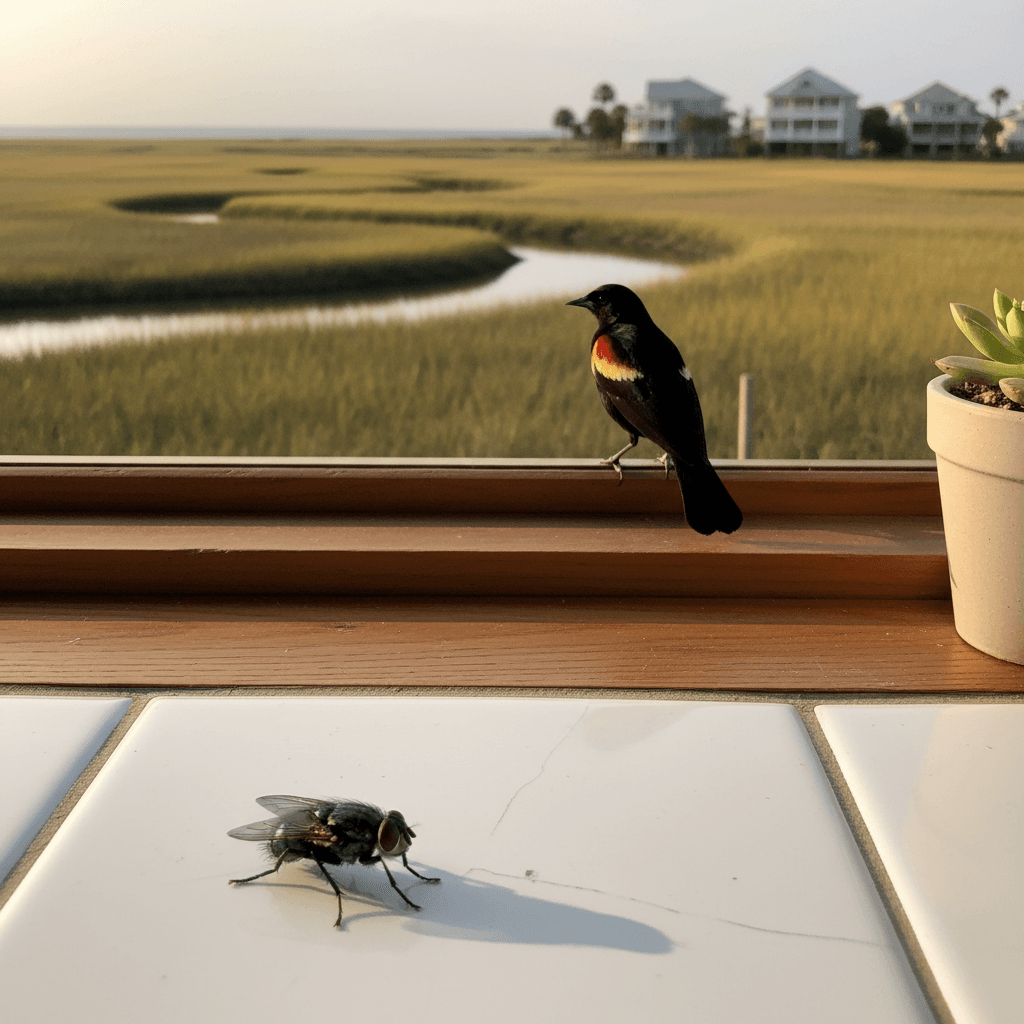
The male red-winged blackbird is easily identified by its glossy black plumage and distinctive red shoulder patches, often bordered with yellow. Females and juveniles are heavily streaked brown overall, resembling a large sparrow. The male's 'conk-la-ree!' song is another key identifier.
Signs of Infestation
Large flocks can descend upon agricultural areas, causing damage to crops. Around homes in Myrtle Beach, nesting birds may create messes with droppings on patios, decks, and vehicles. Look for nesting materials in gutters or eaves.
Health Risks
While red-winged blackbirds do not pose a direct health threat, their droppings can carry diseases and parasites, especially around populated areas in Myrtle Beach. Accumulations of droppings can also stain surfaces and create unsanitary conditions. Nests can also attract other pests, such as mites.
Our Treatment Method
MBPC offers bird deterrents and exclusion methods that comply with SC Department of Pesticide Regulation and protect these native birds. Our Grand Strand specialists can install netting, spikes, or other barriers to discourage nesting and roosting in unwanted areas. We also offer cleaning and sanitation services to remove droppings and nesting materials.
Prevention Tips
Remove potential nesting sites around your Myrtle Beach home, such as overgrown shrubs or vines. Clean gutters regularly to prevent nesting. Avoid feeding birds in areas where large flocks are undesirable, as this can attract more red-winged blackbirds to your property.
Habitat
Red-winged blackbirds thrive in marshy areas, fields, and along the edges of ponds and wetlands throughout coastal South Carolina. They are commonly found in the salt marshes and freshwater wetlands of the Grand Strand, as well as in agricultural fields and suburban neighborhoods.
Peak activity: Year-Round
Identification Photos
Frequently Asked Questions About Red-winged Blackbird
Yes, red-winged blackbirds are protected under the Migratory Bird Treaty Act. It is illegal to kill or harm them, or to disturb their nests, without a permit. MBPC follows all state and federal regulations when implementing bird control measures in Myrtle Beach.
Red-winged blackbirds are attracted to areas with food sources, such as seeds, insects, and berries. They may also be drawn to yards with water sources or suitable nesting sites, especially near wetlands or agricultural fields common around the Grand Strand.
Use feeders that are designed to exclude larger birds, such as tube feeders with small perches. Avoid using mixed seed blends that contain grains like corn or millet, which red-winged blackbirds prefer. Consider offering only black oil sunflower seeds, which attract smaller songbirds but are less appealing to blackbirds in your Myrtle Beach yard.
Red-winged blackbirds typically nest from April through July in Myrtle Beach, SC. During this time, they can become more territorial and aggressive, especially near their nests. Be cautious when approaching areas where they may be nesting to avoid being dive-bombed.
Don't Let Pests Win.
Take Back Your Home Today.
Every day you wait gives pests more time to multiply and cause damage. Our licensed technicians are ready to help — often the same day you call.
Free Inspection
No cost, no obligation
Same-Day Service
Fast response guaranteed
Eco-Friendly
Safe for family & pets
100% Guarantee
Pests return, so do we
Ready to get started?
Choose how you'd like to connect with us.
Available Mon-Fri 8am-6pm, Sat 9am-2pm