
Rice weevil
Sitophilus oryzae
insectsHow to Identify
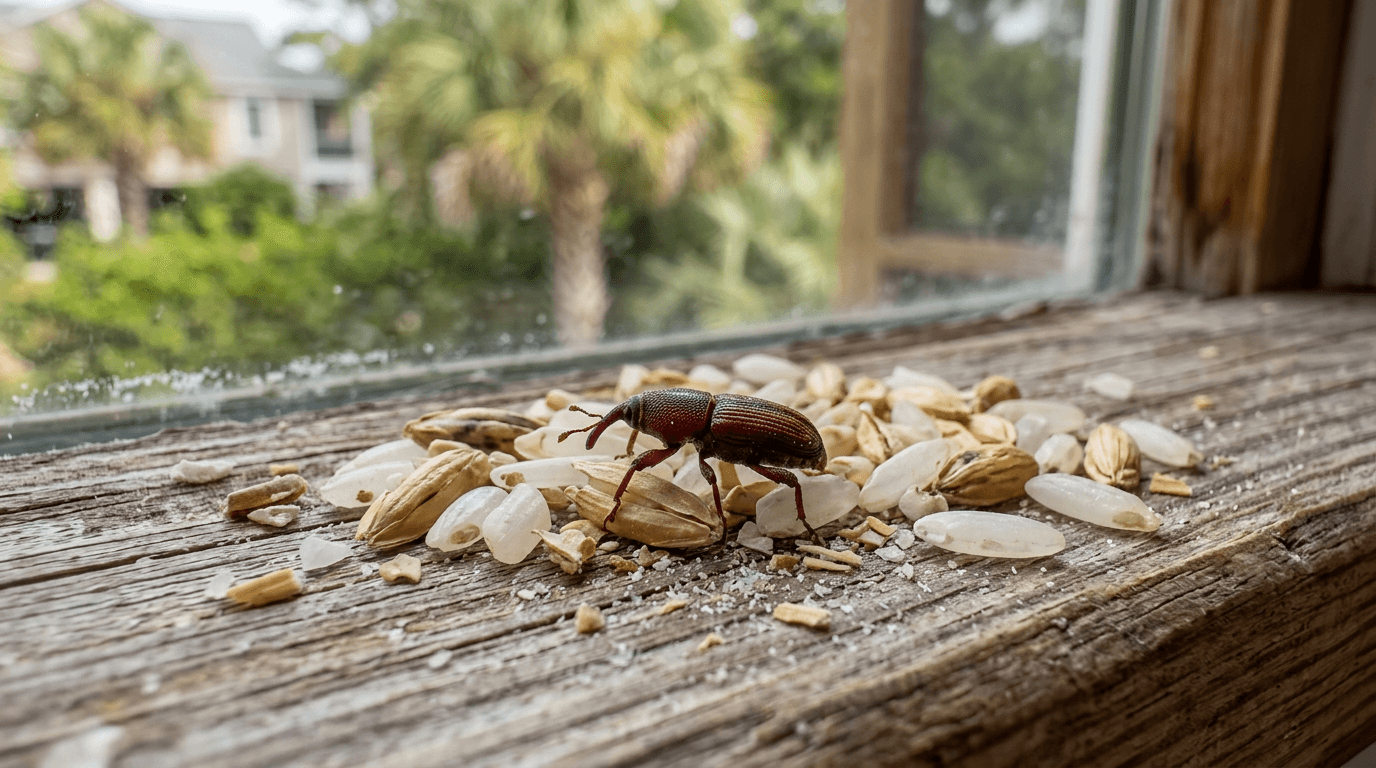
Rice weevils are small, dark brown beetles, about 1/8 inch long, with four light reddish-yellow spots on their wing covers. A key identifying feature is their long, curved snout, which they use to bore into grains. They are often mistaken for other grain beetles, so close inspection is important.
Signs of Infestation
You may find rice weevils crawling in stored grains like rice, pasta, flour, or birdseed. Small holes in grains or packages are a telltale sign, along with the presence of larvae or pupae within infested products. In Myrtle Beach homes, check pantries and food storage areas for signs of these pests.
Health Risks
Rice weevils don't directly bite or sting, so they pose no direct health threat to humans or pets in Myrtle Beach. However, they can contaminate food supplies, leading to spoilage and potential allergic reactions in sensitive individuals. Infested food should be discarded to prevent consumption of contaminated grains.
Our Treatment Method
MBPC offers targeted treatments for rice weevil infestations in your Grand Strand home. Our licensed technicians will identify the source of the infestation and recommend appropriate measures, such as removing infested products and applying residual insecticides to affected areas. We follow SC Department of Pesticide Regulation guidelines to ensure safe and effective pest control.
Prevention Tips
Store grains and dry goods in airtight containers to prevent rice weevil infestations. Regularly inspect stored food for signs of pests, especially in the humid Myrtle Beach climate. Clean up spilled food promptly and maintain a dry, well-ventilated pantry to discourage these pests in your SC home.
Habitat
Rice weevils thrive in warm, humid environments, making Myrtle Beach a favorable habitat. They are commonly found in stored grains and seeds, both indoors and outdoors. In coastal South Carolina, they can infest pantries, grain storage facilities, and even fields of ripening grain.
Peak activity: Year-Round
Identification Photos
Frequently Asked Questions About Rice weevil
Rice weevils are typically introduced through infested food products purchased from the store. They can also enter homes through cracks and crevices in search of food. Once inside, they can quickly multiply and spread to other stored grains.
Rice weevils do not bite or transmit diseases, so they are not a direct threat to human health. However, consuming heavily infested food can cause allergic reactions in some individuals. Discard infested food immediately.
Yes, storing grains in airtight containers is the best way to prevent infestations. Regularly inspect your pantry for signs of pests and clean up any spilled food. Keeping your pantry dry and well-ventilated will also discourage rice weevils.
MBPC uses a combination of methods to eliminate rice weevil infestations in Myrtle Beach homes. This includes removing infested food, applying residual insecticides to affected areas, and providing recommendations for preventing future infestations. Our treatments are safe for your family and pets.
Don't Let Pests Win.
Take Back Your Home Today.
Every day you wait gives pests more time to multiply and cause damage. Our licensed technicians are ready to help — often the same day you call.
Free Inspection
No cost, no obligation
Same-Day Service
Fast response guaranteed
Eco-Friendly
Safe for family & pets
100% Guarantee
Pests return, so do we
Ready to get started?
Choose how you'd like to connect with us.
Available Mon-Fri 8am-6pm, Sat 9am-2pm