Richardson's Ground Squirrel
Urocitellus richardsonii
wildlifeHow to Identify
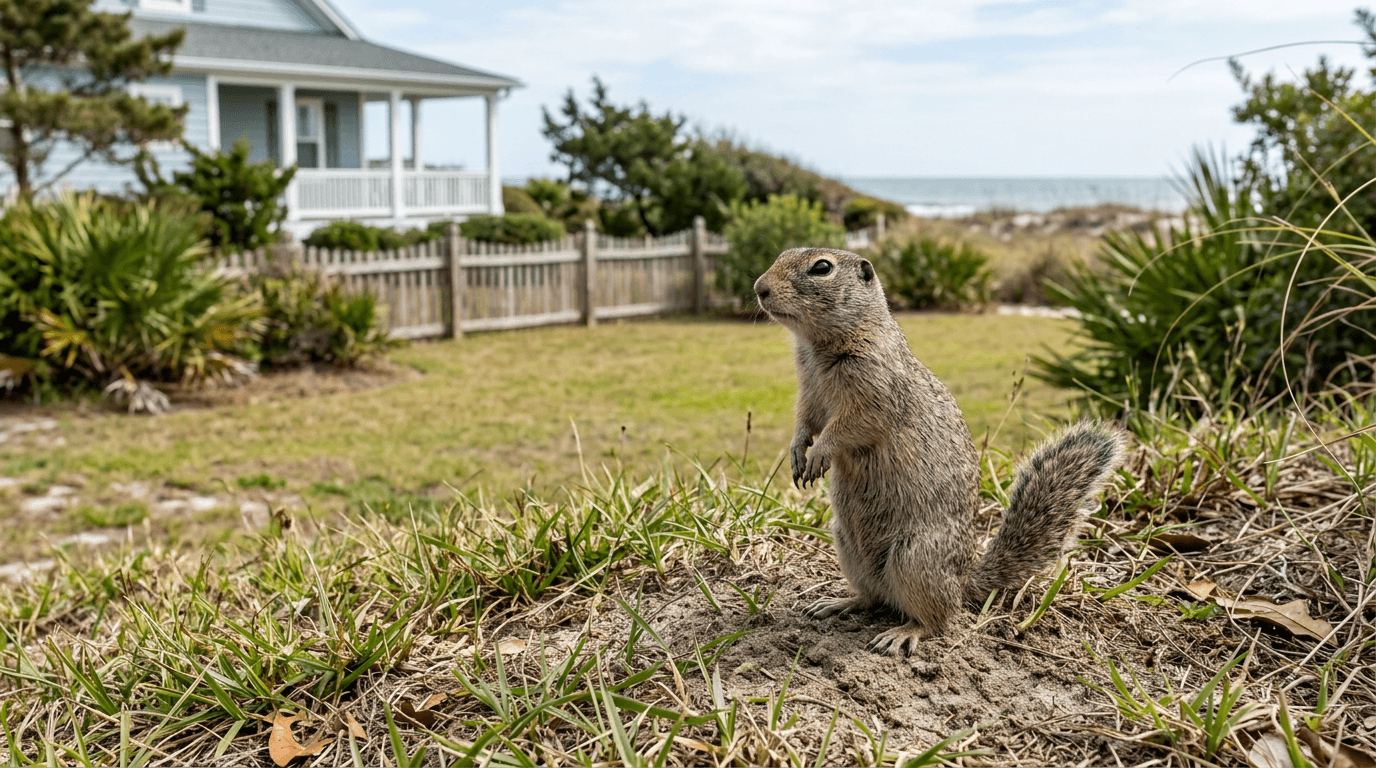
Richardson's ground squirrels are small rodents, typically 11-12 inches long including the tail. They have a brownish-tan coat with a lighter underside and a short, bushy tail. They are most easily identified by their upright posture when observing their surroundings.
Signs of Infestation
Look for burrow entrances, which are typically 2-4 inches in diameter, often near structures or gardens. You may also observe them directly foraging for food in your yard or garden. Their digging can cause damage to lawns and undermine foundations.
Health Risks
While Richardson's ground squirrels are not known to carry rabies, they can transmit other diseases and parasites. Their burrowing activity can also create tripping hazards and potential structural damage to Myrtle Beach properties. They can also attract larger predators to your yard.
Our Treatment Method
MBPC can assess ground squirrel activity on your Grand Strand property and recommend exclusion strategies, such as fencing. Trapping and relocation may be necessary, in compliance with SC Department of Natural Resources regulations. Our licensed technicians prioritize humane and environmentally responsible wildlife management.
Prevention Tips
Remove potential food sources such as fallen fruit and spilled birdseed around your Myrtle Beach home. Secure garbage cans and compost bins to prevent access. Install fencing around gardens and vulnerable areas to deter digging and foraging in the sandy SC soil.
Habitat
Richardson's ground squirrels prefer open grasslands and fields, but can adapt to residential areas in Myrtle Beach, especially those near undeveloped land. They create extensive burrow systems in the sandy soils common to coastal SC. They are most active during the warmer months.
Peak activity: Spring-Fall
Identification Photos
Frequently Asked Questions About Richardson's Ground Squirrel
While not typically aggressive, they can bite if threatened. They can also carry diseases and parasites. Their burrowing can create tripping hazards and undermine structures, especially in the sandy soils of Myrtle Beach.
Contact MBPC for an assessment. Exclusion methods like fencing are often the most effective. Trapping and relocation may be necessary, but should be done in compliance with SC DNR regulations. Avoid using poisons, which can harm other wildlife and pets.
They are attracted to open areas with plenty of vegetation, readily available food sources (gardens, bird feeders, fallen fruit), and loose, sandy soil suitable for burrowing, all common in the Myrtle Beach area.
While they do enter a state of torpor during the colder months, they may remain active on warmer days. True hibernation is less common in the mild winters of coastal South Carolina, compared to their northern relatives.
Don't Let Pests Win.
Take Back Your Home Today.
Every day you wait gives pests more time to multiply and cause damage. Our licensed technicians are ready to help — often the same day you call.
Free Inspection
No cost, no obligation
Same-Day Service
Fast response guaranteed
Eco-Friendly
Safe for family & pets
100% Guarantee
Pests return, so do we
Ready to get started?
Choose how you'd like to connect with us.
Available Mon-Fri 8am-6pm, Sat 9am-2pm