River otter
Lontra canadensis
wildlifeHow to Identify
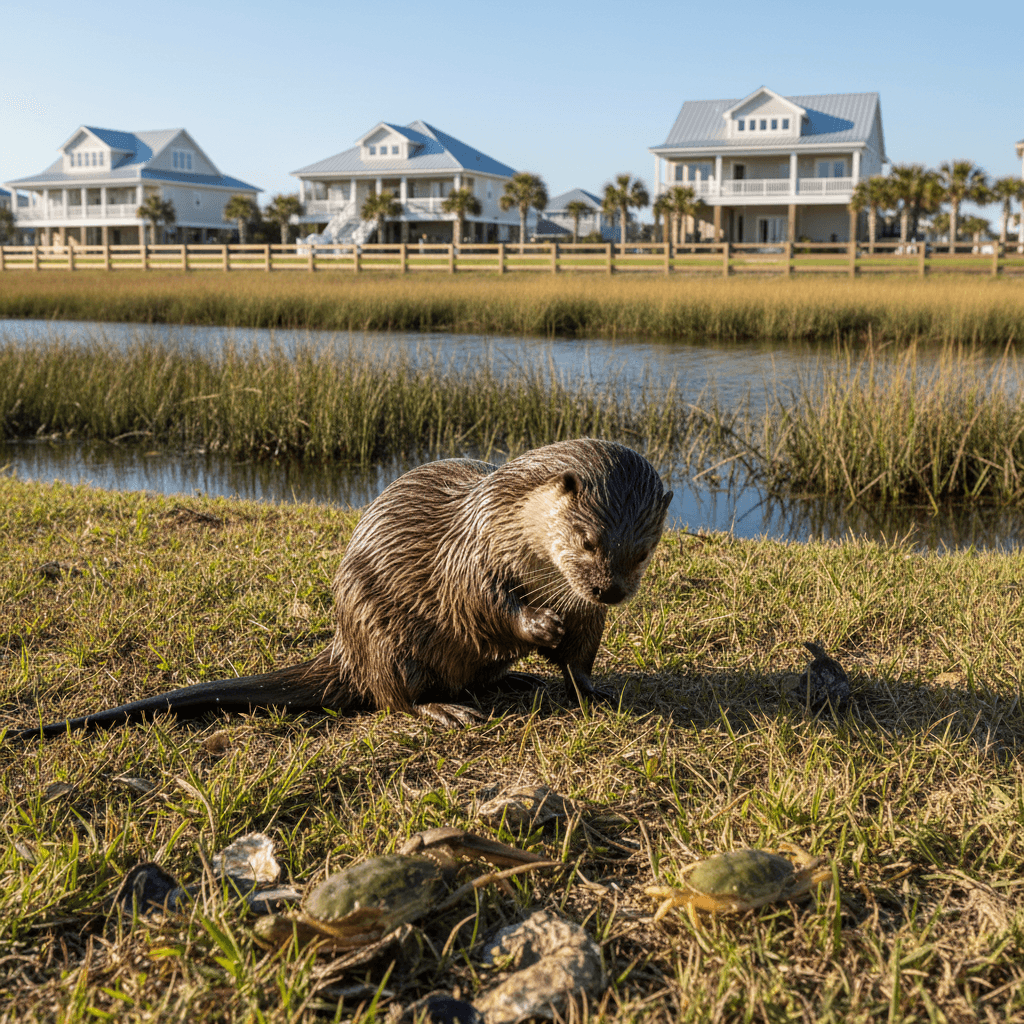
River otters are semi-aquatic mammals with long, slender bodies, short legs, and webbed feet. They have thick, brown fur that is dense and water-repellent, and a long, muscular tail that aids in swimming. Adults typically weigh between 11 and 30 pounds and are 3 to 4 feet in length.
Signs of Infestation
While not an infestation in the traditional sense, signs of river otters near your Myrtle Beach property include tracks in mud or sand near water sources, scat (droppings) containing fish bones or scales, and fish remains near docks or ponds. Otters may also create den sites in hollow logs, under docks, or along the banks of creeks and marshes.
Health Risks
River otters are generally not aggressive towards humans, but they can carry parasites and diseases. In Myrtle Beach, avoid direct contact with otters and their droppings to prevent potential transmission of diseases. Be particularly cautious around pets, as otters may defend their territory.
Our Treatment Method
As a protected species in South Carolina, relocation or trapping of river otters requires permits from the SC Department of Natural Resources. MBPC can assess the situation, advise on humane deterrents, and assist with coordinating with local wildlife authorities if necessary to mitigate otter activity near your Grand Strand property.
Prevention Tips
Secure fish ponds and aquaculture facilities with fencing to deter otters. Remove potential denning sites near your property, such as piles of brush or debris. Avoid feeding otters or leaving out food scraps that may attract them to your yard in Myrtle Beach.
Habitat
River otters are common along the coastal waterways of South Carolina, including Myrtle Beach's salt marshes, tidal creeks, and Intracoastal Waterway. They prefer habitats with abundant fish, crustaceans, and other aquatic prey. They are well-adapted to the humid subtropical climate and thrive in the diverse ecosystems of the Grand Strand.
Peak activity: Year-Round
Identification Photos
Frequently Asked Questions About River otter
River otters are generally not aggressive, but they are wild animals and can bite if threatened. Keep pets away from otters and avoid approaching them, especially if they have young. Contact animal control if you are concerned about aggressive behavior.
Do not approach or handle a baby river otter. Observe from a distance to see if the mother returns. If the otter appears injured or abandoned, contact a licensed wildlife rehabilitator in the Myrtle Beach area for assistance.
Yes, river otters are a protected furbearer in South Carolina. Hunting and trapping are regulated by the SC Department of Natural Resources. Relocating or harming otters without proper permits is illegal.
The best way to protect your fish pond is to install a sturdy fence around the perimeter. Make sure the fence extends at least 3 feet above the ground and is buried several inches deep to prevent otters from digging underneath. Netting over the pond can also be effective.
Don't Let Pests Win.
Take Back Your Home Today.
Every day you wait gives pests more time to multiply and cause damage. Our licensed technicians are ready to help — often the same day you call.
Free Inspection
No cost, no obligation
Same-Day Service
Fast response guaranteed
Eco-Friendly
Safe for family & pets
100% Guarantee
Pests return, so do we
Ready to get started?
Choose how you'd like to connect with us.
Available Mon-Fri 8am-6pm, Sat 9am-2pm