Squash Bug
Anasa tristis
insectsHow to Identify
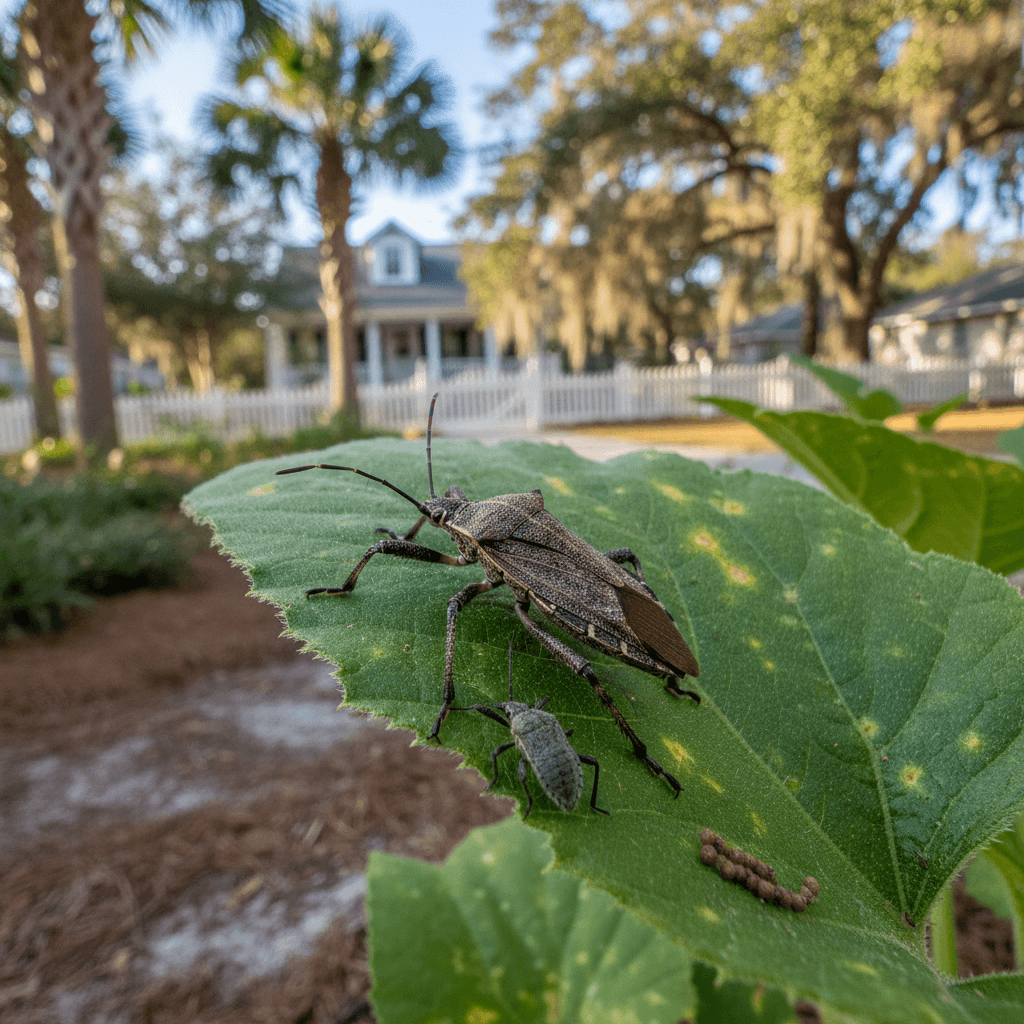
Squash bugs are dark brown, about 5/8 inch long, and have a flattened, elongated shape. Adults have fully developed wings, while nymphs are smaller, grayish-white to green, and wingless. When crushed, they emit a foul odor.
Signs of Infestation
Check your squash, pumpkin, and gourd plants for wilting leaves, especially in the morning. You may find clusters of brownish-red eggs on the undersides of leaves or see adult bugs and nymphs congregating near the base of the plants. Dark brown or black droppings (frass) are another telltale sign.
Health Risks
Squash bugs don't directly bite or pose a health risk to humans or pets in Myrtle Beach. However, their feeding habits can severely damage or kill garden plants, leading to frustration for local gardeners. Plant damage can indirectly affect food availability for beneficial insects and pollinators.
Our Treatment Method
MBPC offers targeted treatments to control squash bug infestations in your Grand Strand garden. Our licensed technicians can apply insecticides approved by the SC Department of Pesticide Regulation to reduce populations. We also provide guidance on cultural practices and preventative measures to minimize future infestations.
Prevention Tips
Remove plant debris from your garden in the fall to eliminate overwintering sites – a key step in Myrtle Beach gardens. Regularly inspect your plants for eggs and nymphs, and handpick them as you find them. Consider using row covers to protect young plants from infestation, especially during peak squash bug season in SC.
Habitat
Squash bugs thrive in vegetable gardens, particularly those with squash, pumpkin, and gourd plants, which are common in Myrtle Beach home gardens. They prefer sunny locations with ample vegetation. Adults overwinter in garden debris and under loose bark, so proper cleanup is crucial in coastal SC.
Peak activity: Spring-Fall
Identification Photos
Frequently Asked Questions About Squash Bug
Squash bugs primarily feed on squash, pumpkins, gourds, and other members of the cucurbit family, which are popular crops in Myrtle Beach gardens. They can also attack melons, but usually prefer squash.
Handpicking bugs and eggs, using insecticidal soap, and introducing beneficial insects like parasitic wasps can help control squash bug populations naturally in your Myrtle Beach garden. Consistent monitoring and early intervention are key.
Squash bugs are most active from spring through fall in Myrtle Beach, with peak activity during the summer months. They overwinter as adults and emerge in the spring to lay eggs on cucurbit plants.
Yes, squash bug infestations can kill your plants, especially young ones. They suck sap from leaves and stems, causing wilting, stunted growth, and eventually death. Protect your valuable Myrtle Beach crops by calling MBPC for treatment options.
Don't Let Pests Win.
Take Back Your Home Today.
Every day you wait gives pests more time to multiply and cause damage. Our licensed technicians are ready to help — often the same day you call.
Free Inspection
No cost, no obligation
Same-Day Service
Fast response guaranteed
Eco-Friendly
Safe for family & pets
100% Guarantee
Pests return, so do we
Ready to get started?
Choose how you'd like to connect with us.
Available Mon-Fri 8am-6pm, Sat 9am-2pm