Star-nosed Mole
Condylura cristata
wildlifeHow to Identify
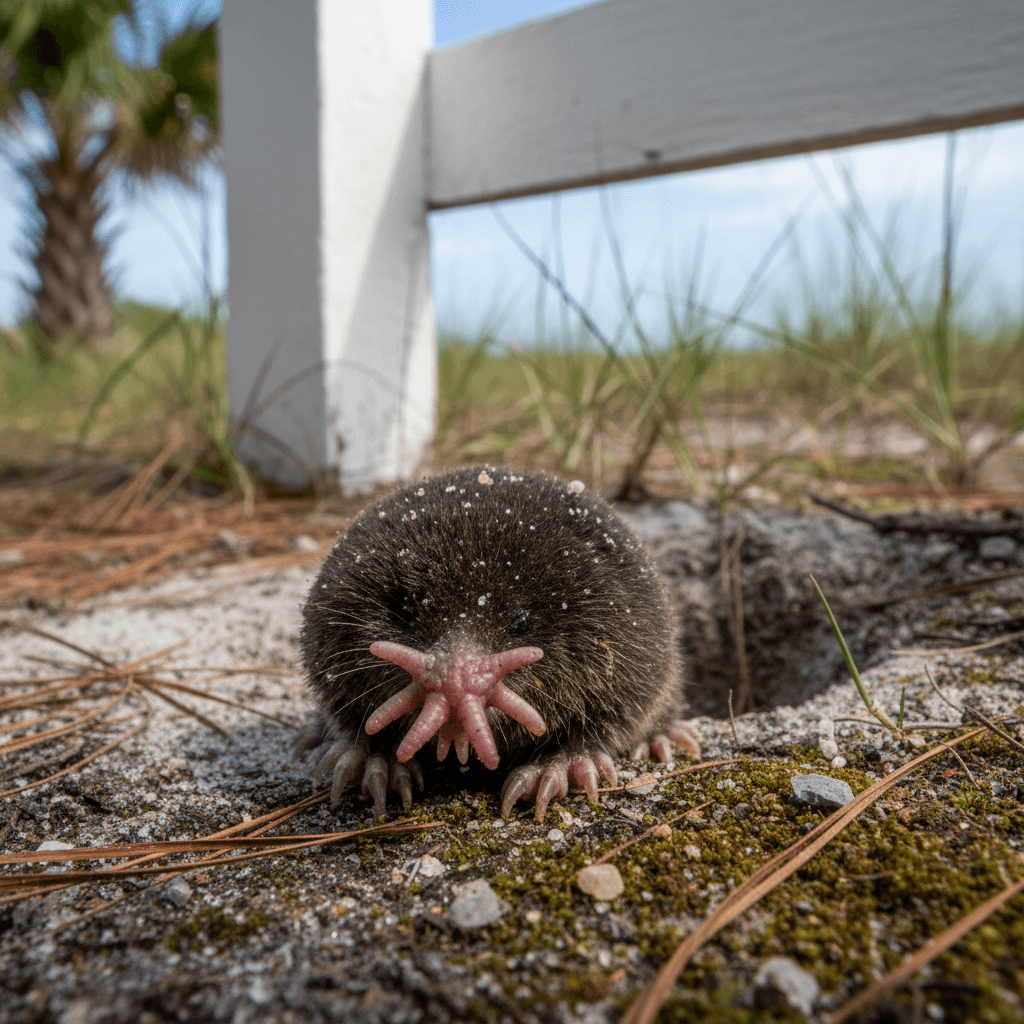
The star-nosed mole is easily identified by the 22 fleshy appendages surrounding its nose, which it uses as a sensory organ. They are small, stout-bodied mammals with dark brown to black fur and large, scaled feet adapted for digging. These moles are about 4-5 inches long, excluding the tail.
Signs of Infestation
Star-nosed moles create shallow tunnels and molehills in damp soil, which can disrupt lawns and gardens. Raised ridges of soil are a common sign, as are surface tunnels that appear as raised pathways. You might also notice damage to plant roots or bulbs due to their digging activity.
Health Risks
Star-nosed moles are not a direct threat to human health in Myrtle Beach. However, their tunneling can damage property, creating tripping hazards and undermining foundations. Their presence can also be a nuisance to homeowners trying to maintain pristine lawns and gardens in the Grand Strand area.
Our Treatment Method
MBPC does not typically handle star-nosed mole removal, as they are a protected species. Trapping and relocation may be an option, but requires adherence to SC Department of Pesticide Regulation guidelines regarding wildlife handling. Contact a licensed wildlife removal specialist for humane and legal solutions in the Myrtle Beach area.
Prevention Tips
Improve drainage in your yard to make it less attractive to moles. Install underground fencing or barriers around gardens and flower beds to prevent them from tunneling in those areas. Consider planting vegetation that is naturally repellent to moles, but consult local Myrtle Beach nurseries for appropriate species.
Habitat
Star-nosed moles prefer wet, poorly drained soils near marshes, streams, and ponds, which are common habitats along the South Carolina coast. They are well-adapted to the humid subtropical climate and sandy soils of the Grand Strand. Their presence is more likely in areas with abundant earthworms and insects.
Peak activity: Year-Round
Identification Photos
Frequently Asked Questions About Star-nosed Mole
Star-nosed moles are not dangerous to humans or pets in Myrtle Beach. They primarily feed on invertebrates and do not pose a biting risk. However, their tunneling can cause damage to lawns and gardens.
Because they are a protected species, check with local Myrtle Beach authorities and SC Department of Natural Resources. Prevention and habitat modification are key. Contacting a wildlife removal specialist is recommended.
Star-nosed moles can create unsightly molehills and tunnels in your Myrtle Beach yard, disrupting the appearance of lawns and gardens. They can also damage plant roots and bulbs, leading to plant loss.
Star-nosed moles are present in South Carolina, including areas around Myrtle Beach with suitable wetland habitat. Their presence may be more noticeable in areas near salt marshes, tidal creeks, and poorly drained soils.
Don't Let Pests Win.
Take Back Your Home Today.
Every day you wait gives pests more time to multiply and cause damage. Our licensed technicians are ready to help — often the same day you call.
Free Inspection
No cost, no obligation
Same-Day Service
Fast response guaranteed
Eco-Friendly
Safe for family & pets
100% Guarantee
Pests return, so do we
Ready to get started?
Choose how you'd like to connect with us.
Available Mon-Fri 8am-6pm, Sat 9am-2pm